 Cat Trivia Games
iOS App
Ancient Egyptian Cat Art: Bronze Cats, Coffins and Amulets
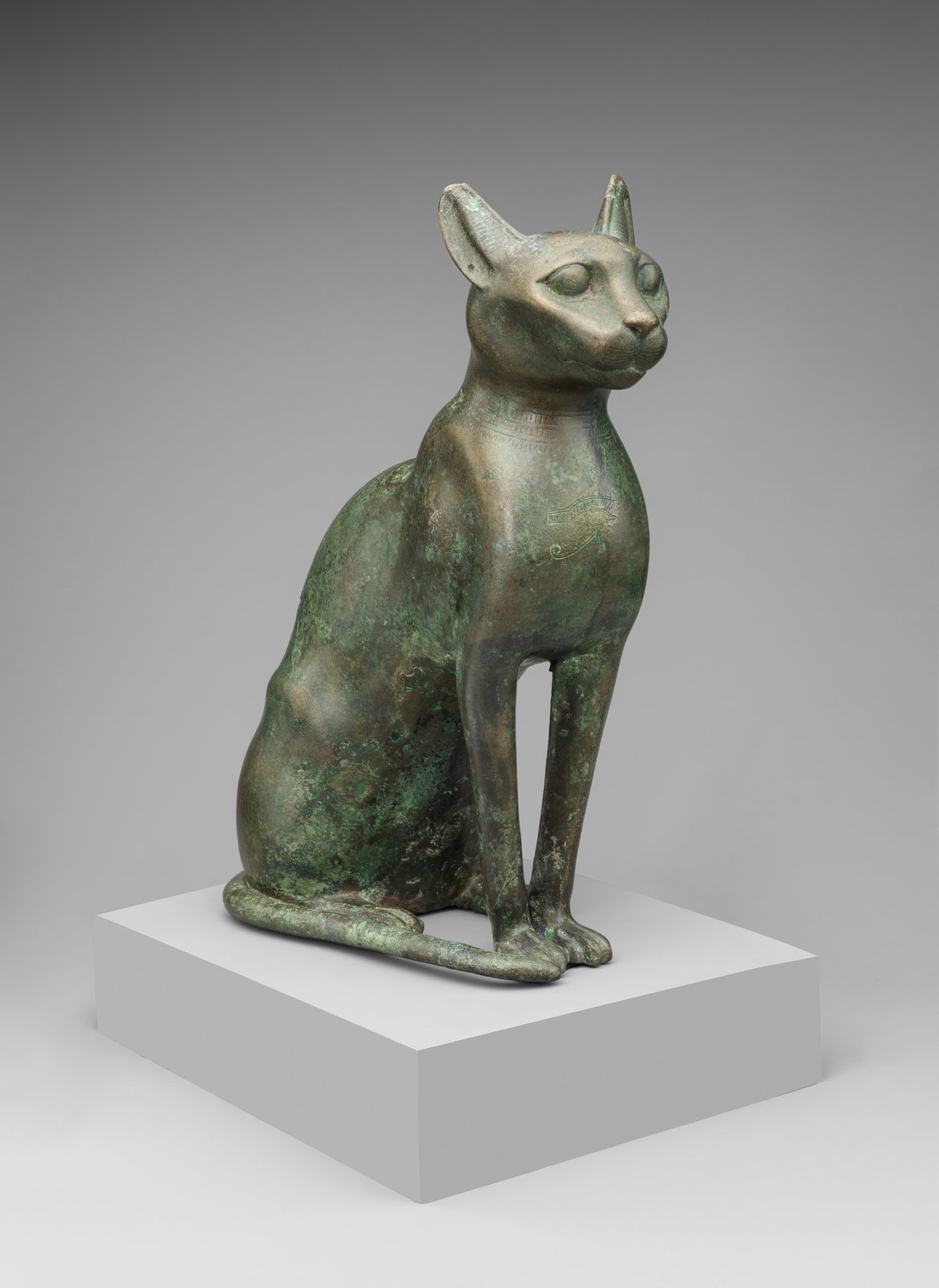
These 21 ancient Egyptian objects show cats in bronze, wood, faience, stone and paint. Eighteen of them date from about 1069 to 30 BCE. Three are cat coffins and a fourth, a bronze statuette, was made to hold a mummified cat. Three of the small seated cats are amulets that their museums name as the goddess Bastet.
Made to hold a mummified cat
Three coffins in the shape of a seated cat, two carved from wood and one cast in bronze, and a bronze statuette whose title at the Met says it was made to contain a mummified cat.
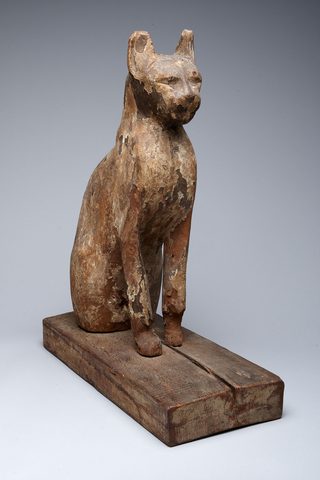
Cat Coffin
Ancient Egyptian
Late Period-Ptolemaic Period (664-32 BCE)
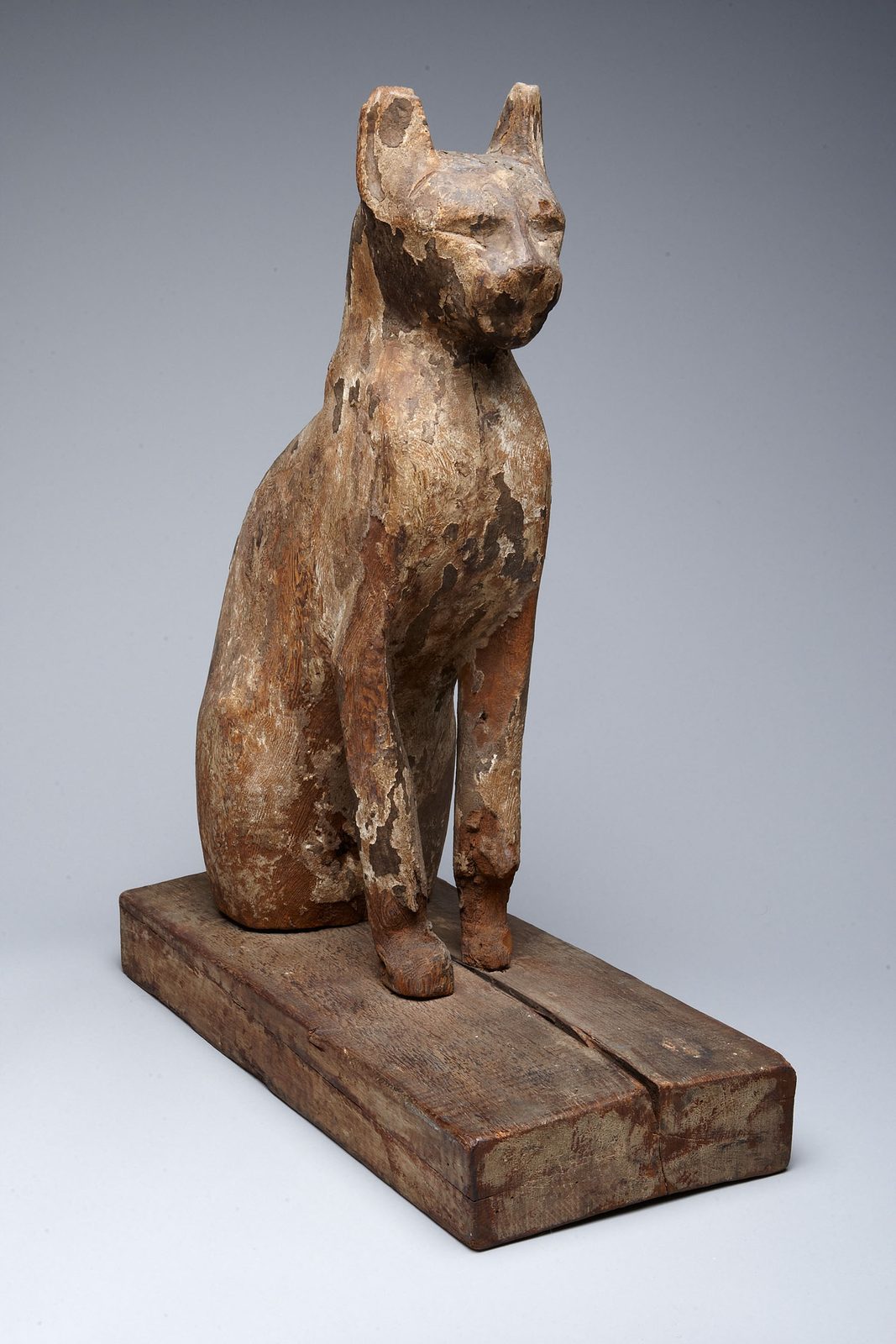
This Ancient Egyptian cat coffin of wood and plaster, from 664 to 32 BCE, is shaped like a seated cat with tall ears.
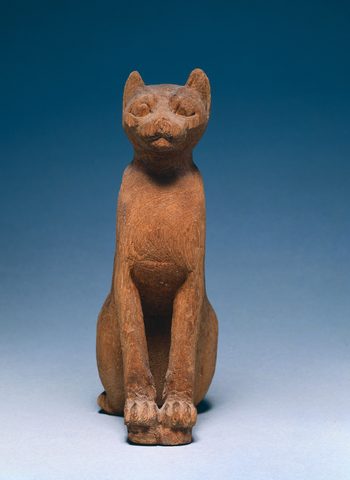
Cat Coffin
Unknown maker, Egypt
664-30 BCE OR 664-330 BCE
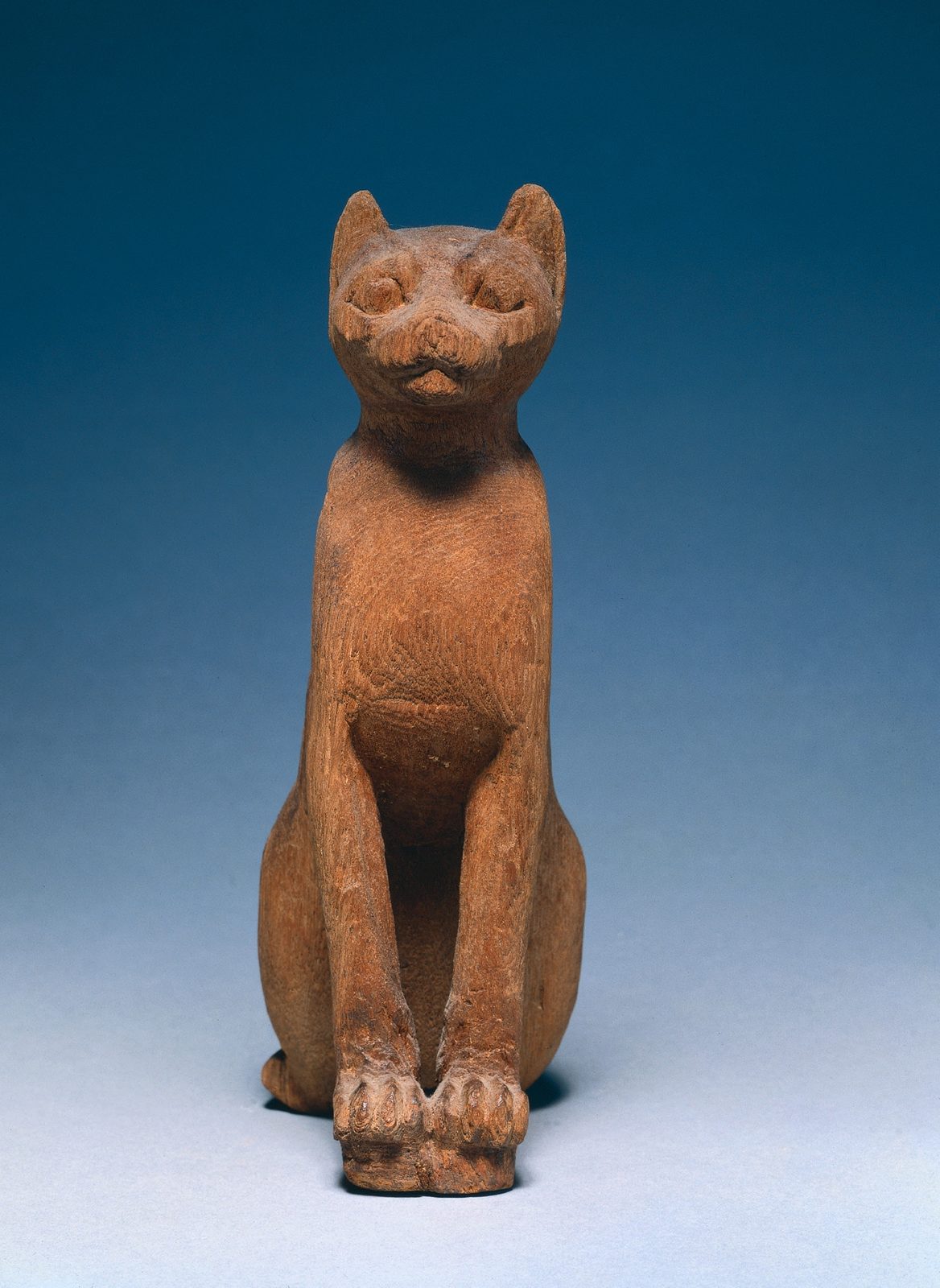
Carved from sycamore fig wood in Late Period or Ptolemaic Egypt, this coffin takes the shape of a cat sitting at attention.
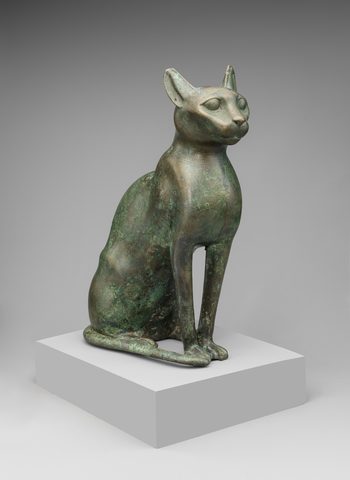
Cat Statuette intended to contain a mummified cat
Unknown maker, Egypt
332-30 BCE
The MetCC0
Cast in leaded bronze between 332 and 30 BCE, this elegant seated cat was made to hold a mummified cat inside.
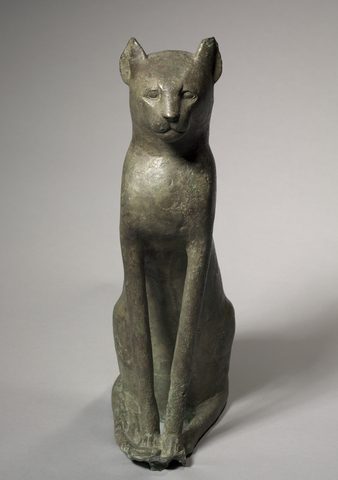
Cat Coffin
Unknown maker, Egypt
305-30 BCE
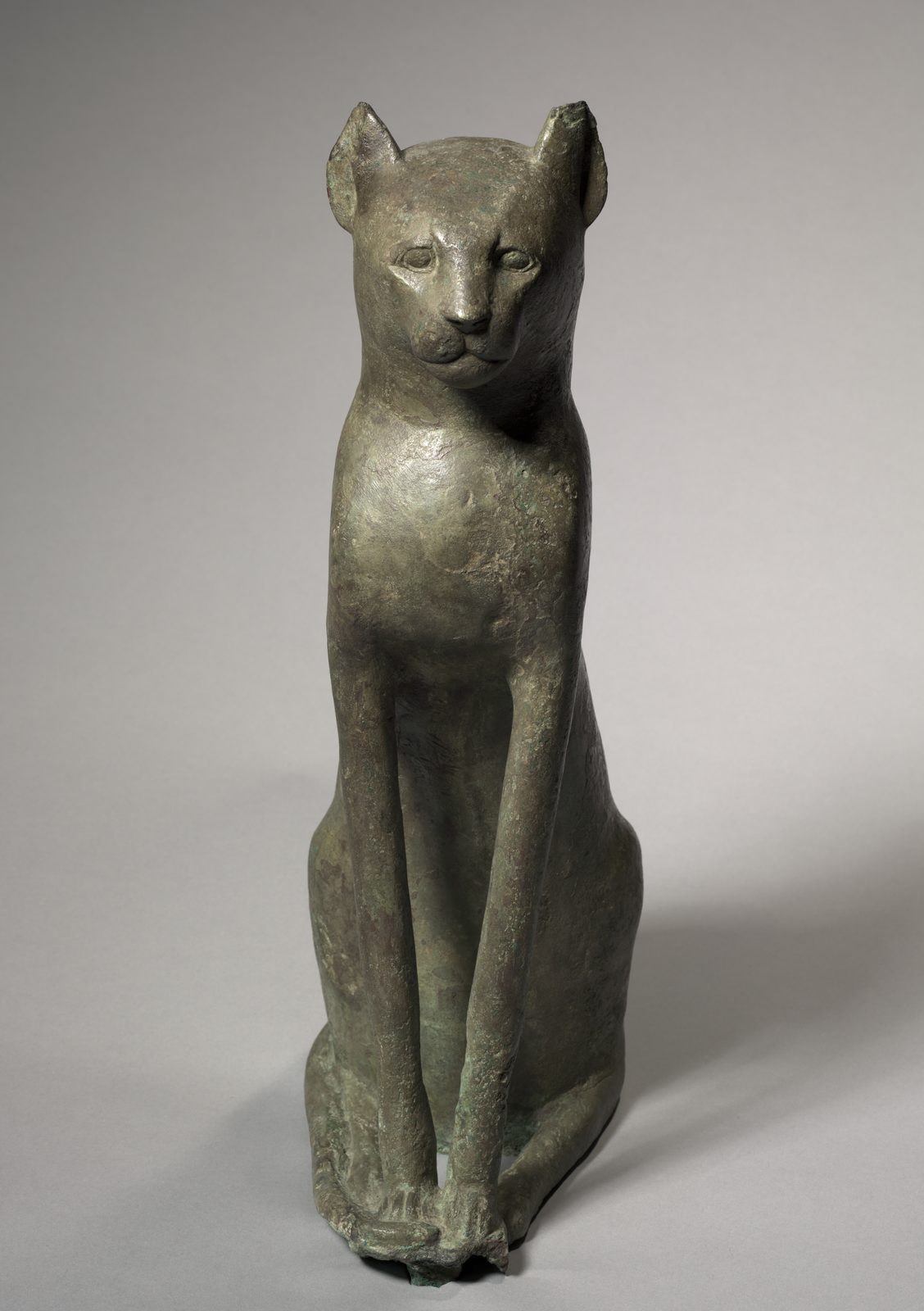
This sleek seated cat is actually a hollow cast bronze coffin from Ptolemaic Egypt, 305 to 30 BCE.
Cats cast in bronze and copper
Small seated and crouching cats cast in bronze or copper alloy. One still wears a gold earring.
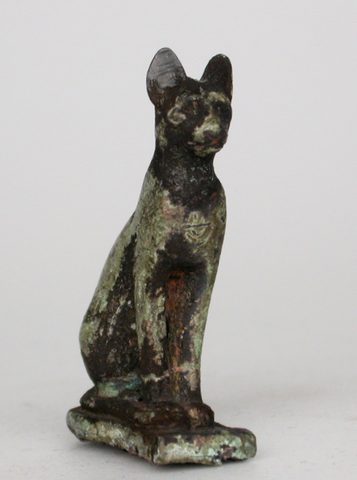
Statuette of a Cat
Ancient Egyptian
Third Intermediate Period, Dynasty 21-25 (about 1069-664 BCE)
Ancient Egyptians cast this slim seated cat in bronze during the Third Intermediate Period, about 1069 to 664 BCE.
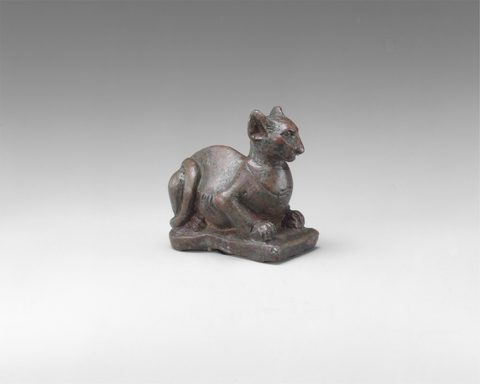
Crouching Cat Figurine
Unknown maker, Egypt
664-380 BCE
The MetCC0
This bronze cat from the Met's Egyptian Art department has been crouching on its little base since sometime between 664 and 380 BCE.
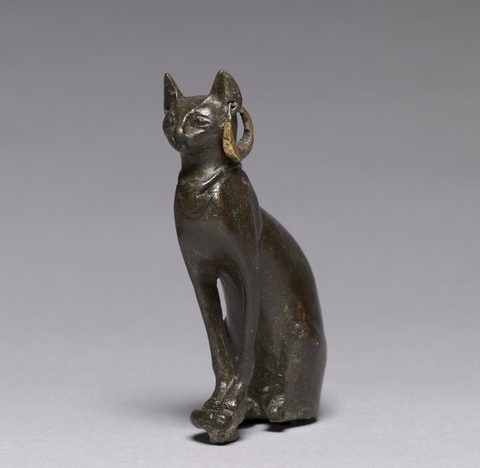
Cat
Unknown maker, Egypt
664-30 BCE OR 664-330 BCE
This bronze cat from Egypt's Late Period still wears its gold earring after more than two thousand years.
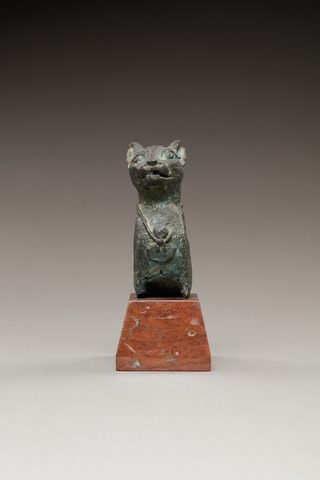
Upper Part of the Figure of a Seated Cat
Unknown maker, Egypt
664-30 BCE
The MetCC0
Only the top half of this Egyptian seated cat survives, made of copper-based metal between 664 and 30 BCE.
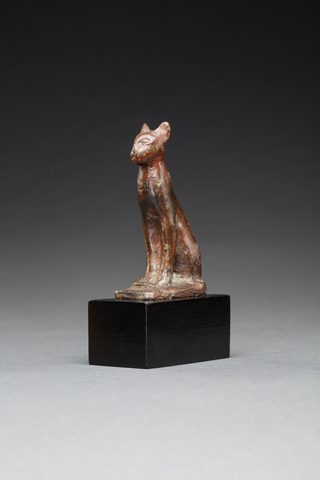
Figure of a Seated Cat
Unknown maker, Egypt
664-30 BCE
The MetCC0
Made in Egypt sometime between 664 and 30 BCE, this copper-alloy cat is still sitting perfectly upright.
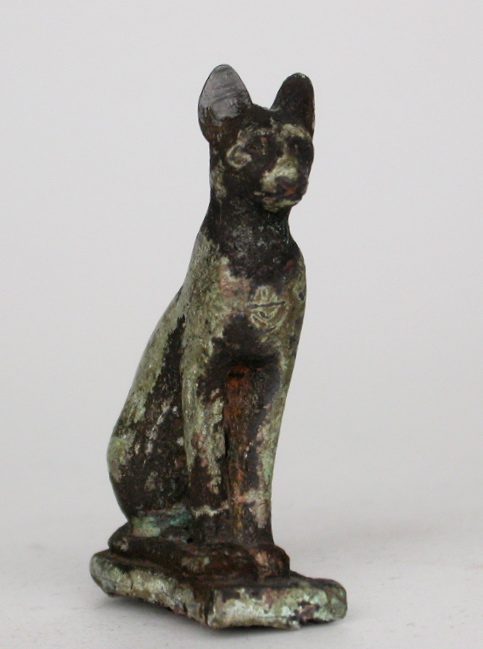
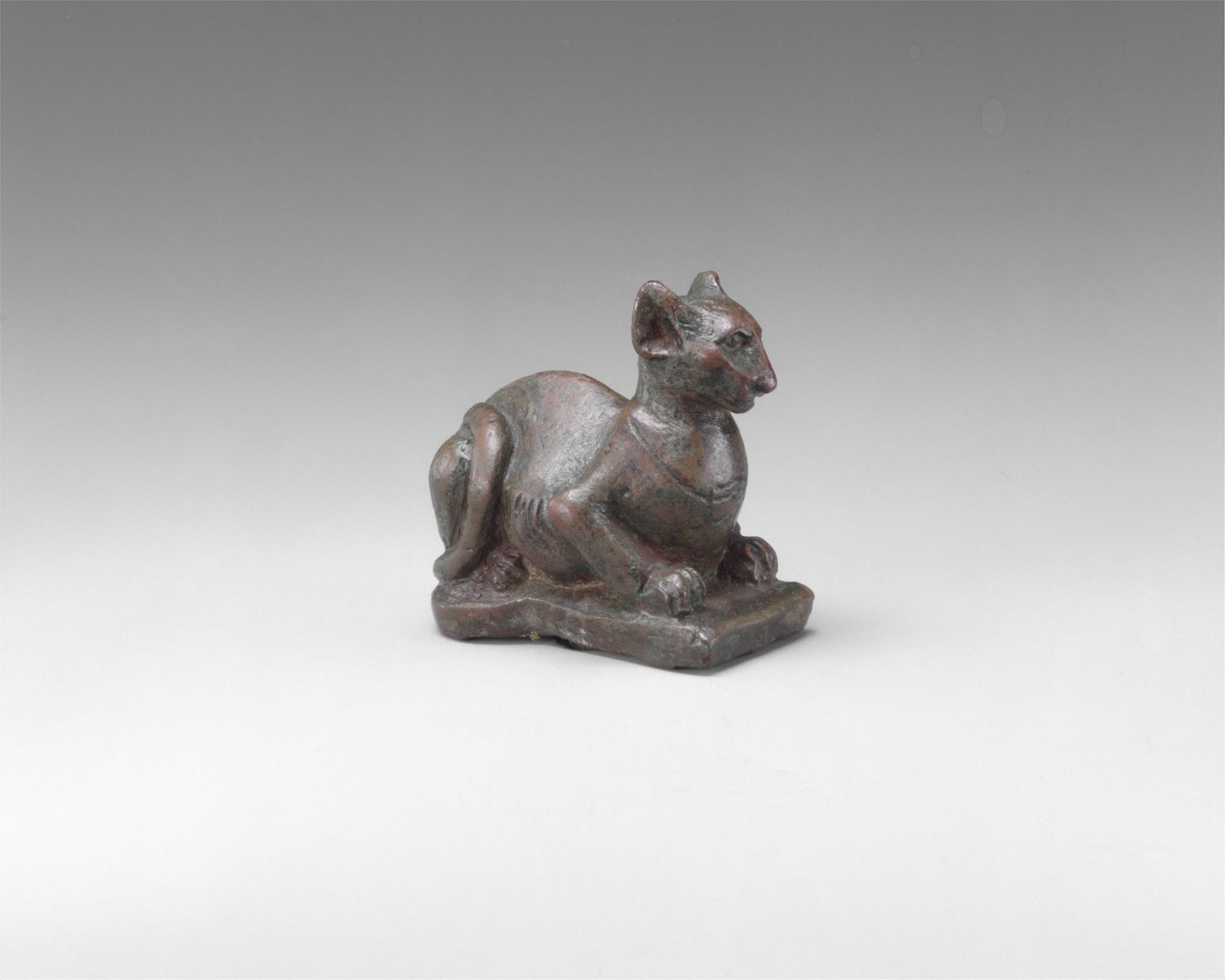
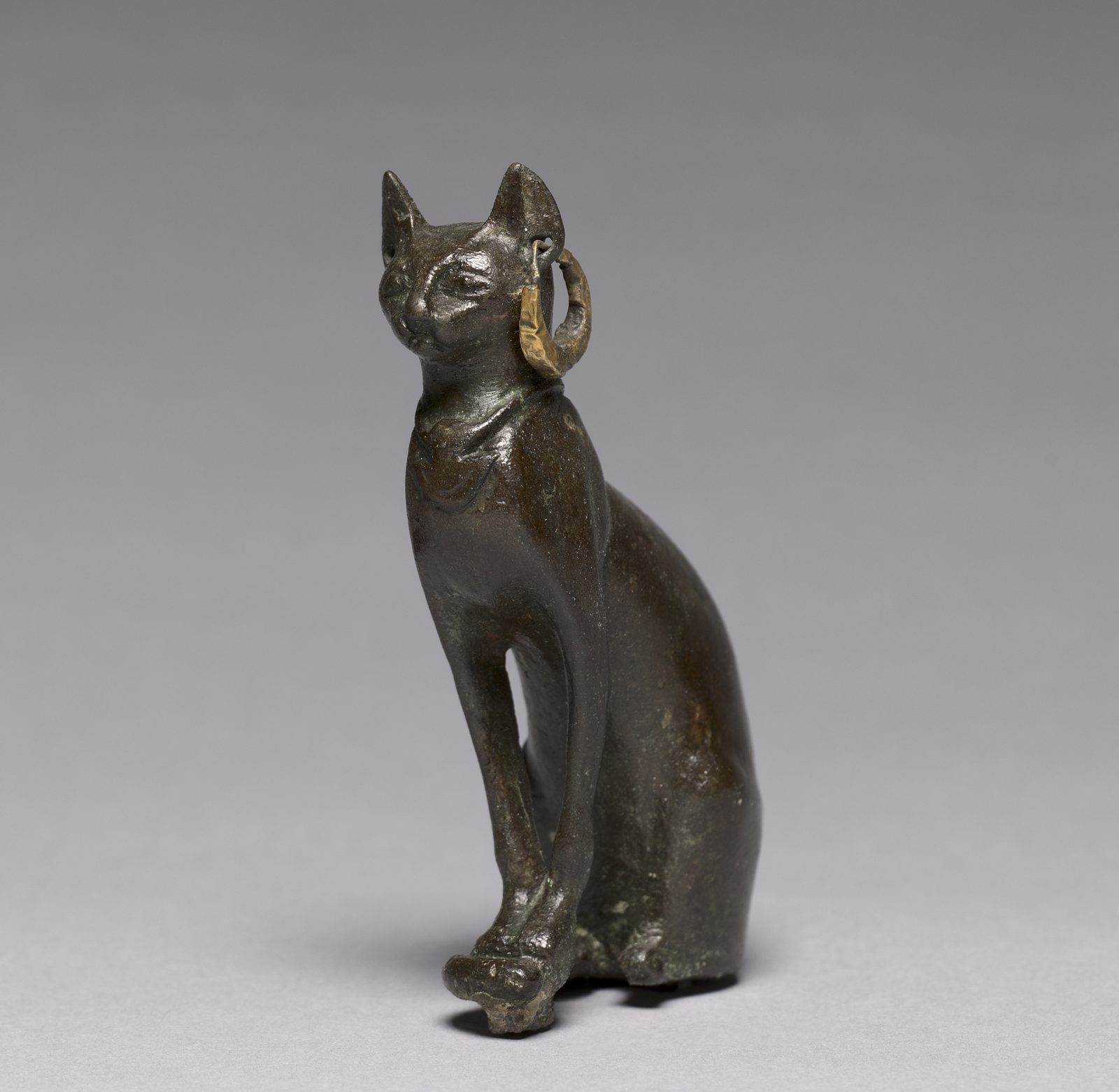
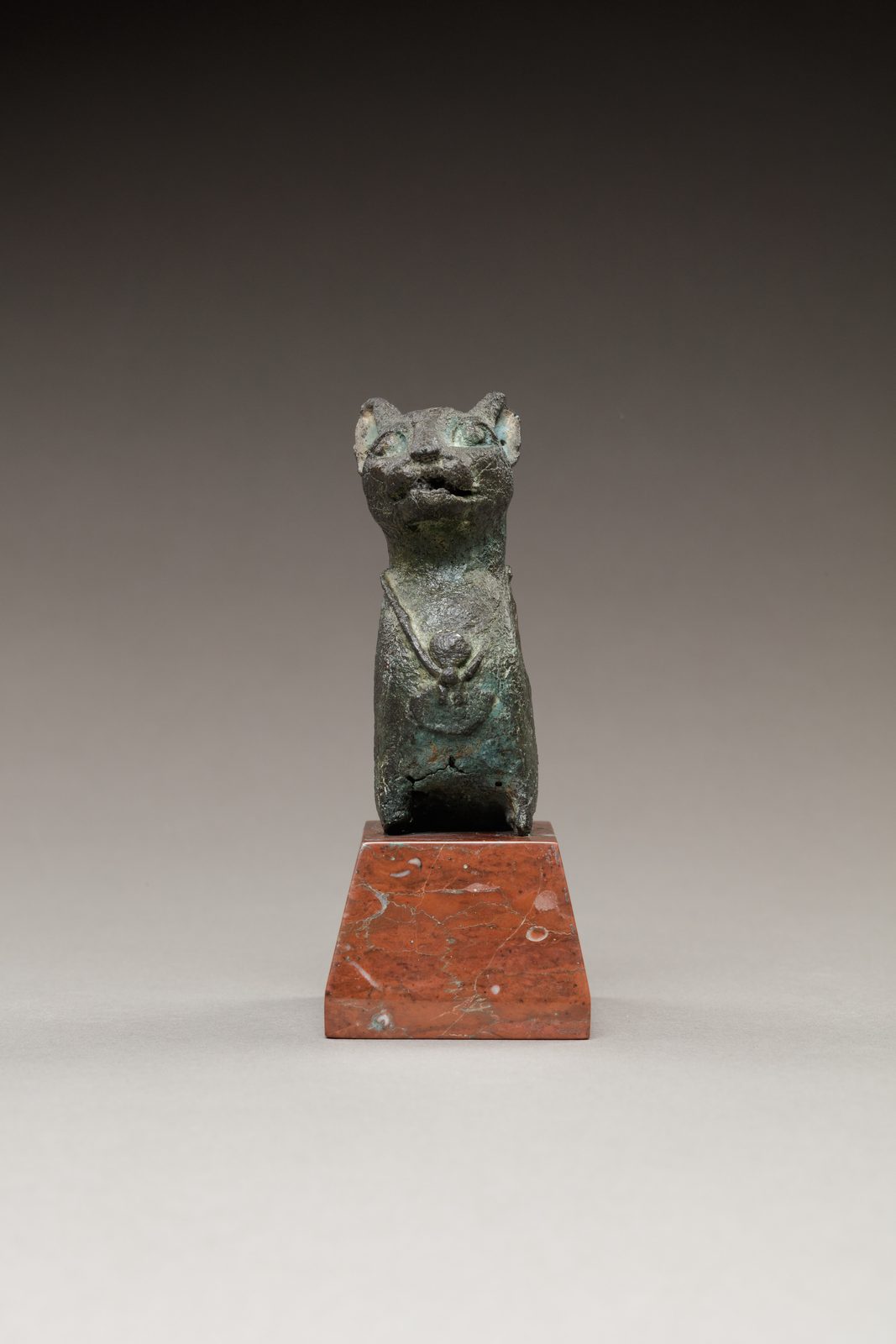
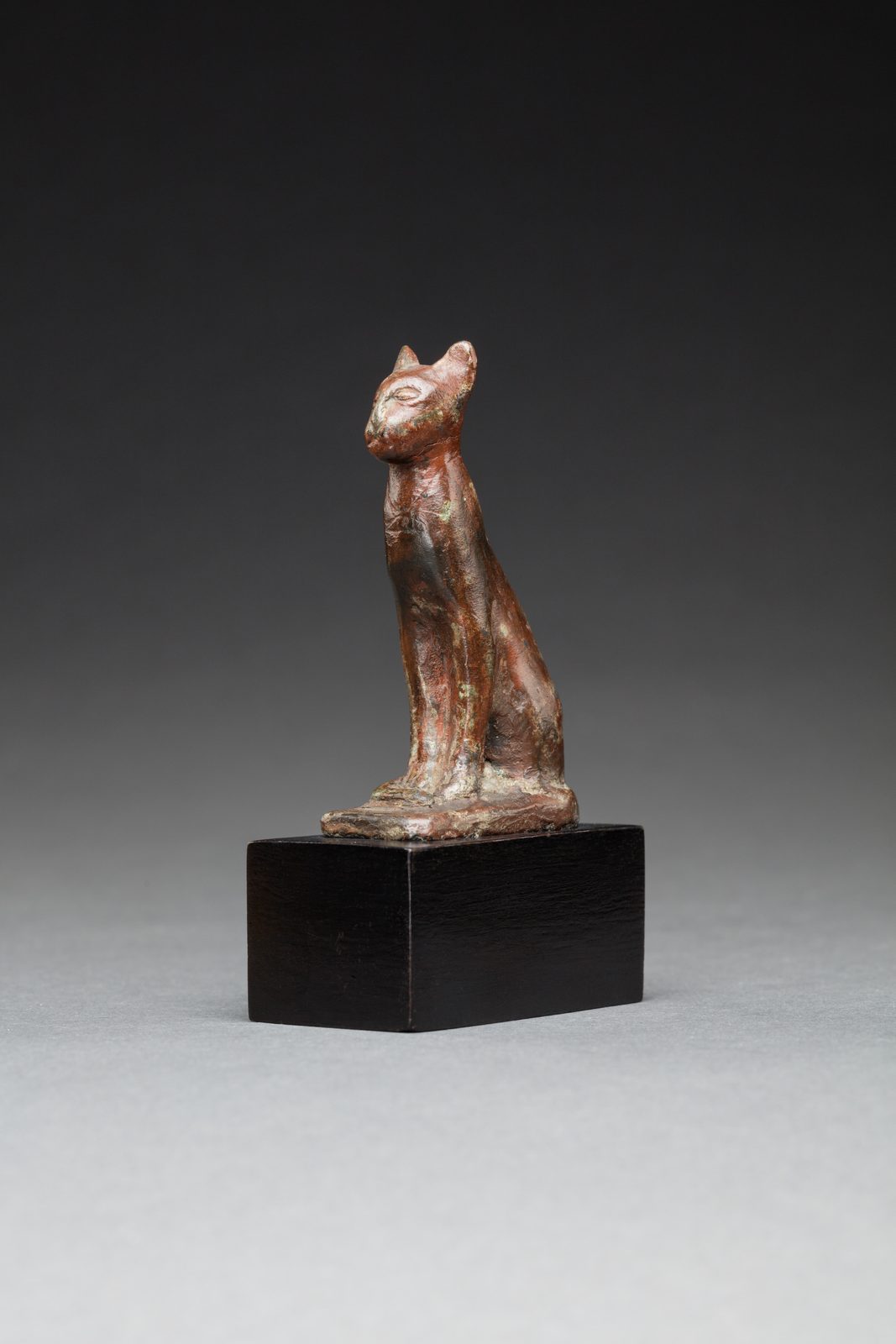
Amulets, a ring and a scaraboid
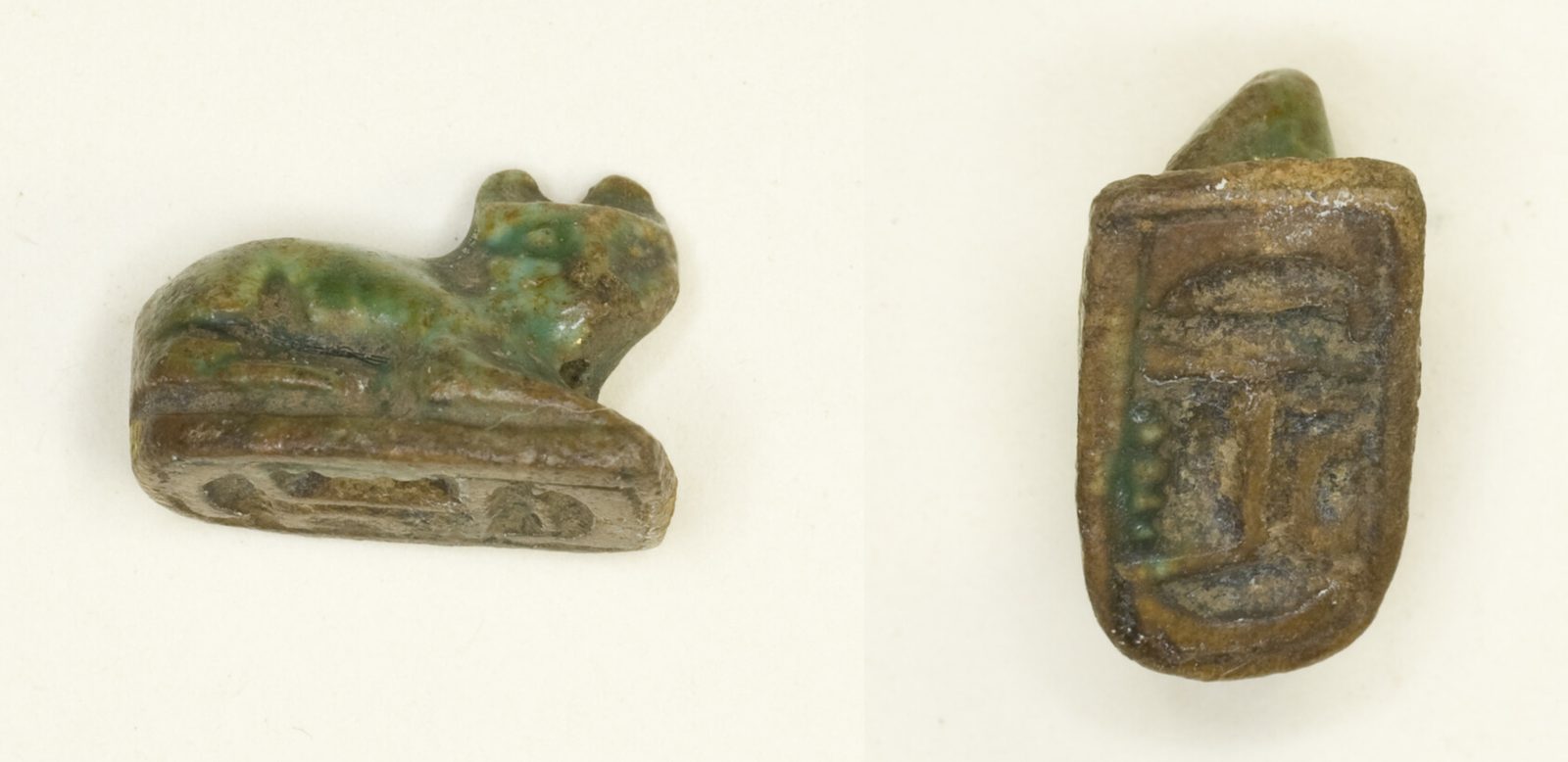
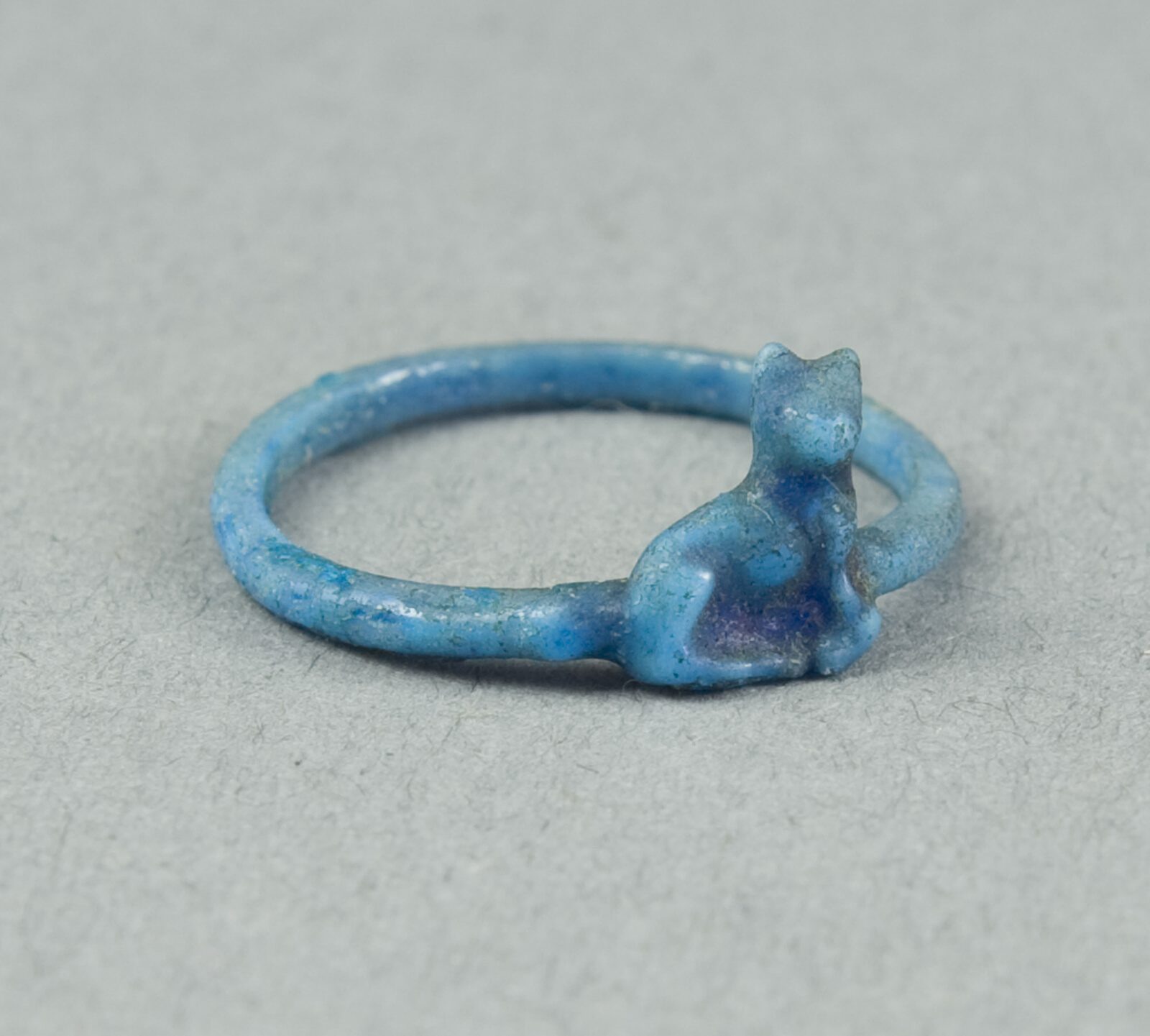
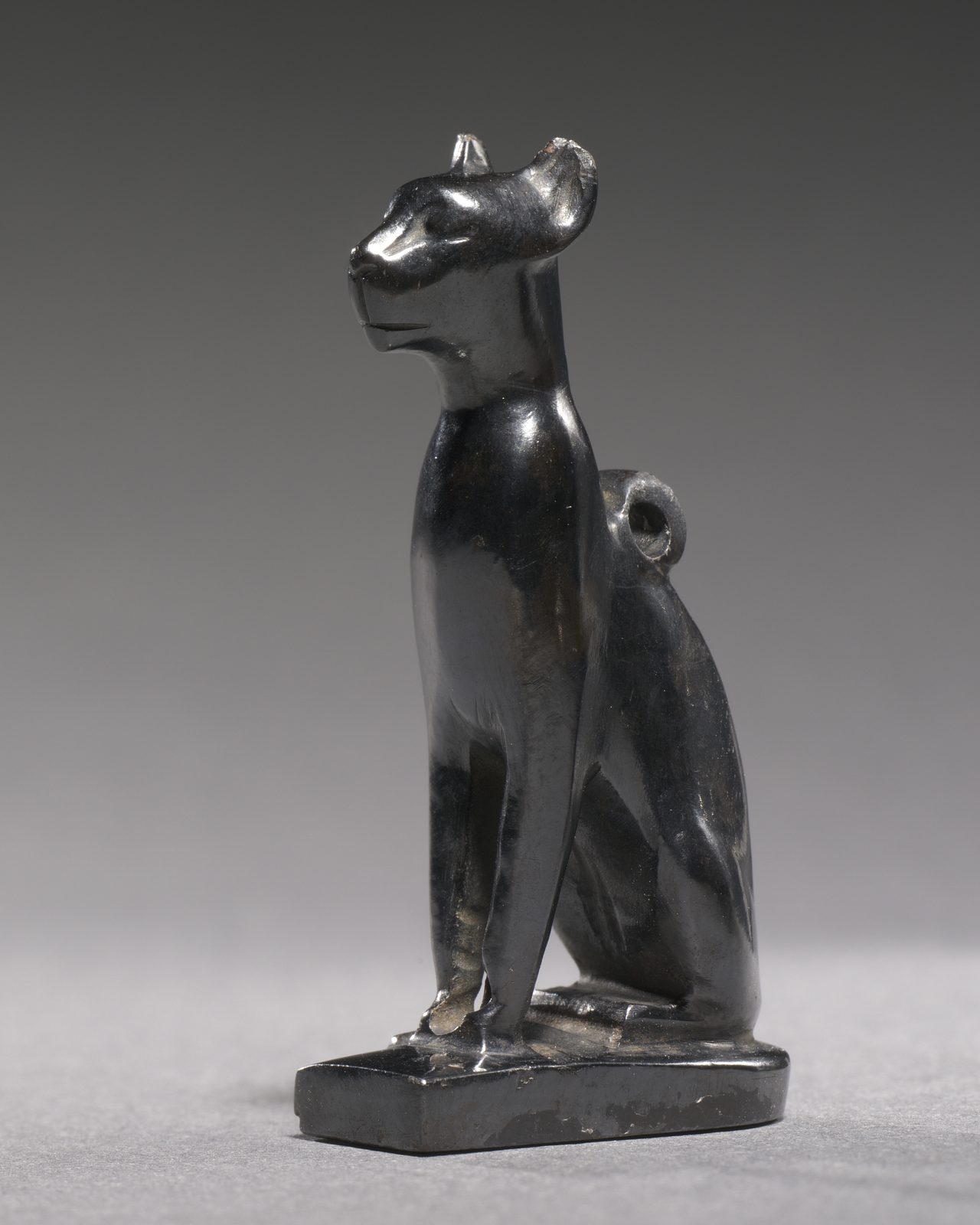
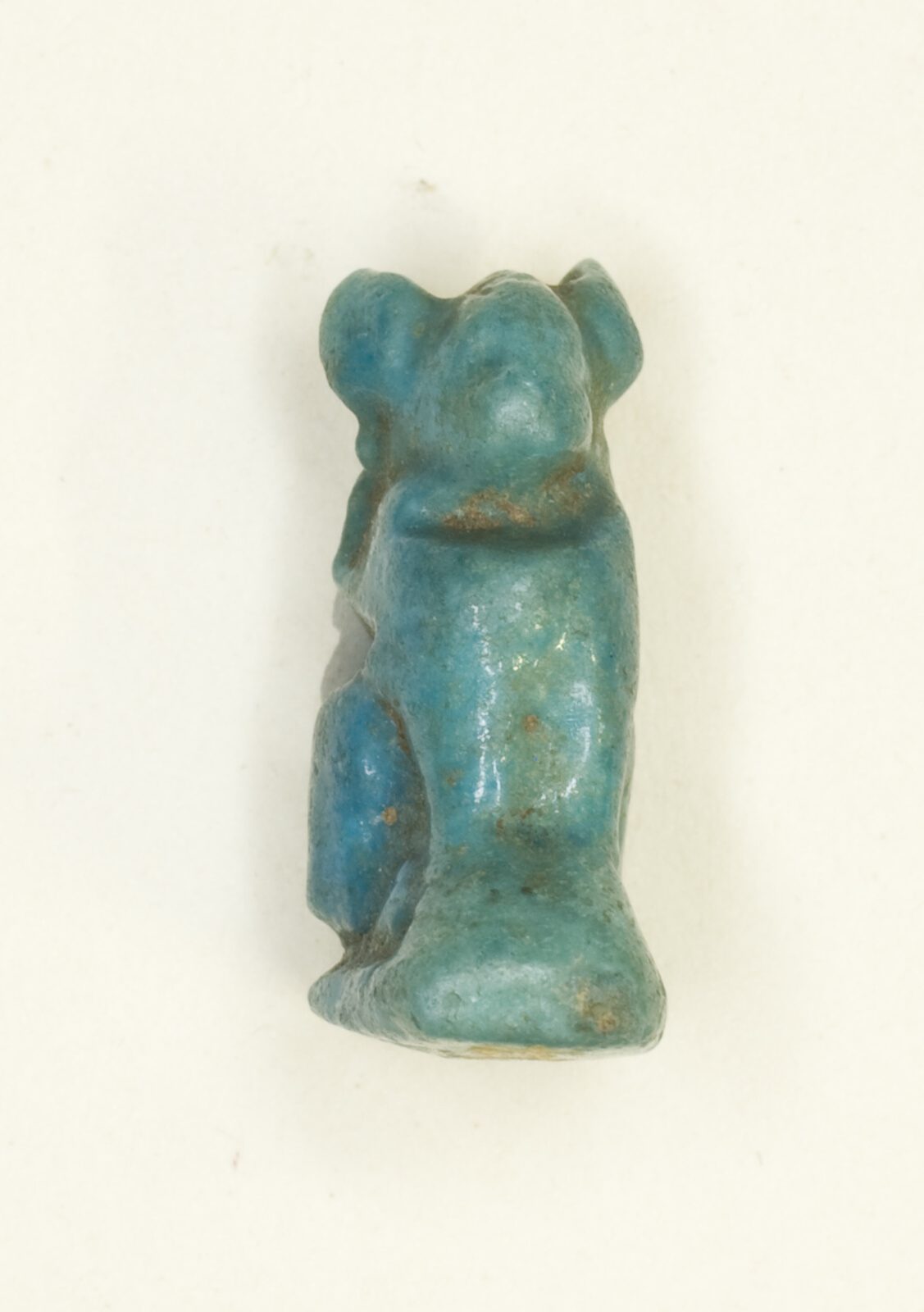
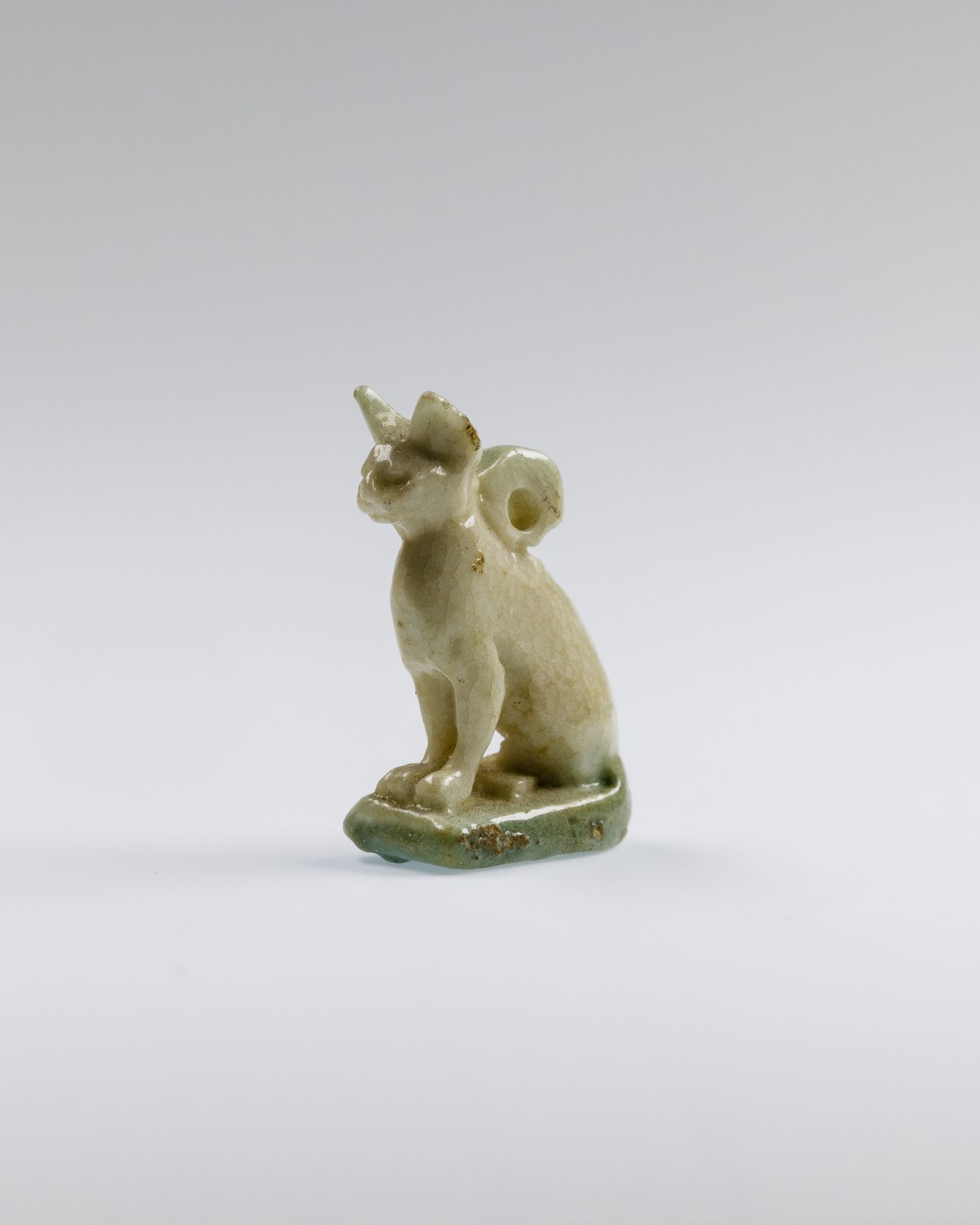
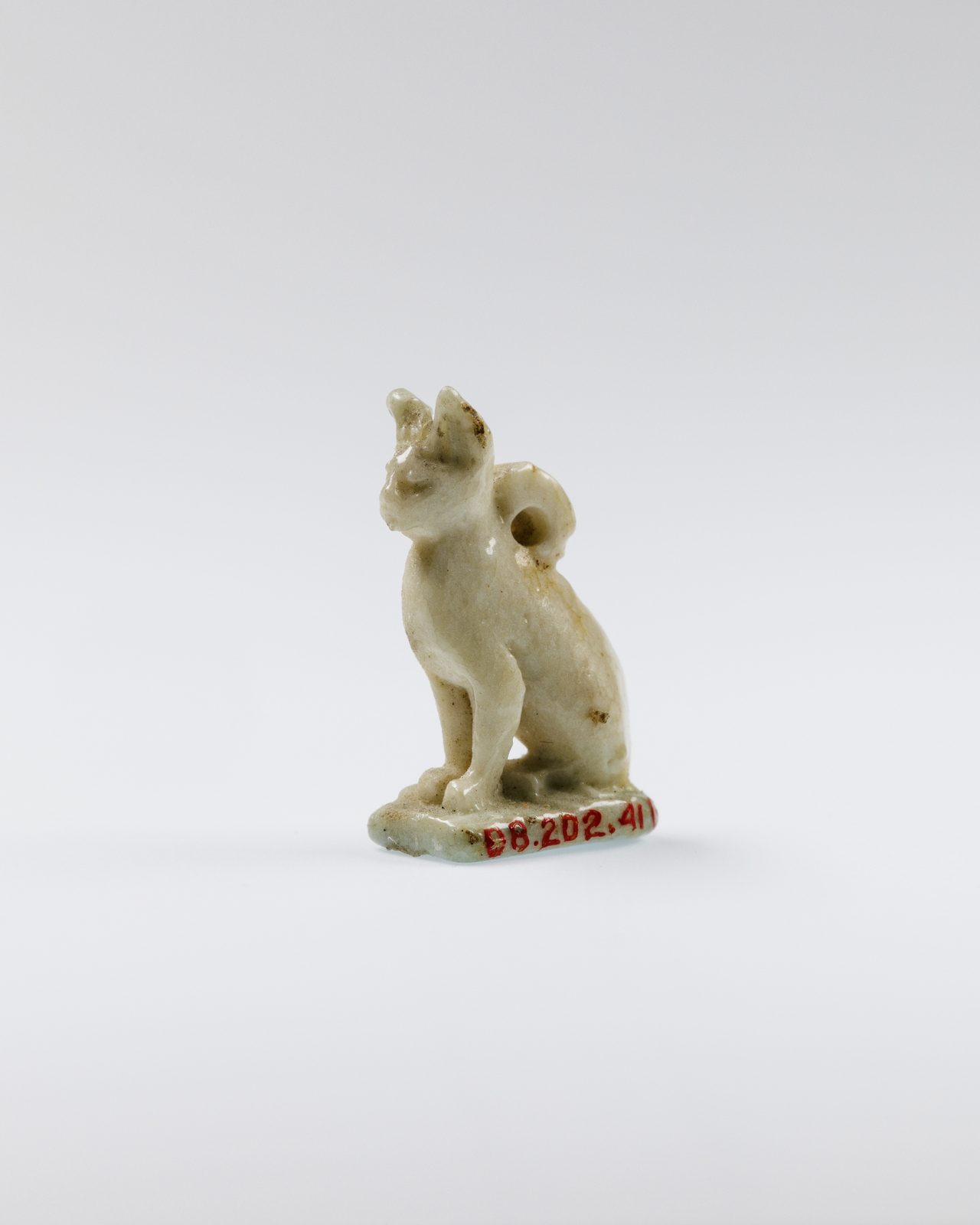
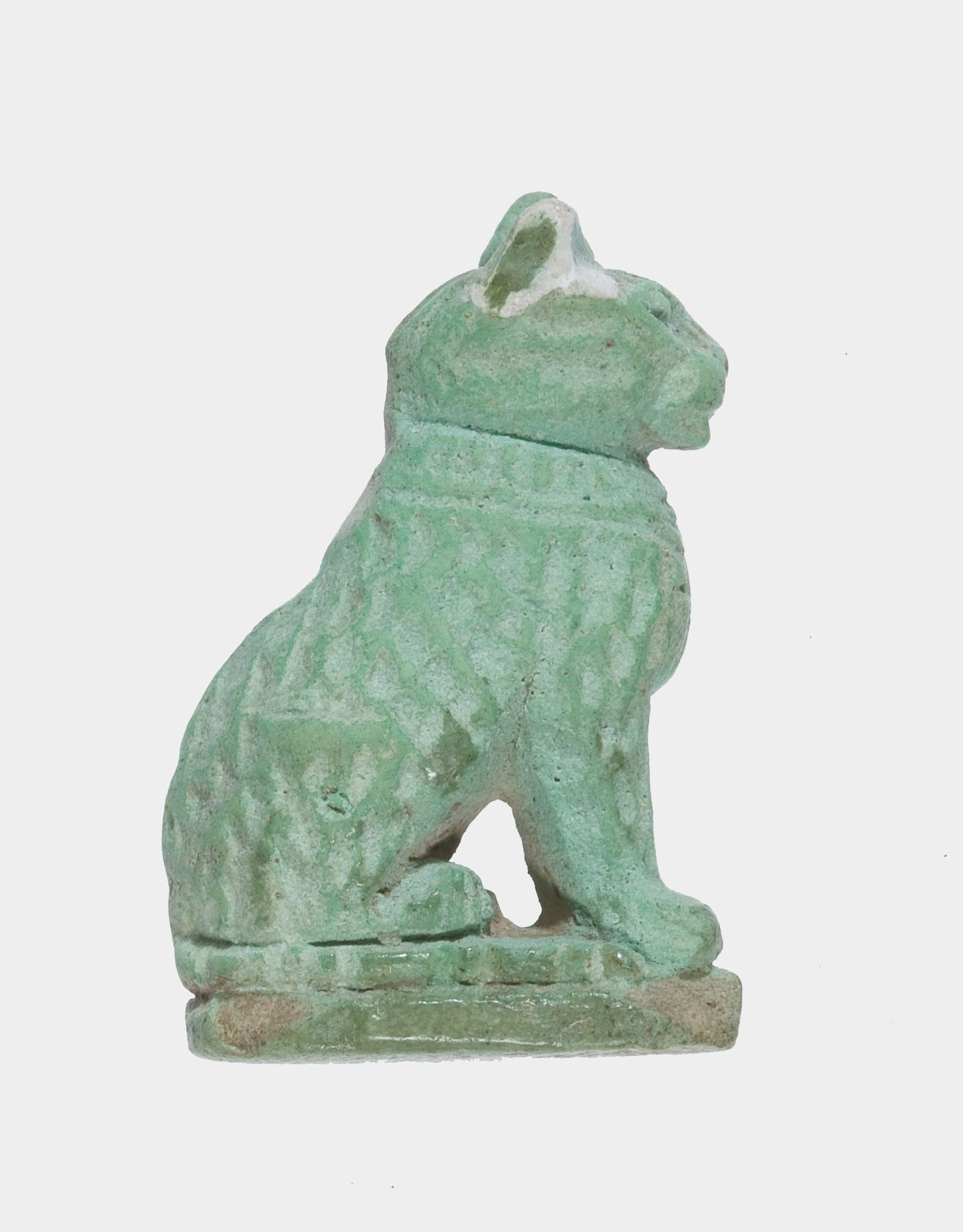
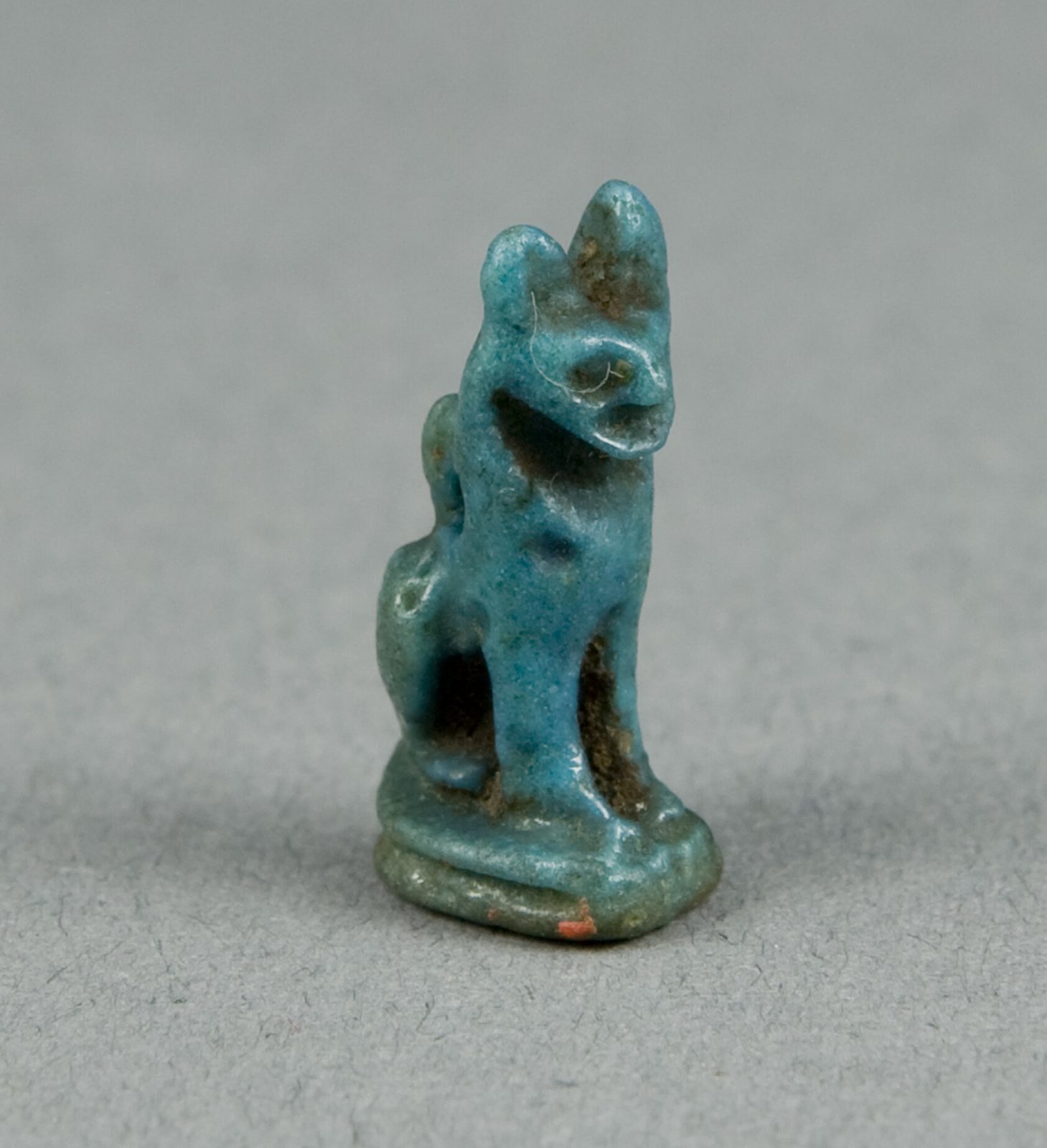
Small cats in faience, hematite and glazed stone, among them three amulets named as Bastet, a faience ring and a scaraboid with a resting cat on top.
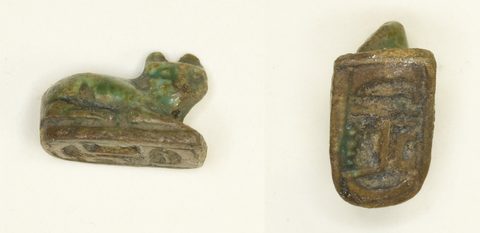
Scaraboid: Cat
Ancient Egyptian
New Kingdom, Dynasty 18 (about 1550-1295 BCE)
This tiny glazed steatite scaraboid topped with a resting cat comes from Egypt's New Kingdom, Dynasty 18, about 1550 to 1295 BCE.
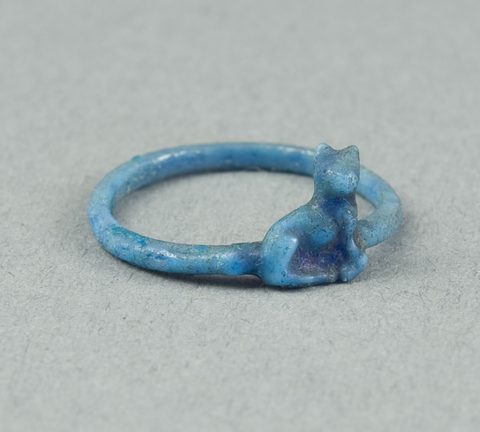
Ring: Figure of Seated Cat
Ancient Egyptian
New Kingdom, Dynasty 18 (about 1390 BCE)
This blue faience ring with a little seated cat comes from Egypt's New Kingdom, about 1390 BCE.
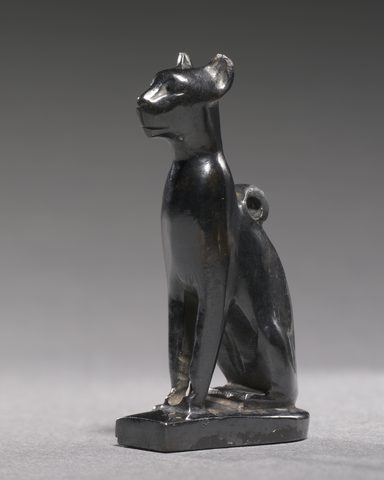
Amulet of Bastet
Unknown maker, Egypt
c. 1069-715 BCE
Carved from hematite in Egypt around 1069 to 715 BCE, this sleek seated cat is an amulet of Bastet.
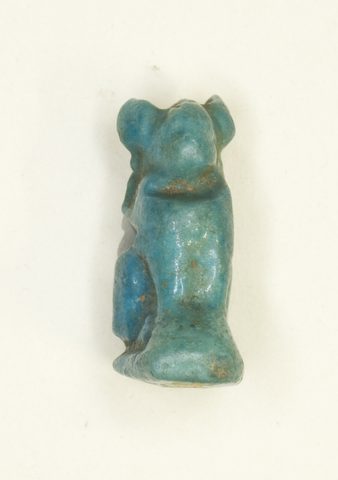
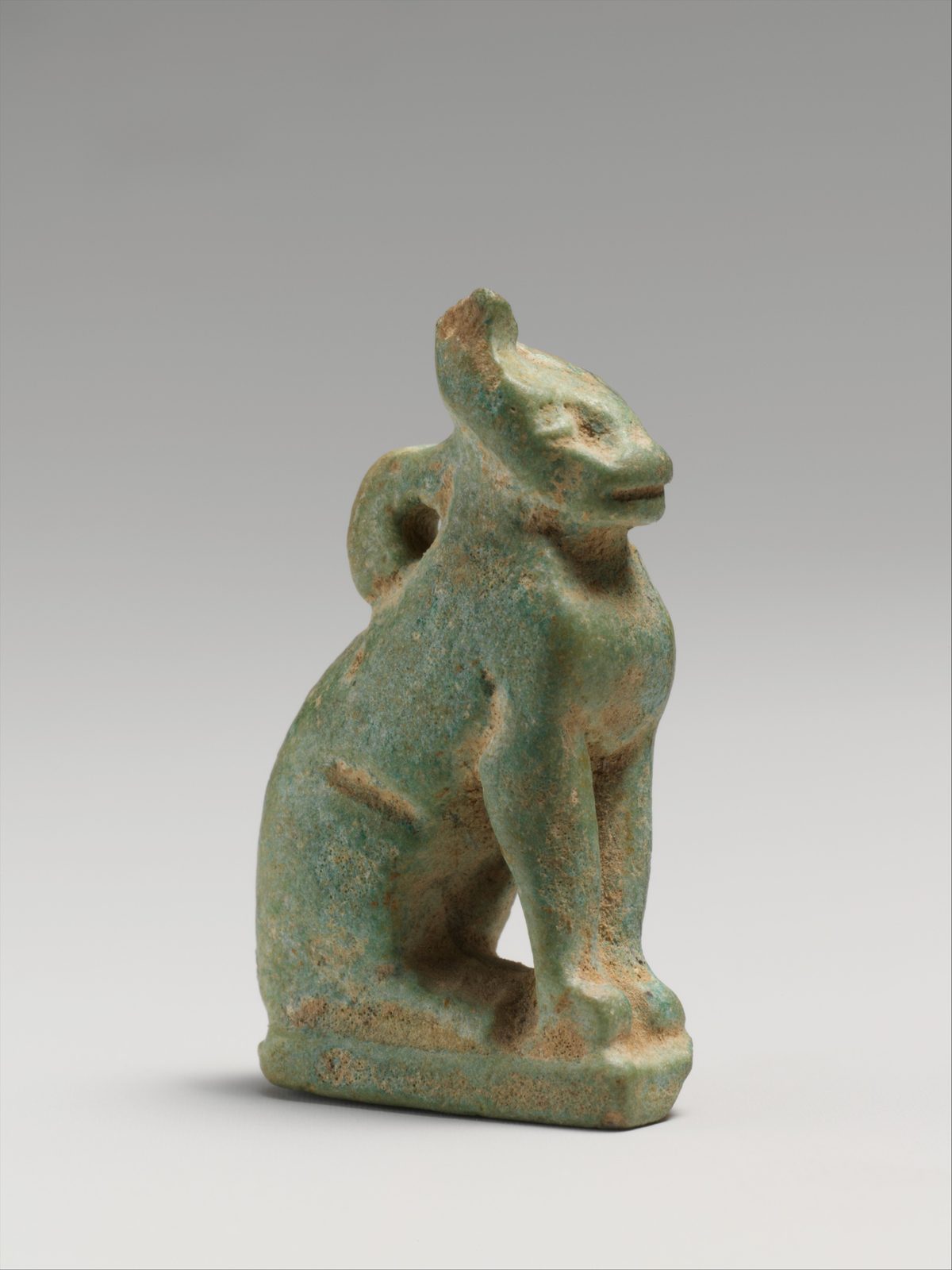
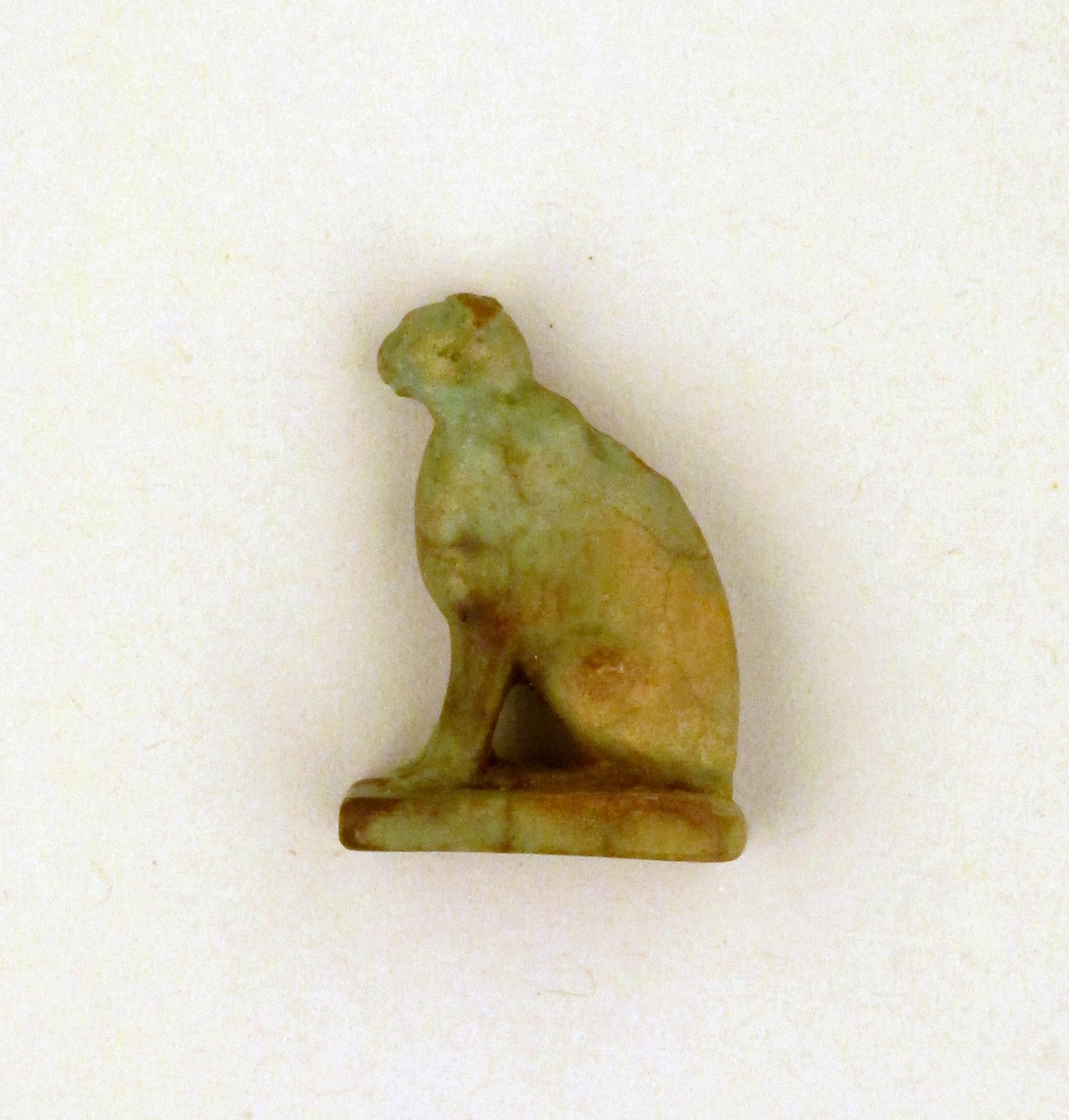
Amulet of a Seated Cat (the Goddess Bastet)
Ancient Egyptian
Third Intermediate-Late Period (?) (about 1069-332 BCE)
This blue-green faience amulet of a seated cat, the goddess Bastet, dates to about 1069 to 332 BCE.
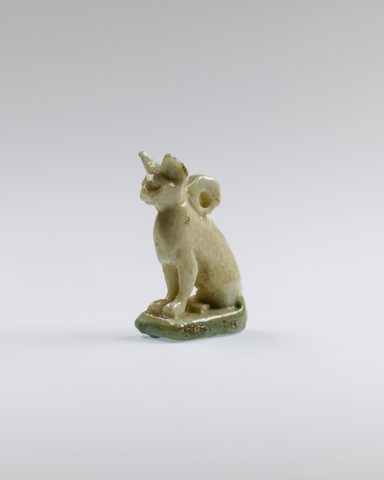
Cat amulet
Unknown maker, Egypt
664-525 BCE
The MetCC0
This faience cat amulet, small enough to hold between two fingers, was made in Egypt between 664 and 525 BCE.
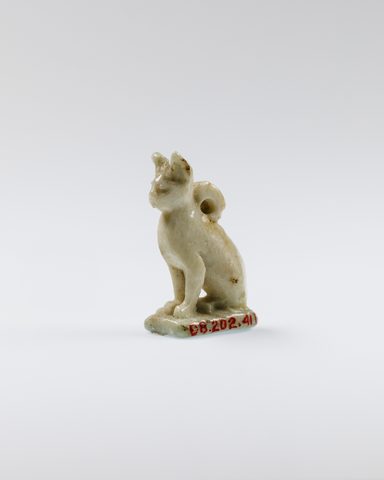
Cat amulet
Unknown maker, Egypt
664-525 BCE
The MetCC0
This little faience cat amulet comes from Egypt's Late Period, made between 664 and 525 BCE.
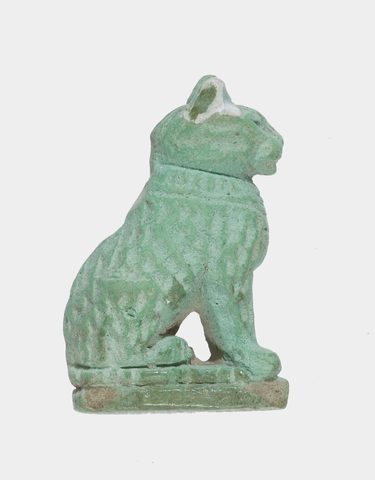
Cat amulet
Unknown maker, Egypt
664-380 BCE
The MetCC0
This little green faience cat amulet from Egypt dates to between 664 and 380 BCE.
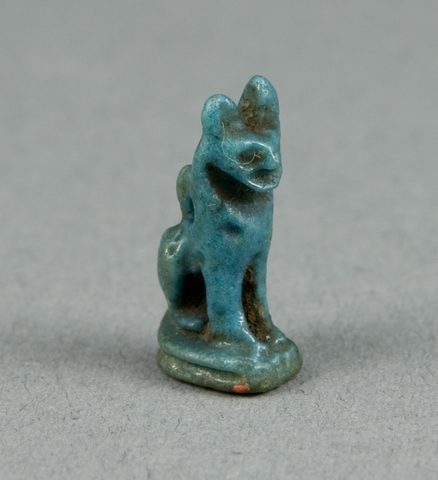
Amulet of the Goddess Bastet as a Seated Cat
Ancient Egyptian
Late Period-Ptolemaic Period (664-30 BCE)
This turquoise faience amulet shows the goddess Bastet as a seated cat and dates to Egypt's Late to Ptolemaic Periods, 664 to 30 BCE.
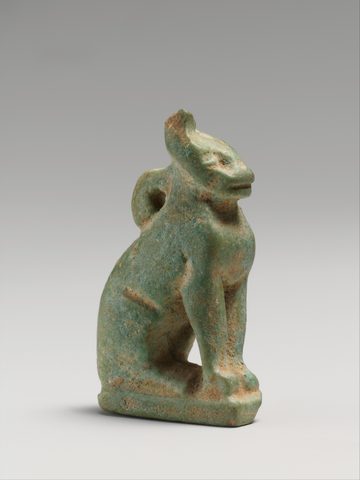
Faience amulet of a seated cat
Unknown maker, Egyptian
664-30 BCE
The MetCC0
This little glazed cat amulet from Egypt dates to sometime between 664 and 30 BCE, and its pointed ears still stand tall.
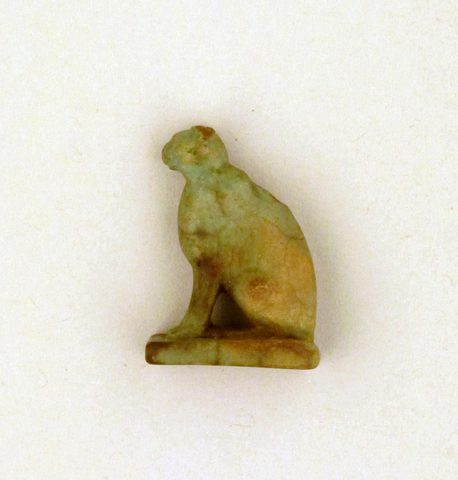
Faience amulet of a seated cat
Unknown maker, Egyptian or Levantin
664-30 BCE
The MetCC0
This faience cat amulet, listed as Egyptian or Levantine, has been sitting up straight since sometime between 664 and 30 BCE.
Cats in Egyptian scenes
A limestone relief of a cat in a papyrus marsh, and a 20th-century copy of a tomb painting in which a cat with a knife cuts into a serpent.
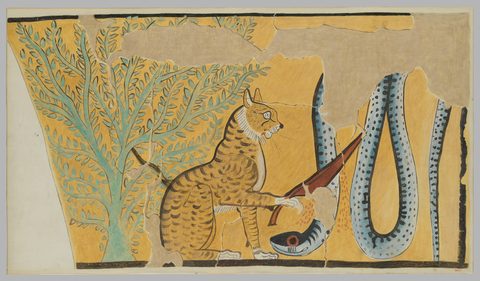
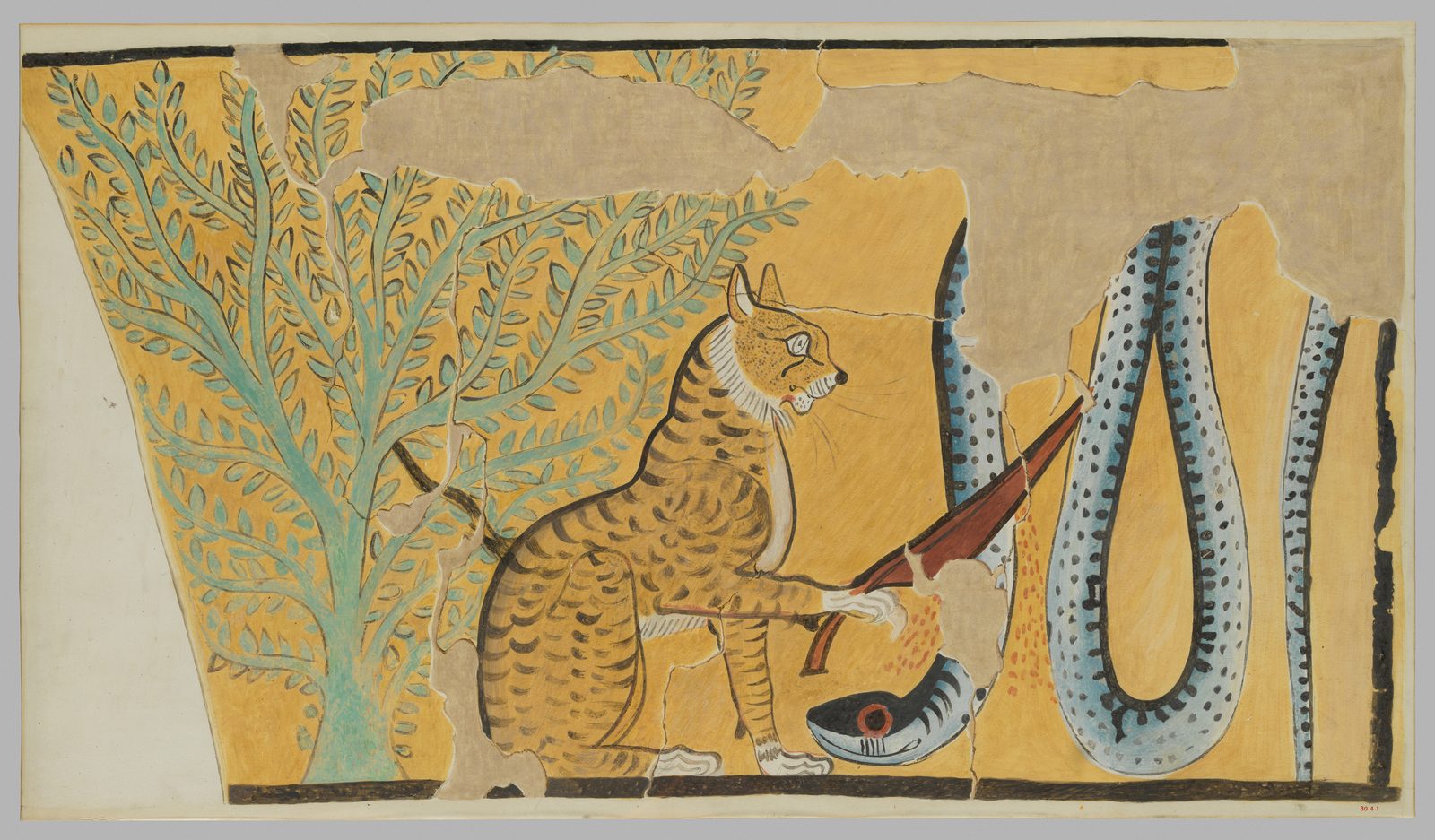
Wall painting of a cat killing a serpent
Charles K. Wilkinson
1920-1921; original ca. 1300-1224 BCE
The MetCC0
Charles K. Wilkinson copied this scene from Sennedjem's tomb (TT 1) at Deir el-Medina in 1920 to 1921; the original knife-wielding cat dates to about 1300 to 1224 BCE.
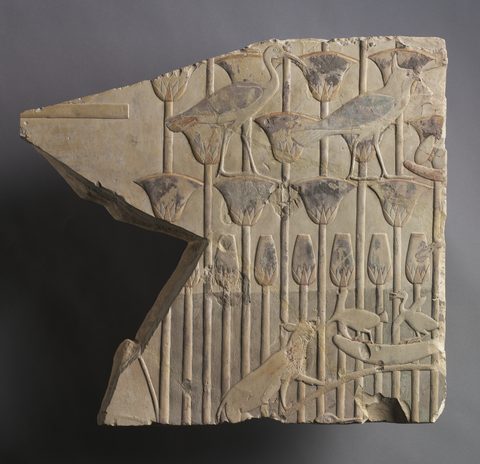
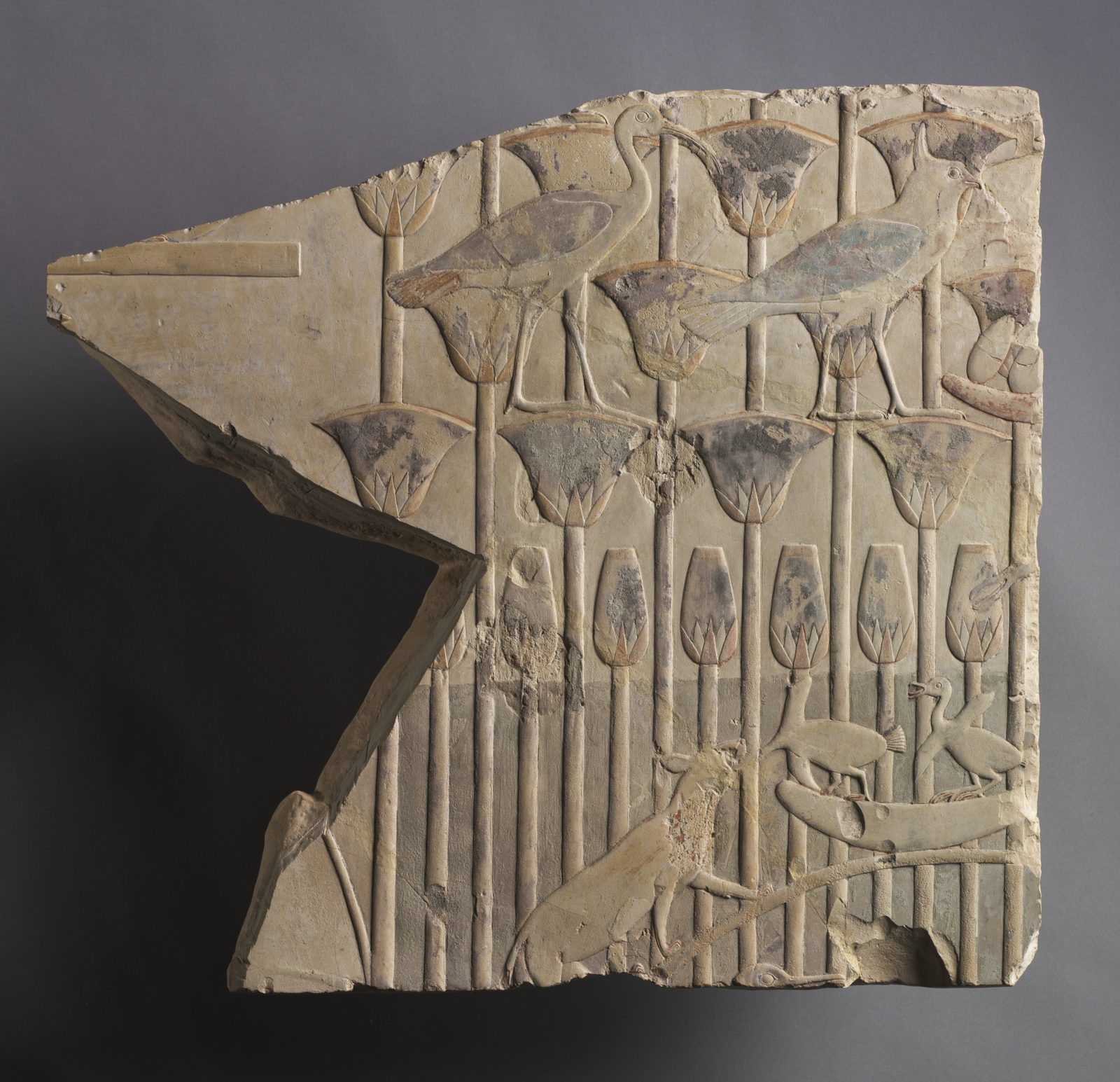
Marsh Scene with Cat and Birds
Unknown maker, Egypt
c. 667-647 BCE
Carved in limestone around 667 to 647 BCE, this Egyptian marsh scene shows a cat creeping up on birds in the papyrus.
About these pictures
The pictures come from the open-access collections of the Metropolitan Museum of Art1, the Art Institute of Chicago2 and the Cleveland Museum of Art3, which mark them CC04. Titles, artists and dates are copied from each museum's record, and the notes are mine, written from those records and the pictures. Tap a picture for a larger copy, or the museum's name for its full record.
More from the Cat Museum
- Guess the centuryTen artworks, four centuries each. Some of these cats are in the deck.
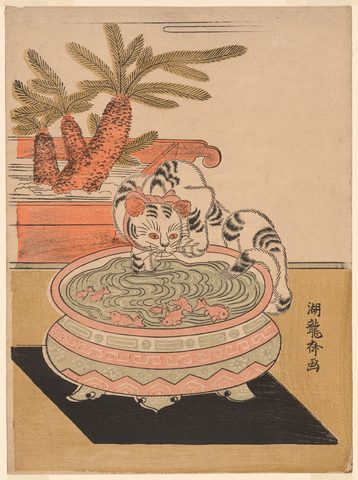 Japanese cat printsHarunobu, Koryusai and Kuniyoshi prints, netsuke and scrolls.
Pictured on the cards: Cat Pawing at Goldfish, Isoda Koryusai, c. early 1770s, Art Institute of Chicago, CC0.
Frequently asked questions
Are these all original ancient objects?
All but one. The wall painting of a cat killing a serpent is a copy that Charles K. Wilkinson painted in 1920 to 1921 from the tomb of Sennedjem at Deir el-Medina. The Met dates the original painting to about 1300 to 1224 BCE.1
Why do the dates cover such long spans?
Many of these records date an object to a period of Egyptian history rather than to a year. The Art Institute of Chicago, for example, dates its wooden cat coffin to the Late Period to the Ptolemaic Period, 664 to 32 BCE.2 The Cleveland bronze cat has two possible ranges in its record.

Christopher writes and runs Cat Trivia Games. Every picture here links to the museum record it comes from, and the sources are listed below. How the site is made and corrected is on the editorial policy page. More about the author.
References
- The Metropolitan Museum of Art. Open Access dataset, released under CC0; collection images covered by the policy carry the CC0 icon. back
- Art Institute of Chicago. Open Access Images: works believed to be in the public domain, under CC0. back
- The Cleveland Museum of Art. Open Access API: data released under CC0, with CC0 images for the works marked CC0. back
- Creative Commons. CC0 1.0 Universal (public domain dedication). back
Written by Christopher Fox under our editorial policy. Artworks and records belong to the museums named on each card; this site is not connected with them.