 Cat Trivia Games
iOS App
PERSONALITY QUIZ / BENGAL
The Bengal personality
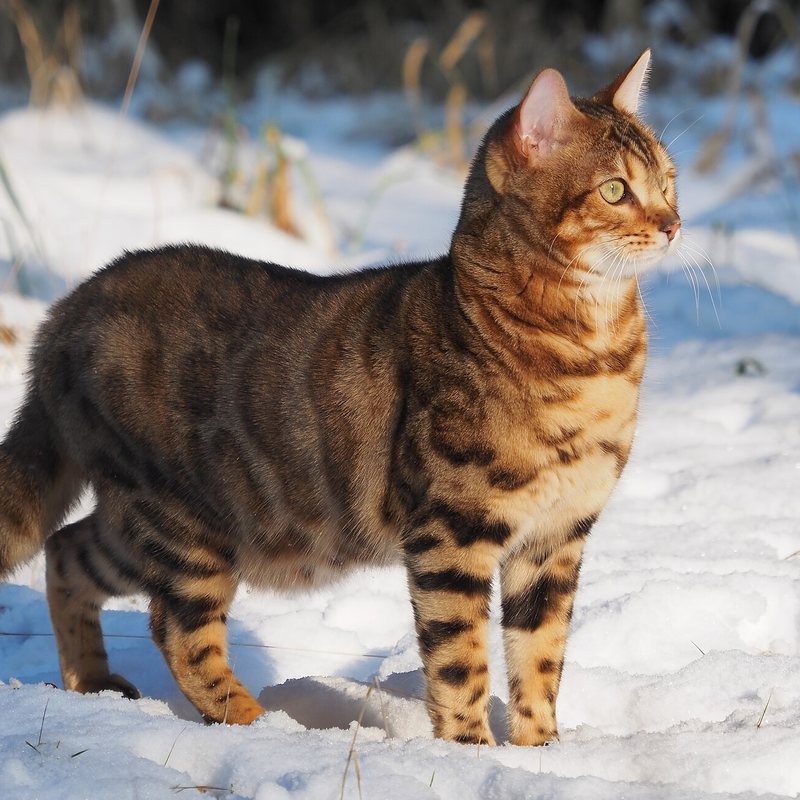
Bengals are often described as active, curious cats that enjoy play and exploration. They can need substantial attention and enrichment, but a breed label does not tell you exactly how one cat will behave. Background, socialization and the individual all matter.
Breed descriptions suggest tendencies, but individual cats vary. Some findings come from owner surveys or expert ratings rather than direct behavioral tests.
What is a Bengal like?
Breed profiles agree on energy and curiosity and differ on almost everything else. The Cat Fanciers' Association opens with confident, curious, and athletic, describes an affectionate, trainable cat, and says breeders made temperament a priority while developing the breed. VCA is more cautious and describes a demanding cat with a potentially challenging temperament. A breeder's selection, or a registry's description, is a tendency, not a promise about one kitten.
What the research found
A 2019 owner survey of 5,726 cats in Finland found the Bengal among the three most active breeds and grouped it with the Russian Blue in the cluster that scored highest for both extroversion and fearfulness (Salonen and colleagues, Scientific Reports). The authors also found Bengals ranked high in aggression, as some earlier studies had, though not all of them. Owner surveys describe averages across many cats, and the individual in front of you can be quite different.
Activity and play
Most sources describe a cat that needs plenty to do. PetMD says Bengals usually need a more stimulating environment than many domestic breeds and that boredom can lead to destructive behavior, and VCA describes a cat that likes high perches and learns to open doors and cabinets. PetMD mentions cat wheels, climbing, shallow water play, harness walks and trick training among popular activities.
Are Bengals lap cats?
Many are affectionate on their own terms. VCA describes a cat that wants interaction with its people and pets but rates it low as a lap cat, and PetMD says many Bengals do not like being held, though some curl up beside their people after a busy day.
Are Bengals talkative?
It varies. VCA rates the breed as very chatty, while CFA says Bengals are often considered talkative but that this is not true of every cat, with a great deal of variation from one to the next.
Bengals with children and other pets
The sources disagree here. CFA describes a cat that suits families with children and gets along with other pets when properly introduced. The veterinarian quoted by PetMD says many Bengals dislike being held and have a strong prey drive, so they may not suit families with small children, and that small or timid pets may not be good companions for them. Supervised, gradual introductions matter, and pets such as birds and rodents need to be kept safely apart.
Generations and registration
Bengals descend from crosses between domestic cats and the Asian leopard cat. PetMD explains the "F" numbers some sellers use: F1 is the first cross, and each later number is one more generation removed from it. CFA accepted the Bengal for registration in 2016 with a requirement of five generations of pure domestic ancestry, and advanced it to championship in 2018. PetMD says later generations tend to behave more like domestic cats, but a generation number does not guarantee a calm temperament or that a cat will suit a particular home. Rules on owning Bengals differ between places, so check the current local rules.
Everyday life with a Bengal
Daily play, climbing space, puzzle feeders and training are the usual suggestions. PetMD says a Bengal can live in an apartment when there is enough vertical space for exercise, such as cat trees, scratching posts and wall shelves, along with daily play. Size, coat and health screening are covered in the Bengal breed guide.
Just for fun
If this was your quiz result...
You like a day with plenty going on. You're quick to try something new, happy to stir things up a little, and often the one suggesting what to do next.
What this result means
In this quiz, this result represents answers that score high on energy, curiosity and mischief and low on lap factor.
The eight quiz traits
YouThe Bengal
Quiz scores, not scientific ratings.
Bengal personality FAQ
Do Bengal cats calm down with age?
Many stay playful. CFA describes Bengals keeping a kitten-like energy well into their senior years, and VCA says they take up to two years to reach physical maturity. Individual cats differ, and a sudden drop in activity at any age is worth a veterinary check.
Are Bengals good for first-time cat owners?
PetMD and VCA both describe Bengals as best suited to people with cat experience, because many need a lot of activity and attention. Before choosing any cat, consider the time you have for play and everyday care, and meet the individual cat.
Can a Bengal be left alone while I work?
That depends on the individual cat, its age, health, routine and the time involved. Plan for daily care and interaction, and respond to signs that the arrangement is not working. A second pet is not automatically the right solution.
Other profiles to explore
The three results whose quiz scores sit closest to the Bengal.
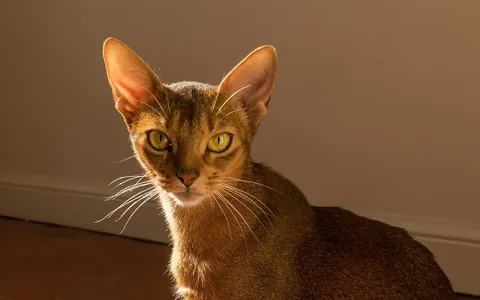
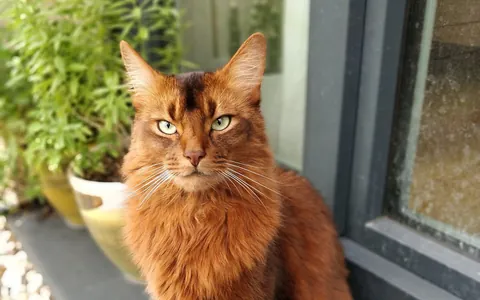
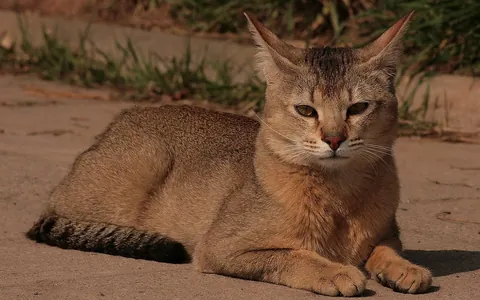
Breed photos: mostly Wikimedia Commons contributors under free licenses, cropped. Every photographer and license is on the photo credits page.
Sources
- Bengal, breed profile and standard, Cat Fanciers' Association
- Bengal, VCA Animal Hospitals
- Bengal cat breed profile, PetMD
- Breed differences of heritable behaviour traits in cats, Salonen M, Vapalahti K, Tiira K, Mäki-Tanila A, Lohi H. Scientific Reports 9:7949 (2019)