 Cat Trivia Games
iOS App
PERSONALITY QUIZ / RUSSIAN BLUE
The Russian Blue personality
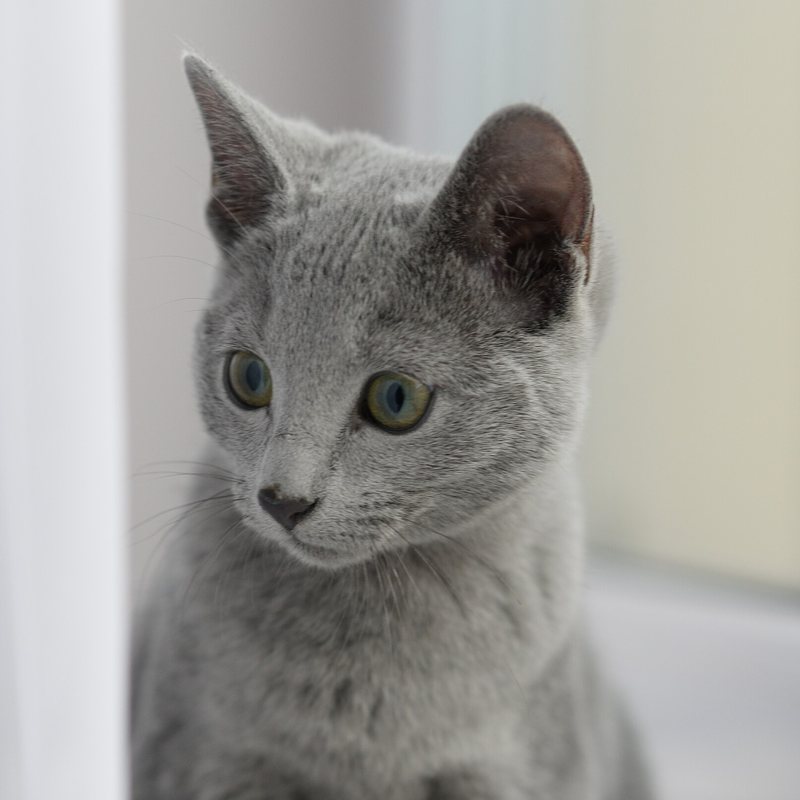
Russian Blues are often described as quiet cats that take time to become comfortable with unfamiliar people. Some are affectionate with their close companions and enjoy play or puzzle toys. Shyness, activity and interest in laps vary between individuals.
Breed descriptions suggest tendencies, but individual cats vary. Some findings come from owner surveys or expert ratings rather than direct behavioral tests.
What is a Russian Blue like?
Breed profiles describe a gentle, observant cat that warms up at its own pace. The Cat Fanciers' Association says a Russian Blue may seem shy at first and becomes a friendly, affectionate companion once it knows you, and VCA describes a cat that is not pushy but is devoted to its favorite people. The breeder quoted by PetMD describes a cat that offers affection on its own terms and in its own time.
What the research found
The studies do not line up neatly. In a 2019 owner survey of 5,726 cats in Finland, Russian Blues were the breed most likely to be shy with strangers and with new objects, and they were also highly active, which put them in one cluster with the Bengal (Salonen and colleagues, Scientific Reports). The authors note that the shyness finding contrasts with earlier studies. In a 2009 study in which Japanese veterinarians rated breeds, the Russian Blue was grouped with breeds rated higher in aggressiveness and sensitivity (Takeuchi and Mori). Small expert-rating studies and one country's owner survey are not enough to label a whole breed, and individual cats vary.
Play and puzzles
The PetMD breeder describes Russian Blues that will fetch a tossed toy again and again once they decide to play, and lists wand toys, small balls and bird watching from a window among popular activities. CFA describes a cat that is curious about closed cabinets and drawers and recommends puzzle toys and interactive games. PetMD adds that many like high places to watch from.
Are Russian Blues lap cats?
The sources disagree. CFA describes cats that look for a spot on your lap or even ride on your shoulder, and VCA rates the breed highly as a lap cat, while PetMD says Russian Blues are not known for being especially cuddly or clingy. Expect some cats to enjoy laps and others to prefer sitting nearby.
Are Russian Blues vocal?
Most are described as quiet. CFA lists "quiet" in its summary and PetMD calls the breed relatively quiet, though individual cats still meow, and the PetMD breeder describes cats that make their wishes known by waiting next to the treat cupboard.
Russian Blues with children, visitors and other pets
CFA suggests older children who let the cat take its time, and says many Russian Blues make friends with other animals. Visitors are often the hard part: CFA describes cats that hide when a guest arrives and come out to investigate later. Give a shy cat a quiet place to retreat and let it approach in its own time. Some individuals do well with children and other pets, but a breed label cannot guarantee it, so use gradual, supervised introductions.
Everyday life with a Russian Blue
PetMD describes a breed that likes routine and does not like change, and recommends set playtimes and a peaceful retreat in a busy household. CFA mentions a large appetite, so daily interactive play also helps keep weight in check. Size, coat and health notes are in the Russian Blue breed guide.
Just for fun
If this was your quiz result...
You take a while to open up, and that's fine with you. A few people know you well, and with them you're loyal, playful and better company than a first impression suggests.
What this result means
In this quiz, this result represents answers that score high on independence and low on chattiness, sociability and mischief.
The eight quiz traits
YouThe Russian Blue
Quiz scores, not scientific ratings.
Russian Blue personality FAQ
Are Russian Blues one-person cats?
Some bond most closely with one or two people. VCA describes a cat devoted to its favorite people, and the PetMD breeder describes affection offered in the cat's own time. Many still get along with the whole household.
Are Russian Blues smart?
Cats show different strengths in learning, play and problem-solving. Breed descriptions are not an intelligence test, and an individual cat may behave differently from its reputation. Many Russian Blues enjoy puzzle toys.
Can a Russian Blue be left alone while I work?
That depends on the individual cat, its age, health, routine and the time involved. Plan for daily care and interaction, and respond to signs that the arrangement is not working. A second pet is not automatically the right solution.
Other profiles to explore
The three results whose quiz scores sit closest to the Russian Blue.
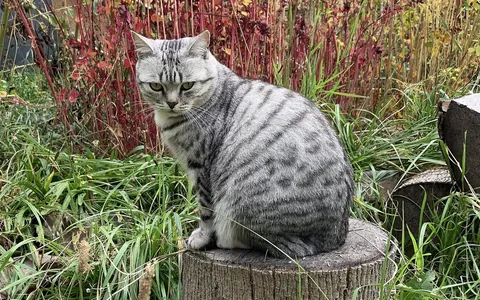
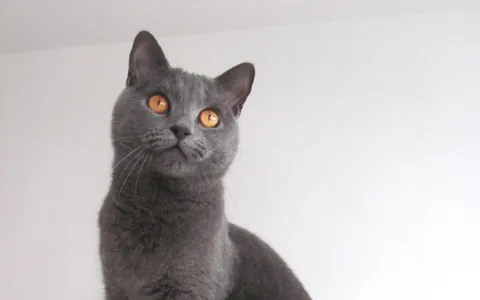
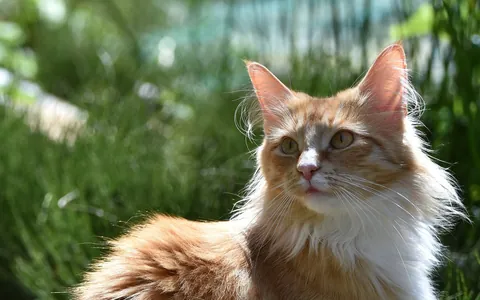
Breed photos: mostly Wikimedia Commons contributors under free licenses, cropped. Every photographer and license is on the photo credits page.
Sources
- Russian Blue, breed profile and standard, Cat Fanciers' Association
- Russian Blue, VCA Animal Hospitals
- Russian Blue cat breed profile, PetMD
- Breed differences of heritable behaviour traits in cats, Salonen M, Vapalahti K, Tiira K, Mäki-Tanila A, Lohi H. Scientific Reports 9:7949 (2019)
- Behavioral profiles of feline breeds in Japan, Takeuchi Y, Mori Y. Journal of Veterinary Medical Science 71(8):1053-1057 (2009)