 Cat Trivia Games
iOS App
PERSONALITY QUIZ / SIBERIAN
The Siberian personality
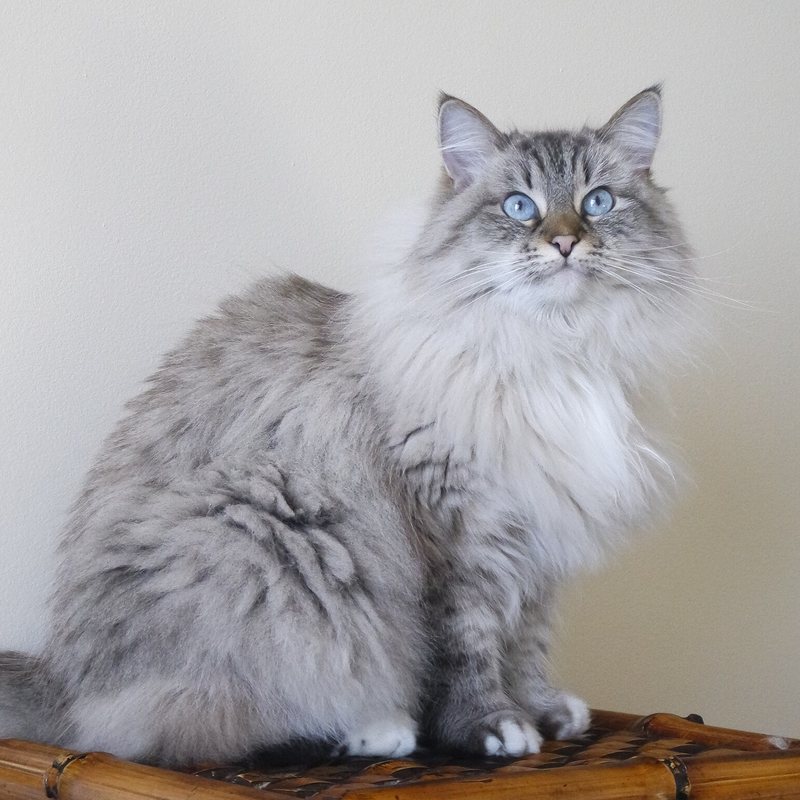
Siberians are often described as playful cats that also enjoy company. A large, slow-maturing body does not predict when an individual will become calmer or how much handling it will enjoy. Give it choices about play, rest and contact.
Breed descriptions suggest tendencies, but individual cats vary. Some findings come from owner surveys or expert ratings rather than direct behavioral tests.
What is a Siberian like?
Breed profiles describe a curious, sociable cat that likes to know what is going on. The Cat Fanciers' Association describes a cat that takes a keen interest in its surroundings and likes to investigate cupboards and suitcases, and calls the breed extremely intelligent, as befits a natural hunter, while adding that it is not overactive or intrusive. VCA describes a mellow, confident cat that is receptive to people, pets and visitors. The breeder quoted by PetMD describes cats that are "not too needy, but not too independent either", and stresses that personalities vary a lot: some Siberians mainly want to be with their people, and some are keen hunters.
Research adds little. In a 2019 owner survey of 5,726 cats in Finland, Siberians, grouped with the Neva Masquerade, fell into the large middle cluster that held most of the breeds studied (Salonen and colleagues, Scientific Reports).
Play and curiosity
VCA and PetMD both describe a capable climber that likes high perches, and the PetMD breeder mentions kittens with bursts of play early in the morning and again before bed. VCA describes cats that work out how to open cabinet doors and learn tricks readily. Wand toys, climbing spaces and puzzle feeders give that curiosity an outlet.
Growing up slowly
CFA describes the Siberian as a slow-maturing breed, with most reaching full size around three years of age. That is physical growth. It does not tell you when a particular cat will play less or settle down, which depends on the individual, its health and its surroundings.
Lap time and voice
VCA describes the breed as a good lap cat, and PetMD says a well-socialized Siberian often enjoys sitting with its family. CFA describes a cat that is attentive to its people and notes that Siberians are often sought as emotional support animals. Being sought for that role says something about their reputation, not about a proven therapeutic effect. Most profiles describe a quiet cat that purrs more than it meows, though the PetMD breeder says some chirp.
Siberians with children and other pets
CFA and VCA describe a cat that often gets along with children, dogs and other cats. Some individuals do well in those homes, but a breed label cannot guarantee compatibility. Consider the cat's history and behavior, supervise interactions and use gradual introductions.
Everyday life with a Siberian
The PetMD breeder says many Siberians do not enjoy being left alone for long periods. Height, puzzles and company matter: things to climb, things to investigate and daily play with their people. The coat, size, health screening and the allergy question are covered carefully in the Siberian breed guide.
Just for fun
If this was your quiz result...
You're curious and up for a game, but you also like time close to people you know. Your best days mix a bit of exploring with a long rest afterward.
What this result means
In this quiz, this result represents answers that score high on energy, affection and curiosity and low on chattiness and mischief.
The eight quiz traits
YouThe Siberian
Quiz scores, not scientific ratings.
Siberian personality FAQ
When do Siberian cats calm down?
There is no fixed age. CFA describes slow physical maturity, with most Siberians reaching full size by about three, but calmer behavior depends on the individual cat, its health and its routine. A sudden drop in activity at any age is worth a veterinary check.
Are Siberian cats smart?
Cats show different strengths in learning, play and problem-solving. Breed descriptions are not an intelligence test, and an individual cat may behave differently from its reputation.
Can a Siberian be left alone while I work?
That depends on the individual cat, its age, health, routine and the time involved. Plan for daily care and interaction, and respond to signs that the arrangement is not working. A second pet is not automatically the right solution.
Other profiles to explore
The three results whose quiz scores sit closest to the Siberian.

Breed photos: mostly Wikimedia Commons contributors under free licenses, cropped. Every photographer and license is on the photo credits page.
Sources
- Siberian, breed profile and standard, Cat Fanciers' Association
- Siberian, VCA Animal Hospitals
- Siberian cat breed profile, PetMD
- Breed differences of heritable behaviour traits in cats, Salonen M, Vapalahti K, Tiira K, Mäki-Tanila A, Lohi H. Scientific Reports 9:7949 (2019)