 Cat Trivia Games
iOS App
Siberian Cat Breed
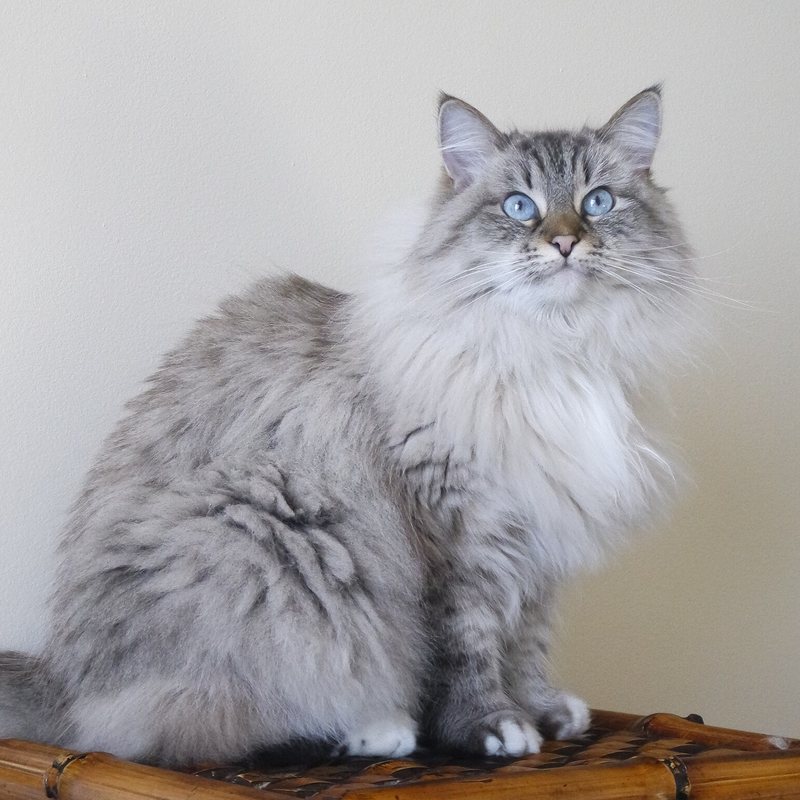

The Siberian is a muscular, longhaired cat with a dense coat that changes with the seasons. Many are described as sociable and playful. The breed is often advertised to people with cat allergies, but no breed label can guarantee that an individual cat will not trigger a reaction.
Quick facts
- Origin: Russia, where CFA dates the breed's recorded history to around the year 1000
- Size: large and slow to mature; CFA gives 12 to 18 pounds for mature males and 8 to 12 for females
- Life expectancy: 11 to 18 or more years (TICA); 10 to 18 years (PetMD)
- Coat: a thick triple coat in winter, shed for a shorter, less dense coat in summer
- Registries: first breeding cats imported to the US in 1990; CFA registration in 2000 and championship status in 2007
Temperament and daily life
CFA describes Siberians as sociable, curious and easygoing cats that want to be near their people and know what is going on, and that like to investigate cabinets, cupboards and suitcases. It also quotes owners who describe their cats as "90% placid and 10% mischief". Many are natural problem solvers. Many are quiet cats that purr more than they meow. Siberians are powerful jumpers, so sturdy cat trees and secure shelves are worth having. Many get on well with dogs, other animals and children, though introductions and the individual cat's temperament still matter.
Grooming and care
Siberian coats vary a great deal. CFA says some need a weekly grooming session to prevent mats while others can go weeks without one, and TICA suggests combing or brushing a couple of times a week, with more during the spring and fall sheds. A practical routine is to check the underside, tail and britches several times a week, where mats usually start, and gently tease small tangles apart with your fingers or the edge of a comb. International Cat Care advises against cutting mats out with scissors, because it is hard to tell where the skin ends and the hair begins; a tight or painful mat is a job for a veterinarian or qualified groomer.
Siberians and allergies
The main cat allergens are proteins from the skin's oil glands (Fel d 1) and saliva (Fel d 4), not the hair itself, and International Cat Care says all cat breeds produce allergens, although some cats produce more than others. Some breeders and registries describe the Siberian as hypoallergenic or low in Fel d 1. Treat that as a claim about some cats, not a promise about the one you are considering: no breed can be assumed safe for someone with a cat allergy. Spending time with a particular cat shows how you react to it that day, but it does not guarantee you will tolerate living with it. Only a doctor can diagnose a cat allergy, so talk to yours before you commit.
Health considerations
The Siberian is on the Cornell Feline Health Center's list of breeds in which hypertrophic cardiomyopathy (HCM) is more prevalent. HCM is diagnosed by echocardiography, and there is no recommended DNA test for it in Siberians: a 2024 review of feline HCM gene variants advises routine genetic testing only for one variant in Maine Coons and one in Ragdolls. Siberian breeders typically screen for HCM, polycystic kidney disease (PKD) and several recessive conditions.
UC Davis lists the Siberian among the breeds for its PKD1 and pyruvate kinase deficiency DNA tests. Each covers one variant, so ask a breeder which tests and heart checks the parents had and what the results mean. Dental disease and weight gain are worth watching too; a broad, barrel-shaped build is normal for the breed, and your veterinarian can help you judge a healthy weight.
History
CFA notes that the Siberian is considered the national cat of Russia, where farmers and tradesmen kept these cats for centuries and where versions of them appear in fairy tales. They became known outside Russia after cat shows began in England in the 1890s. The first breeding Siberians arrived in the United States in 1990, imported by Elizabeth Terrell for her Starpoint cattery. CFA accepted the breed for registration in 2000 and granted championship status in 2007.
Appearance
The Siberian is a large, powerful cat with a rounded, barrel-shaped body, heavily boned legs and strong hindquarters. The head is a broad modified wedge with a full, rounded muzzle, lustrous, almost round eyes and medium-sized, well-furnished ears. The semi-long coat is thick and full in winter and shorter and less dense in summer, and it comes in a wide range of colors and patterns, including pointed.
Before choosing a Siberian
Plan for regular coat checks and heavier grooming during the seasonal sheds, and for an active cat that likes to climb. If anyone in the home has a cat allergy, get medical advice before you commit rather than relying on the breed's reputation. Ask a breeder about heart screening and DNA tests, and meet the individual cat if you can.
Siberian FAQ
When is a Siberian fully grown? Later than many breeds. CFA says most Siberians reach full size by about three years of age, while TICA says the breed can take as long as five years to reach full maturity.
What is a Neva Masquerade? It is the name FIFe uses for pointed Siberian-type cats, which it shows as a separate breed under a shared Siberian and Neva Masquerade standard. CFA and TICA include pointed colors within the Siberian.
Sources
- Cat Fanciers' Association (CFA): Siberian
- The International Cat Association (TICA): Siberian
- PetMD: Siberian
- FIFe: Siberian and Neva Masquerade breed standard
- International Cat Care: allergies to cats and grooming your cat
- Cornell Feline Health Center: hypertrophic cardiomyopathy
- Boeykens F. et al. (2024), Classification of feline hypertrophic cardiomyopathy-associated gene variants. Frontiers in Veterinary Science
- UC Davis Veterinary Genetics Laboratory: PKD1 test and PK deficiency test
One question about the Siberian cat
The Siberian cat holds an unofficial cultural title in its homeland. What is it commonly called?
Answer: Russia's national cat. The Siberian is widely regarded as Russia's national cat, reflecting its centuries-long presence as the country's native forest-dwelling breed. Source