 Cat Trivia Games
iOS App
Cat Idioms and Their Origins
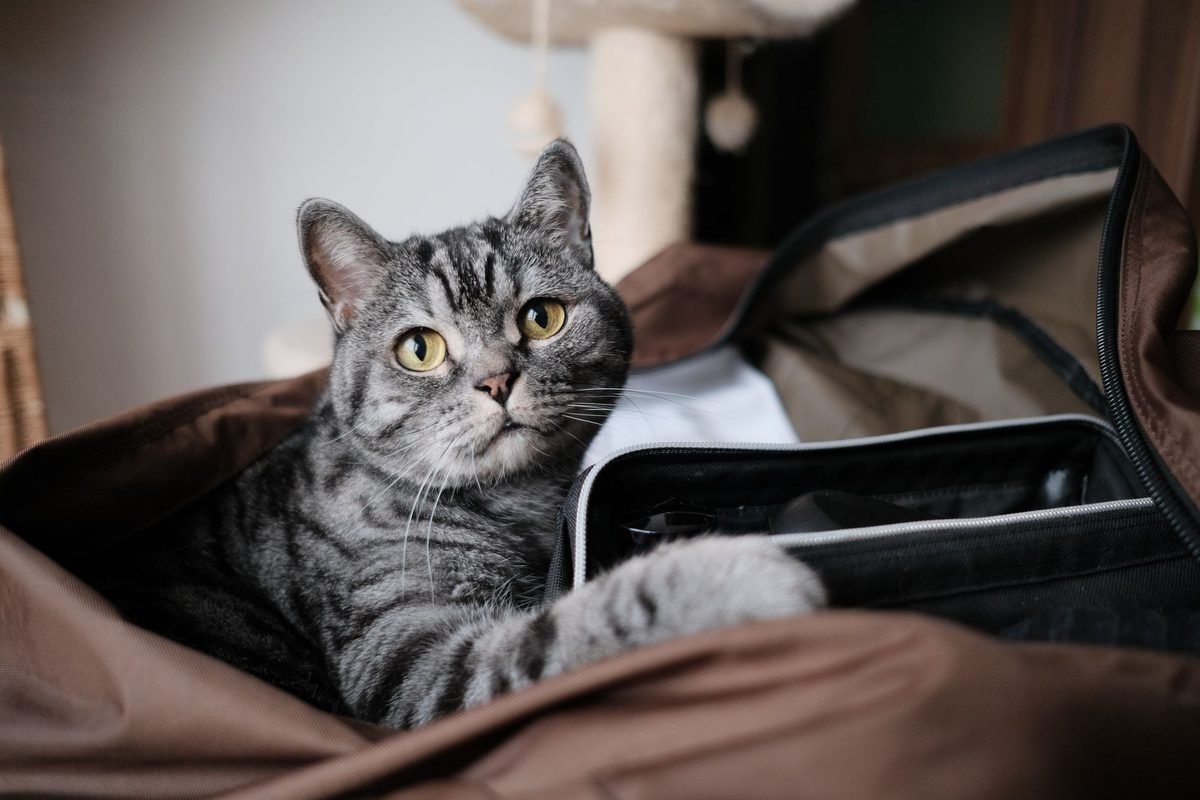
English cat idioms go back at least to 1546, when John Heywood printed "a cat may look at a king". "Curiosity killed the cat" began as "care will kill a cat", first recorded in 1598, when care meant worry. "Raining cats and dogs" is first printed in its modern form in 1738, "let the cat out of the bag" in 1760 and "the cat's pajamas" in 1918. Where "raining cats and dogs" comes from is unknown.
Cat idioms by earliest record
Each date is the earliest record I found, and earlier uses may yet turn up, as David Wilton of Wordorigins.org notes for the cat's meow and the cat's whiskers.1
| Idiom | Earliest record | Where it appears | Source |
|---|---|---|---|
| A cat may look at a king | 1546 | John Heywood's proverbs: "What, a cat maie looke on a kyng, ye know" | 2 |
| Care will kill a cat | 1598 | Ben Jonson, Every Man in His Humour | 34 |
| It shall rain dogs and polecats | Printed 1653 | Richard Brome, The City Wit, probably first staged 1629 to 1631 | 5 |
| No room to swing a cat | 1665 | Richard Kephale, Medela Pestilentiae | 6 |
| Rain cats and dogs | 1738 | Jonathan Swift, Polite Conversation | 7 |
| Let the cat out of the bag | 1760 | The London Magazine | 8 |
| Grin like a Cheshire cat | By 1788 | Francis Grose's slang dictionary, second edition: "said of any one who shews his teeth and gums in laughing". Made famous by Lewis Carroll's Alice's Adventures in Wonderland (1865). | 910 |
| A cat's paw | 1760 to 1770 | Linked to La Fontaine's fable of a monkey using a cat's paw to pull roasted chestnuts from a fire. Grose (1788): "a tool or instrument to accomplish the purpose of another". | 119 |
| Catnap | 1815 to 1825 | An Americanism | 11 |
| Cat got your tongue? | December 1859 | The Racine Democrat, Wisconsin | 12 |
| Curiosity killed the cat | 1873 | James Allan Mair, A Handbook of Proverbs, listed as Irish | 13 |
| Copycat | 1895 to 1900 | An Americanism | 11 |
| The cat's pajamas | February 1918 | The Pageland Journal, South Carolina | 14 |
| The cat's meow | May 1921 | Pirate Piece, a US Army unit newsletter, per the Oxford English Dictionary; the earliest Wilton could verify is in the State Times, Baton Rouge, September 11, 1921 | 1 |
| The cat's whiskers | April 12, 1922 | The cartoon Noozie, Sunshine Kid, Daily Herald, Gulfport, Mississippi | 1 |
| Fat cat | 1925 to 1930 | An Americanism, first meaning a rich contributor to a political campaign | 11 |
Let the cat out of the bag
To let the cat out of the bag is to give away a secret. Gary Martin of The Phrase Finder finds it first in The London Magazine in 1760: "We could have wished that the author... had not let the cat out of the bag." He reads the quotation marks around most uses in the 1760s and 1770s as a sign the phrase was new.8
The usual explanation is a market trick. A merchant sells a worthless cat in a bag as a valuable pig, and the buyer finds out only on opening the bag at home, as with "a pig in a poke".15 Martin finds pigs in pokes by 1530.8 German keeps both halves: die Katze im Sack kaufen, to buy the cat in the sack, means buying something unchecked, and die Katze aus dem Sack lassen, to let the cat out of the sack, means revealing a plan you had kept quiet.16
No document proves the market story.8 Michael Quinion of World Wide Words doubts that even the most gullible buyer would mistake a cat for a piglet; he suspects the real explanation is lost.17 Both doubt that the cat was a cat-o'-nine-tails whip kept in a bag: Martin says it does not fit the meaning of disclosing a secret, and Quinion notes that floggings were made as public as possible.817
Curiosity killed the cat started as care
Care in the original proverb meant worry or sorrow.4 In Ben Jonson's Every Man in His Humour, probably first acted in the summer of 1598, the water-bearer Cob says "hang sorrow, care'll kill a cat" in the revised 1616 text; the earlier version, set in Florence, has "care will kill a cat".3 Shakespeare used it soon after in Much Ado About Nothing: "What though care killed a cat? Thou hast mettle enough in thee to kill care."18
Sources disagree on when curiosity replaced care. The American Heritage Dictionary of Idioms gives O. Henry's story "Schools and Schools" (1909) as the first recorded use,15 but his sentence, "Curiosity can do more things than kill a cat", plays on the proverb.19 Martin's earliest example is from The Galveston Daily News in 1898: "It is said that once 'curiosity killed a Thomas cat.'"4
The oldest curiosity version I found is in James Allan Mair's A Handbook of Proverbs (London, 1873), which tags each proverb by country. "Curiosity killed the cat" is Irish there, "Care killed a cat" English and "Care will kill a cat; but ye canna live without it" Scottish.13
The happy ending came later. Martin's first printed example of "Curiosity killed the cat, / But satisfaction brought it back" is in The Titusville Herald, a Pennsylvania newspaper, in December 1912.4
Quick quiz: how well do you know cat history?
In early agricultural settlements, young wildcats were primarily valued for controlling which agricultural pest?
Answer: Rodents attracted to grain stores. Young wildcats caught by early farming communities were put to work hunting the rodent populations that thrived around grain storage facilities, making them valuable partners in protecting stored food from spoilage and theft. Source
In the Irish tale of Seanchan and the King of the Cats, who ultimately saves the bard from the giant cat Irusan?
Answer: Saint Ciaran. According to the tale, Saint Ciaran of Clonmacnoise intervenes and kills Irusan, rescuing the bard Seanchan from the vengeful cat king. Source
In the Usugumo legend, what belief caused the brothel owner to kill Usugumo's cat?
Answer: Demonic possession. According to the Usugumo legend, rumors spread that Usugumo was bewitched by a demonic cat. The brothel owner, believing these superstitious rumors, killed the cat. However, the cat's heroic sacrifice was later revealed when its severed head bit a giant snake lurking in the toilet, saving Usugumo's life and proving the cat's devotion rather than any evil possession. Source
Raining cats and dogs, and polecats
The usual first record of the idea is a joke in Richard Brome's comedy The City Wit, where the pedant Sarpego calls down a flood in mangled Latin and Greek: "Regnabitque, and it shall raine Dogmata Polla Sophon, Dogs and Polecats, and so forth." Notes in the Richard Brome Online edition explain that he mistranslates regnabit, "shall reign", as rain, and that the Greek polla, "many", turns the cats into polecats.5
The earliest surviving text is from 1653, but most commentators date the first performance to 1629 to 1631, and the same notes say Brome's twist suggests the phrase was not completely new even then.5
Jonathan Swift wrote dead cats into a storm in October 1710 and printed the modern phrase in 1738. His poem "A Description of a City Shower", first printed in The Tatler, ends with London's torrents carrying "Drown'd puppies" and "Dead cats".20 Quinion suggests Swift may later have been quoting his own expression.21 In Polite Conversation, Lord Sparkish says: "I know Sir John will go, tho' he was sure it would rain Cats and Dogs."7
Polite Conversation may be decades older than its 1738 date. Its 1892 editor, George Saintsbury, judged it was composed as the "Essay on Conversation" Swift noted as written or planned in 1708 to 1710.7
What the image meant is unknown. The American Heritage Dictionary of Idioms suggests gutters overflowing with sewage, garbage and dead animals,15 though Martin notes that dead animals would have been seen in dry weather too.22 The tale of animals sliding off thatched roofs, revived by a "Life in the 1500s" email circulating since 1999, does not hold up: dogs did not live in thatch.22 Quinion's reference books favor a mythological origin, with cats tied to storms and dogs to the Norse god Odin, but he found no evidence for it.21 True or False Cat Facts checks 30 more popular cat claims.
Cat got your tongue, and the cat's pajamas
Both first turn up in American newspapers. Martin's earliest "cat got your tongue" is from a Wisconsin paper in December 1859: "Oh ho! The cat got your tongue has it?"12 It was first said mainly to a child who had misbehaved and would not answer.15 Stories tie it to the cat-o'-nine-tails or to tongues fed to cats in ancient Egypt, but Martin finds "no shred of evidence" for either.12
The cat's pajamas means something excellent, as do the cat's meow and the cat's whiskers. Martin's earliest example is from a South Carolina paper in February 1918: "Wouldn't that beat the cat's pajamas?"14 Wilton's earliest is in the July 17, 1919 unit newspaper of the US Army's 21st General Hospital in Denver.1 By July 1921 it was also a dance, in a Brooklyn Daily Eagle headline: "'Cat's Pajamas' New Dance, Not Nightie, Lands Two in Jail."23
Who coined the cat's pajamas is disputed. Green's Dictionary of Slang credits the US sportswriter T. A. "Tad" Dorgan (1877 to 1929).23 Wilton writes that Dorgan used the cat's meow but did not originate it,1 and Martin notes that the 1918 and 1919 examples are not Dorgan's.14 The word pajamas entered English in 1870 to 1875, from a Hindi word built on Persian pāy, "leg", and jāma, "garment".11
Frequently asked questions
Did the cat-o'-nine-tails whip give us any of these sayings?
No evidence shows that it did. The Penguin Dictionary of English Idioms (2001), quoted by Quinion, traces "no room to swing a cat" to the whip, but Kephale called it "the vulgar saying" in 1665, and Quinion knows of no mention of the whip by that name before William Congreve's play Love for Love in 1695.6
Where does the idea of a cat's nine lives come from?
It is in print by 1546, when a husband in Heywood's proverbs tells his wife that "a woman hath nyne lyues lyke a cat".2 In Romeo and Juliet, Mercutio calls Tybalt "Good king of cats" and wants "nothing but one of your nine lives".24 Grose's 1788 slang dictionary says cats, "according to vulgar naturalists, have nine lives, that is one less than a woman."9 The number changes from country to country, as 9 Cat Myths Explained shows.
Do other languages have the same cat idioms?
Some do. German says in der Nacht sind alle Katzen grau, "at night all cats are gray", and wenn die Katze aus dem Haus ist, tanzen die Mäuse, "when the cat is out of the house, the mice dance".16 Mair's 1873 handbook lists "A' cats are grey i' the dark" as Scottish and "When the cat's away, the mice play" as English.13
Up next
 Cat Facts9 Cat Myths ExplainedNine lives, landing on their feet and seven more claims checked.
 Cat FactsBlack Cat Facts, Trivia Questions and AnswersWhere black cat luck, good and bad, came from.
 Cat FactsCat Riddles With Answers: 40 for Kids and Grown-Ups40 riddles, from easy ones for kids to wordplay for grown-ups.
Christopher writes and runs Cat Trivia Games. The sources for this article are listed below, and how the site is made and corrected is on the editorial policy page. More about the author.
References
- David Wilton, Wordorigins.org, April 29, 2024. cat's pajamas / whiskers / meow. back
- John Heywood, A dialogue conteinyng the nomber in effect of all the prouerbes in the englishe tongue, Thomas Berthelet, London, 1546, transcribed in the Textbase of Early Tudor English, University of Otago. A Dialogue of Proverbs. back
- Ben Jonson, Every Man in His Humour, Project Gutenberg: the revised London text, with an introduction on the play's first performance (eBook 5333) and the earlier text set in Florence (eBook 3694). back
- Gary Martin, The Phrase Finder. Curiosity killed the cat. back
- Richard Brome Online, The City Wit, edited by Elizabeth Schafer, Royal Holloway, University of London, 2010: Act 4, with notes, textual introduction and critical introduction (provenance and dating). back
- Michael Quinion, World Wide Words. No room to swing a cat. back
- Jonathan Swift, Polite Conversation in Three Dialogues, edited by George Saintsbury, Chiswick Press, 1892, via Project Gutenberg. Text and editor's introduction. back
- Gary Martin, The Phrase Finder. Let the cat out of the bag. back
- Francis Grose, A Classical Dictionary of the Vulgar Tongue, second edition, S. Hooper, London, 1788, via the Internet Archive. Scanned book (entries CAT'S FOOT, CAT'S PAW and CHESHIRE CAT). back
- Gary Martin, The Phrase Finder. Grinning like a Cheshire cat. back
- Dictionary.com, from the Random House Unabridged Dictionary and The American Heritage Idioms Dictionary. cat's-paw, catnap, copycat, fat cat and pajamas. back
- Gary Martin, The Phrase Finder. Cat got your tongue? back
- James Allan Mair, A Handbook of Proverbs: English, Scottish, Irish, American, Shaksperean, and Scriptural, Routledge, London, 1873, pages 22, 33, 34 and 77, via the Internet Archive. Scanned book. back
- Gary Martin, The Phrase Finder. The cat's pajamas. back
- Dictionary.com, idioms from The American Heritage Idioms Dictionary. let the cat out of the bag, curiosity killed the cat, rain cats and dogs and cat got one's tongue. back
- Duden. Katze (idioms and sayings). back
- Michael Quinion, World Wide Words. Let the cat out of the bag. back
- Folger Shakespeare Library. Much Ado About Nothing, Act 5, scene 1. back
- O. Henry, Options, Project Gutenberg. Options, including "Schools and Schools". back
- The Poems of Jonathan Swift, D.D., Volume 1, Project Gutenberg. A Description of a City Shower. back
- Michael Quinion, World Wide Words. Raining cats and dogs. back
- Gary Martin, The Phrase Finder. Raining cats and dogs. back
- Jonathon Green, Green's Dictionary of Slang. cat's pyjamas. back
- Folger Shakespeare Library. Romeo and Juliet, Act 3, scene 1. back
Written by Christopher Fox under our editorial policy.