 Cat Trivia Games
iOS App
Félicette: The First Cat in Space
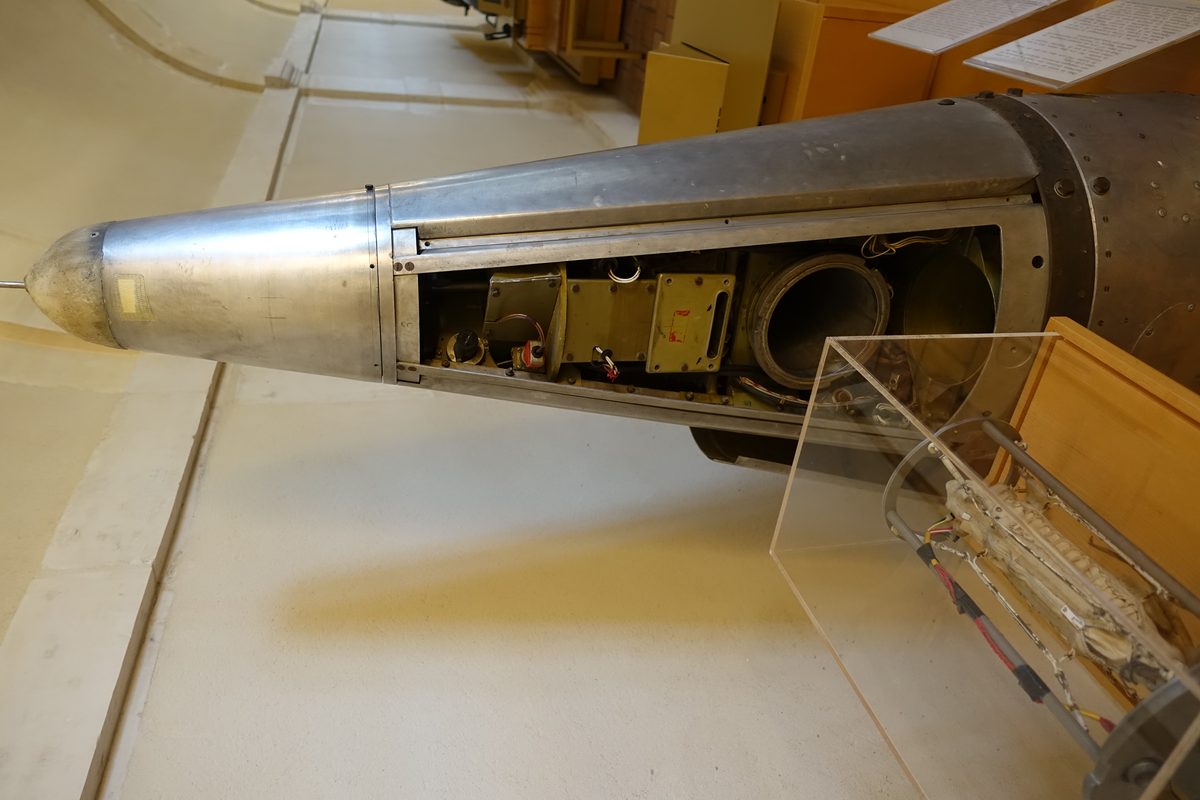
The first cat in space was Félicette, a black-and-white female launched by French researchers on 18 October 1963. A Véronique rocket carried her from the Algerian Sahara to about 154 km. She spent around five minutes weightless and parachuted back alive roughly 13 minutes after liftoff. About two months later she was euthanized so scientists could study her.
The flight on 18 October 1963
Félicette lifted off from the Interarmy Special Vehicles Test Centre at Hammaguir, in the Algerian Sahara, at 8:09 a.m. by one French account.1 She rode Véronique AGI sounding rocket 472 on a suborbital flight: straight up past the edge of space and back down.3
By Guinness World Records' account, she crossed the atmospheric boundary at 9.5 g, around double the force Apollo astronauts would later feel, and fell back at 7 g. Her capsule landed upside down under its parachute, and the scientists who opened it found her "completely unharmed, though slightly terrified."4 A helicopter brought the cat and her capsule back.5 Two days later the Sydney Morning Herald ran the headline "Space Cat Back Alive."9
A second French cat flew on 24 October 1963, a flight NASA's history of animals in space says "ran into difficulties that prevented recovery."2 Space.com reports that the rocket veered off course and the cat was found dead a day later.6 Smithsonian Magazine calls Félicette the only cat to have survived a trip to space.7
Where the published figures differ
Retellings disagree on most of these figures.
| Detail | Figure used here | Other figures in print |
|---|---|---|
| Launch date | 18 October 1963 (NASA, Guinness, the 2018 IAC paper)238 | 24 October (Gizmodo, 2017), the second cat's flight date per NASA; 21 October (CBC, 2020)910 |
| Liftoff time | 8 a.m. (Guinness)4 | 8:09 a.m. (Numerama)1 |
| Peak altitude | 154 km (Guinness); 157 km (Space.com, 2017); more than 150 km (Nautilus, 2026)3115 | 130 miles, about 209 km (Gizmodo; Space.com, 2026); 200 km (CBC)9610 |
| Whole flight | 13 minutes (Guinness, CBC, National Space Centre)41012 | 15 minutes (Space.com, 2017; Smithsonian); about 10 minutes (Numerama; Slate.fr)117113 |
| Weightlessness | About 5 minutes (Guinness, National Space Centre, Nautilus, Numerama)41251 | None found |
| Forces | 9.5 g going up (Guinness; Space.com, 2017); 7 g coming down (Guinness)411 | None found |
| Euthanized | About two months after the flight (Guinness, Nautilus)35 | "A few months" (Smithsonian); 2 or 3 months (Purr 'n' Fur); "in 1964" (Numerama)7141 |
Fourteen cats, numbered instead of named
France came to cats by way of a rat. On 22 February 1961 a Véronique AGI V24 rocket made France the third country to launch an animal into space: a rat called Hector, whose brain and muscle activity was recorded in flight. Professor Robert Grandpierre, founder of the aviation medicine center CERMA, then "quickly went for bigger animals."8
In 1961 CERMA staff gathered 14 cats and gave them numbers instead of names, so the scientists would not get attached.3 Guinness calls them strays, but CBC says it is unclear whether Félicette came from a pet shop or the streets of Paris.310 She was a black-and-white tuxedo, a bicolor pattern rather than a breed, designated C341.4
Training meant confinement, noise and acceleration. The cats spent long periods in tight containers and rode a centrifuge that simulated launch and re-entry while electrodes monitored their brains.4 For one to two hours a day they sat boxed in a cabin that played rocket noise.13
Six cats made the shortlist the day before launch, chosen for staying calm in the tests, and Félicette was picked on the day.13 The statue campaign's video credits her calm disposition and adds that, by some reports, the other cats had all put on too much weight.11 One candidate did get a name. Purr 'n' Fur, a cat history site, says Scoubidou had her implanted electrode removed after it deteriorated from polarization, then became the laboratory mascot and was adopted by a secretary.14
What the flight measured
The main subject was her brain. Implanted electrodes tracked its neuron activity in flight,15 and others around her body monitored her breathing and heart rate.7
By most accounts she came through well. Her sensors showed she was not too badly affected, apart from some heart trouble on the way down.12 French archives cited by Nautilus say she stayed calm throughout, which the scientists credited to her training, and ate and behaved normally afterward.5 CERMA said she had made "a valuable contribution to research."9
About two months later she was euthanized so scientists could study the flight's effects on her body. Guinness World Records reports that the autopsy produced no useful information beyond showing that brain activity could be monitored remotely.3
Quick quiz: how well do you know cat history?
Feline veterinary behavior specialists generally advise against attempting to socialize a feral kitten past what age, citing risks to the kitten's emotional wellbeing?
Answer: About 4 months old. A FelineVMA position statement cautions that trying to socialize feral kittens beyond roughly four months of age can be more stressful than helpful, since the early sensitive period for accepting handling has largely closed by then. Source
For the 2019 film Cats, director Tom Hooper's visual effects team developed a technique that merged live-action footage of actors with CGI fur. What was this technique called?
Answer: Digital fur technology. Hooper's team pioneered what they called digital fur technology, merging on-set actor footage with CGI rather than using traditional motion capture. Source
Geneticist Carlos Driscoll's landmark cat domestication study found that house cats are descended from which wildcat subspecies?
Answer: Felis silvestris lybica. Driscoll's team showed domestic cat DNA clustered with Felis silvestris lybica, the Near Eastern wildcat, rather than the European, Chinese, or southern African wildcat subspecies. Source
Félix or Félicette: the naming story
Her name came after the flight. The press called her Astro-Cat, or Félix after the silent-era cartoon cat, and assumed she was male. The scientists corrected them, and the female cat became Félicette.4 Her name is the answer to one of the 220 cat trivia questions and answers.
Another story says a tomcat named Félix was chosen first but went missing on launch day, so Félicette replaced him. Gizmodo told it in 2017, and Space.com repeats it in its October 2026 anniversary piece.96 Gérard Chatelier, named as chief medical doctor in a 2018 International Astronautical Congress paper,8 told Purr 'n' Fur in 2014 that there never was a cat called Félix and that he did not know where the tale came from.14
The name Félix still made it onto stamps. Comoros in 1992, Chad in 1997 and Niger in 1999 issued stamps naming her Félix, all with a long-haired cat, though Félicette was short-haired.14
The statue at the International Space University
The memorial started in a workplace kitchen. Matthew Serge Guy, then a creative director in London, found a towel there printed with the space cat but not her name, and looked her up.112 He opened a Kickstarter campaign in October 20177 for a bronze statue in Paris.11 Its video made the case in three lines: "The first chimp in space is buried at the International Space Hall of Fame. The first dog in space is immortalized in bronze. The first cat has nothing."11 Atlas Obscura counts 1,141 backers and about $56,000; Smithsonian Magazine says more than 1,100 patrons gave $57,000.157
Paris fell through: a suitable public site was harder to find than expected. With help from the French space agency CNES and the European Space Agency, the statue went to the International Space University instead, into its Pioneer's Hall alongside a bust of Yuri Gagarin.16
The design changed too. Guy first pictured Félicette on top of her Véronique rocket, but at true scale the podium would have been "a very narrow pole" a cat could barely fit on. He also said a rocket base felt "in some ways insensitive," because "Félicette was literally placed into the tip of a rocket against her will." The British sculptor Gill Parker suggested a globe instead.16 The finished bronze, cast by Sculpture Castings in Basingstoke, shows her sitting on the Earth, looking up at the stars.10
The statue was unveiled on 18 December 2019, during the 25th anniversary of the university's Master of Space Studies program.7 Astronauts Helen Sharman, Paolo Nespoli and Reinhold Ewald attended, with Philippe Jung, co-author of the 2018 congress paper on Félicette.10 Sources differ here too: CBC gives its height as about 170 cm and Smithsonian as five feet, and Guinness World Records dates the statue to January 2020.1073
Frequently asked questions
Why did France send a cat instead of a dog or a monkey?
Countries such as Russia mainly used dogs, but France opted for cats.3 The UK's National Space Centre links the choice to French neuroscientists already studying brain activity in cats, who could then see how it changed in space.12 After the two cat flights, CERMA switched its research to monkeys.6
Has any other cat been sent to space?
Space.com counts two cats that have flown on a rocket, both French.6 Iran was reported in 2013 to be planning a cat launch, but by Space.com's account it never happened.6 In late 1958 American newspapers reported a Brazilian Army plan to launch a tomcat named Flamengo. A Brazilian reader later told Purr 'n' Fur that the project was dismantled after protests and the cat never flew.14
Up next

Christopher writes and runs Cat Trivia Games. The sources for this article are listed below, and how the site is made and corrected is on the editorial policy page. More about the author.
References
- Nelly Lesage, Numerama, November 17, 2017. Félicette, la première chatte revenue de l'espace, va avoir une statue à son effigie (in French). back
- Tara Gray, NASA History Office. A brief history of animals in space. back
- Guinness World Records. First cat in space. back
- Katherine Gross, Guinness World Records, October 17, 2025. The cat who reached the Milky Way: anniversary of the first feline to fly to space. back
- David Nield, Nautilus, October 21, 2026. 63 years ago this week, Félicette became the first cat in space. back
- Hanneke Weitering, Space.com, October 18, 2026. On this day in space! Oct. 18, 1963: France's Félicette becomes the 1st cat in space. back
- Katherine J. Wu, Smithsonian Magazine, January 28, 2020. Félicette, the first cat in space, finally gets a memorial. back
- Kerrie Dougherty, Philippe Jung and Jean-Jacques Serra, International Astronautical Federation, IAC-18, 2018. Félicette, the only space cat (paper abstract). back
- Rae Paoletta, Gizmodo, January 26, 2017. The secret history of the first cat in space. back
- Sheena Goodyear, CBC Radio, As It Happens, January 23, 2020. Statue of Félicette, the 1st cat in space, unveiled at International Space University. back
- Hanneke Weitering, Space.com, November 8, 2017. First cat in space to receive a proper memorial. back
- Katie Holland, National Space Centre (UK), August 8, 2024. A (very) brief history of cats in space. back
- Jean-Laurent Cassely, Slate.fr, January 27, 2017. La France a envoyé le premier chat dans l'espace, et tout le monde l'a oublié (in French). back
- Patrick Roberts, Purr 'n' Fur. Félicette the space cat, and the mythical Félix. back
- Atlas Obscura, March 5, 2020. Memorial to Félicette, the first cat in space. back
- Hanneke Weitering, Space.com, August 8, 2019. Hail Félicette! French space cat memorial beginning to take shape. back
Written by Christopher Fox under our editorial policy.