 Cat Trivia Games
iOS App
PERSONALITY QUIZ / SAVANNAH
The Savannah personality
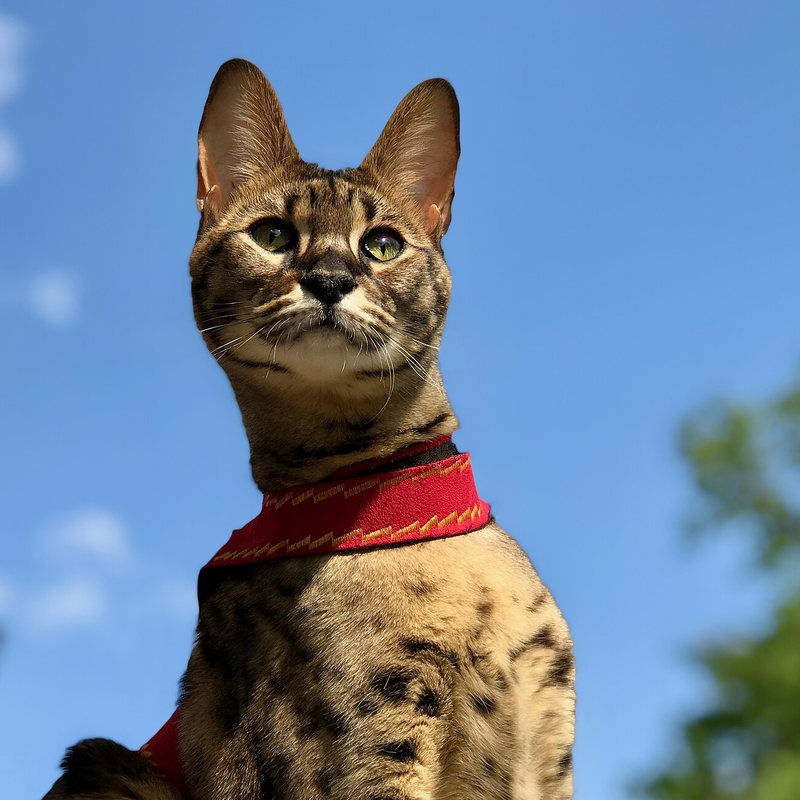
Savannahs are often described as active and exploratory, but they vary in ancestry and individual behavior. A quiz match is not a recommendation to own one. Anyone considering a Savannah needs to understand its care requirements and check the rules that apply where they live.
Breed descriptions suggest tendencies, but individual cats vary. Some findings come from owner surveys or expert ratings rather than direct behavioral tests.
What is a Savannah like?
The TICA breed standard, published by the Savannah Cat Association, describes the ideal Savannah as "a confident, alert, curious and friendly cat." PetMD describes Savannahs as sweet-natured and family-oriented when well socialized, often following their people around and wanting to join in.
Independent research is thin. The Savannah does not appear in the Finnish and Japanese breed surveys cited on other profiles here, so this page relies on the breed club, a veterinary publisher and a welfare statement, and their views do not always agree.
Ancestry and generations
Savannahs come from crosses between domestic cats and the serval, a wild African cat. An F1 Savannah has a serval parent, and each later generation is one step further from it. PetMD says Savannahs tend to become a little smaller and calmer in later generations, but generation is a tendency, not a guarantee of temperament. The Cat Group, a coalition of cat welfare organizations, says hybrid cats less than five generations removed from the wild cat are considered the most at risk of welfare problems as pets, notes that no commercially available genetic test can prove which generation a hybrid is, and does not support breeding or keeping wild cat hybrids (The Cat Group position statement on hybrid cats). Rules on owning Savannahs depend on where you live and on the cat's generation, so check the current local rules.
How active is a Savannah?
Most sources describe a very active cat. The breed club's guide to Savannah behavior and energy needs recommends one to two hours of active play a day, and PetMD describes cats more likely to be racing through the house than curling up, with earlier generations the most active. PetMD mentions fetch and harness walks.
Are Savannahs affectionate?
PetMD says many enjoy their people's company and stay close when their people relax, though they are more likely to be nearby than settled on a lap. PetMD also says a Savannah with something to say may meow loudly.
Savannahs with other pets and children
PetMD says Savannahs socialized as kittens can live with other cats, dogs and children, and suggests later generations for homes with small children. The breed club recommends gradual, supervised introductions, and warns that the Savannah's prey drive puts hamsters, birds, rabbits and guinea pigs at risk, so small pets must be kept where the cat cannot reach them. The Cat Group says hybrids retain many wild-type behaviors and can be more aggressive and territorial with owners, other pets and wildlife, while the breed club says true aggression is uncommon in well-socialized Savannahs. There is little independent research to settle the disagreement.
Everyday life with a Savannah
The breed club calls daily interactive play essential and suggests puzzle feeders, and PetMD stresses vertical space such as cat trees, scratching posts and shelves, even in an apartment. The club links destructive behavior to boredom and unmet energy, and it also advises a veterinary visit if behavior changes suddenly, since medical problems can show up as behavior changes. PetMD recommends keeping a Savannah indoors unless it is on a harness or in a secure enclosure. Size, generations and health screening are covered in the Savannah breed guide.
Just for fun
If this was your quiz result...
You like a challenge and plenty of room to move. You're curious, quick to act and happiest when the day has something new to figure out.
What this result means
In this quiz, this result represents answers that score high on energy, curiosity and mischief and low on lap factor.
The eight quiz traits
YouThe Savannah
Quiz scores, not scientific ratings.
Savannah personality FAQ
Does a later generation make a Savannah calmer?
PetMD says later generations tend to be smaller and calmer, and The Cat Group says hybrids less than five generations from the wild cat are the most at risk of welfare problems as pets. Neither is a guarantee about one cat, and no commercially available genetic test proves which generation a hybrid is.
Can a Savannah live in an apartment?
PetMD says it can, with enough play, exercise and enrichment, and calls vertical space crucial. Whether it works depends on the individual cat and on how much time you have for daily play and care.
Do Savannah cats like water?
PetMD says many Savannahs are said to enjoy water. Interest varies, so never assume a cat is safe near open water without supervision.
Other profiles to explore
The three results whose quiz scores sit closest to the Savannah.
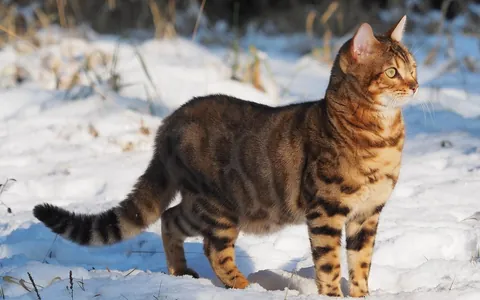
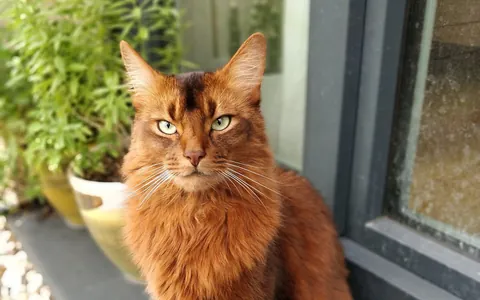
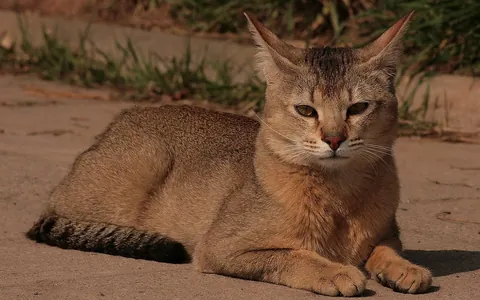
Breed photos: mostly Wikimedia Commons contributors under free licenses, cropped. Every photographer and license is on the photo credits page.
Sources
- TICA Savannah breed standard (2012), Savannah Cat Association
- Are Savannah cats destructive? Understanding their behavior and energy needs, Savannah Cat Association
- Savannah cat breed profile, PetMD
- The Cat Group position statement on hybrid cats, International Cat Care