 Cat Trivia Games
iOS App
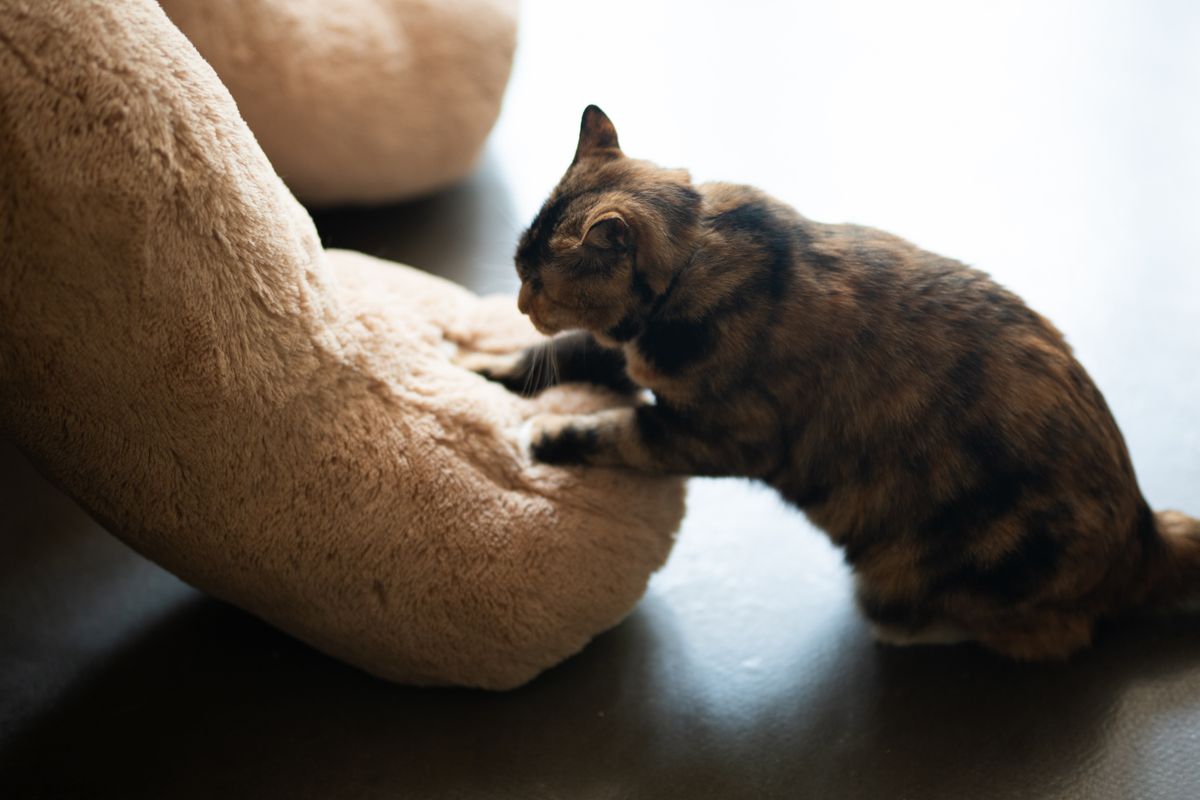
Why Do Cats Knead?
Kneading is the alternating paw press cats use on blankets, cushions and sometimes your lap. It starts during nursing, and many cats keep the habit as adults. You will often see it as a cat settles down, though kneading alone cannot tell you exactly how it feels.
Why cats knead
The movement begins with kittens pressing their mother's belly to help the milk flow.12 The sequence below shows how that feeding behavior can carry into adult life.
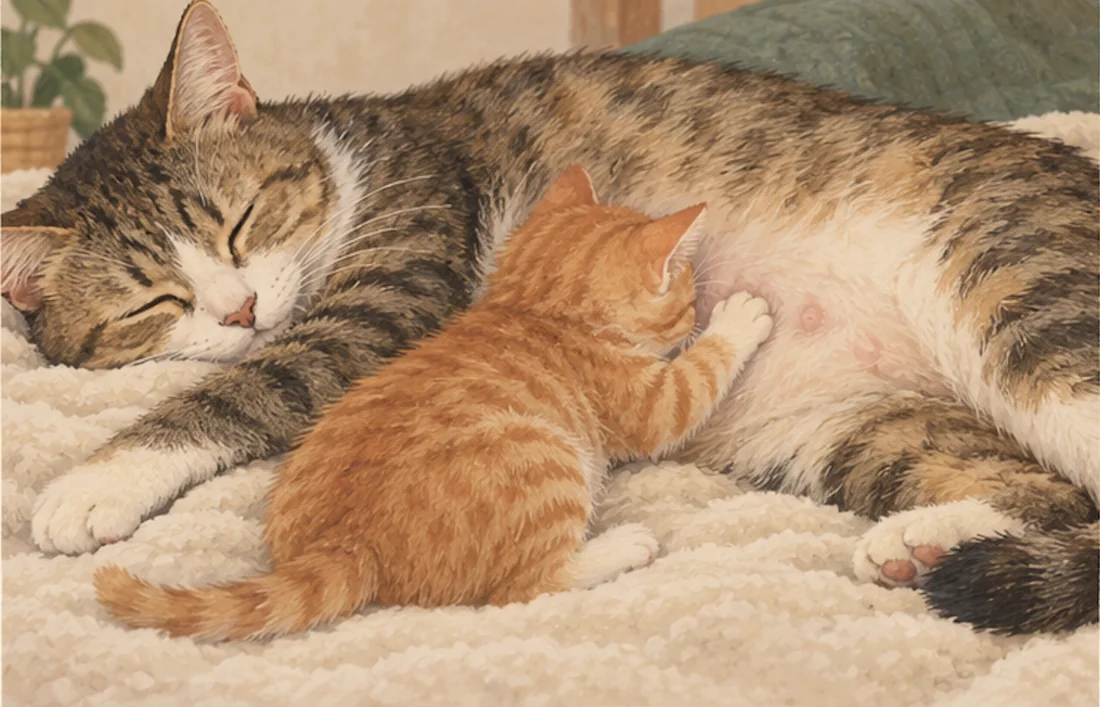
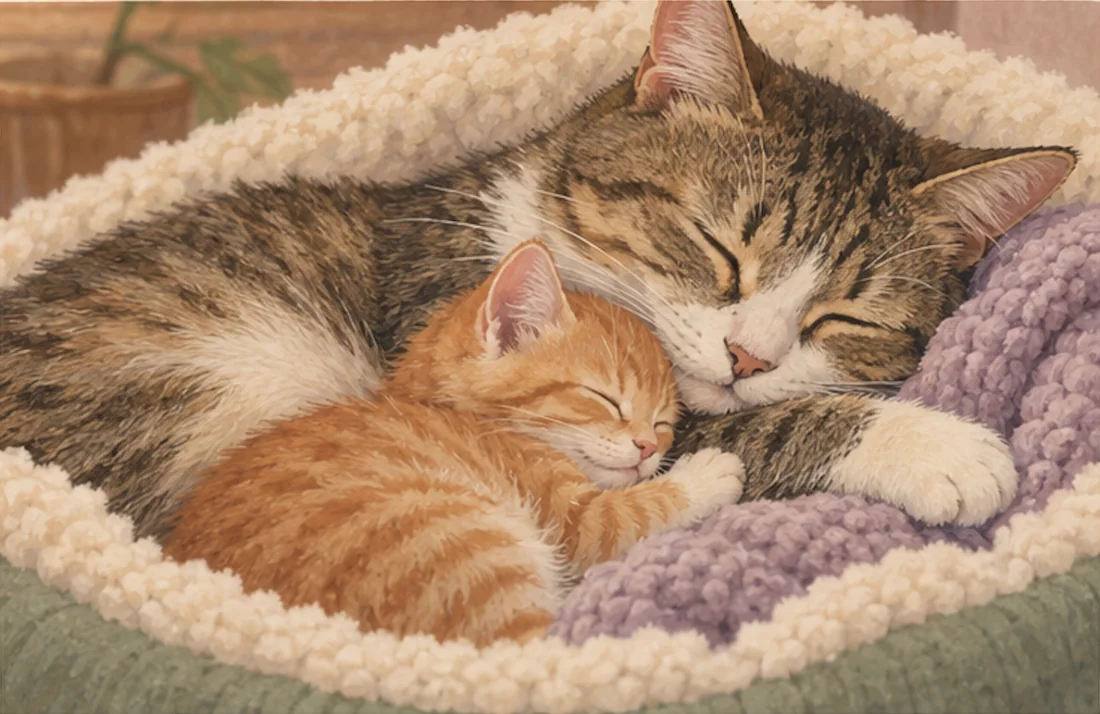
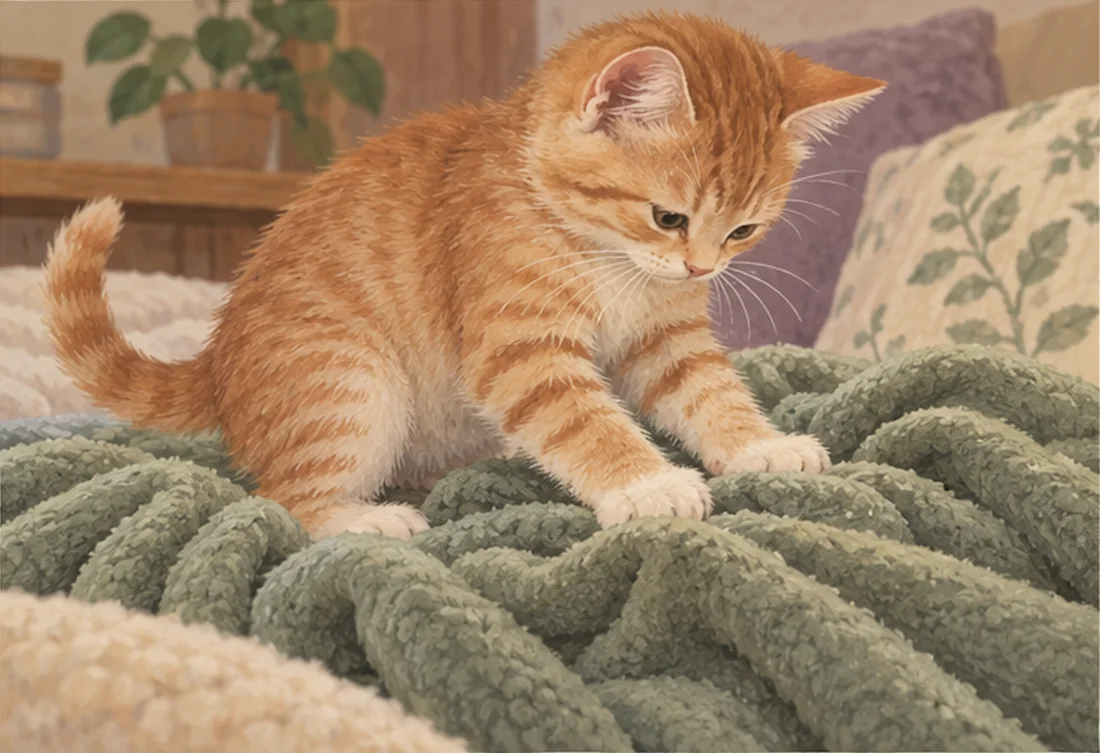
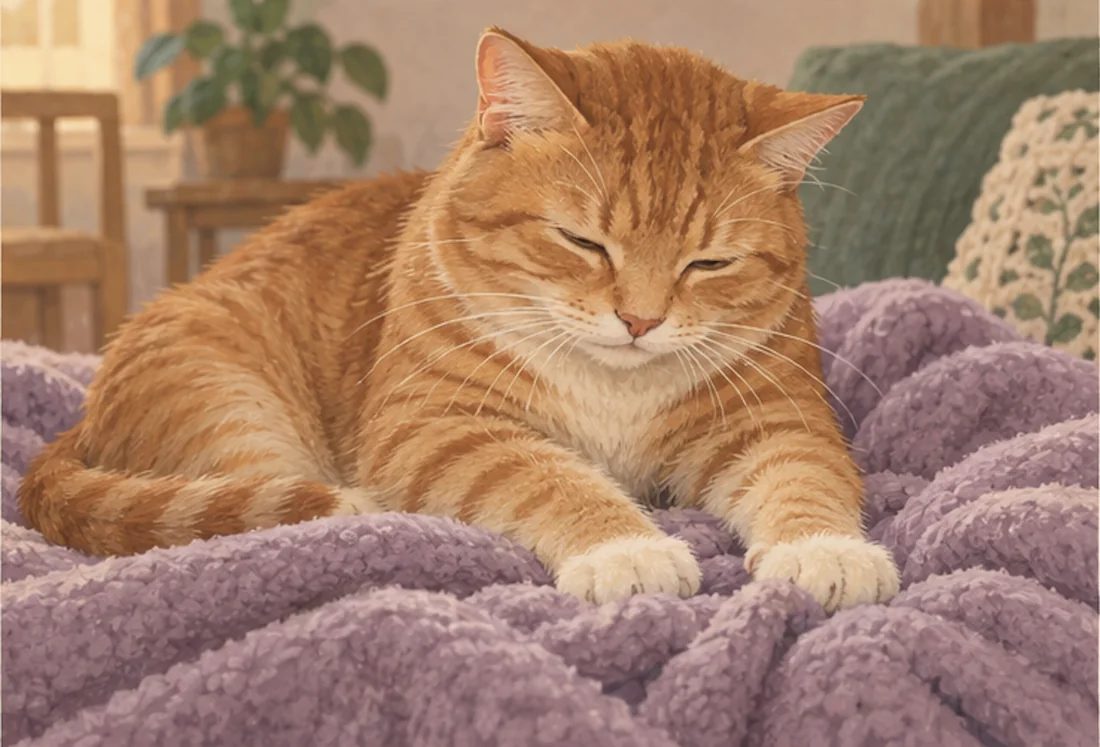
AI-generated illustrations.
PetMD's Dr. Hannah Hart links adult kneading to the sense of calm kittens experience while nursing.3 Other possible explanations include:
- Preparing a resting spot. Wild cats sometimes knead soft grass and bedding before resting. House cats may be doing something similar to a blanket, though this remains a proposed explanation.23
- Scent. Cats have scent glands on their paws and between their toes. Kneading may leave scent behind and could be one way a cat marks its territory.23 That does not mean every knead is about marking.
- Stretching. Kneading may also help a cat stretch and relieve tension in its legs.3
Not every cat keeps the habit. Some knead throughout their lives, and others stop after kittenhood.13
Why your cat kneads you or a blanket
The soft surface may be part of the appeal, whether it is a blanket or your lap.3 VCA notes that cats do not usually knead on people or animals they dislike, so a cat kneading on you is probably relaxed around you.2 Its posture, ears and choice to stay can give you more context. A single habit is not proof of trust.
Some cats suck on the blanket as they knead, another movement that resembles nursing.3
What to do when the claws hurt
You do not have to sit through sharp claws. Put a blanket between you and your cat, or gently redirect it to a nearby soft surface. Let it choose whether to stay.
Never punish kneading. Both PetMD and International Cat Care warn that punishment causes fear and can damage your bond with your cat.13 A thick blanket in your cat's favorite spot gives it somewhere to knead that suits you both. Sources differ on claw trimming: PetMD suggests keeping claws short, while International Cat Care does not recommend routine trims for most cats. Ask your vet what suits your cat.13
When a change is worth asking your veterinarian about
Kneading itself is normal. A change is what deserves attention. VCA and PetMD suggest contacting your vet if your cat starts kneading much more than usual, or in unusual places such as under the bed, especially alongside other changes such as hiding more or a different appetite. Cats that feel unwell sometimes purr and knead to soothe themselves.23 This is not a complete list. If something about your cat's behavior has changed and it worries you, that is reason enough to call.
Frequently asked questions
Why does my cat drool while kneading?
International Cat Care says some cats dribble as they knead, as though expecting the milk that kneading once brought. It is usually harmless, but mention it to your vet if the drooling is new and happens at other times too.
Should I pet my cat while it kneads?
Some cats enjoy it and some do not. Watch your cat's body language and stop if it seems annoyed.
Christopher writes and runs Cat Trivia Games. The sources for this article are listed below, and how the site is made and corrected is on the editorial policy page. More about the author.
References
- International Cat Care. Why do cats..? (kneading, and nail trimming). back
- VCA Animal Hospitals. Why do cats knead? (Or, the art of biscuit making!) back
- Hart, H., DVM, PetMD. Why do cats knead? back
This is general information, not veterinary advice. Written by Christopher Fox under our editorial policy.