 Cat Trivia Games
iOS App
How Do Cats Say Thank You?
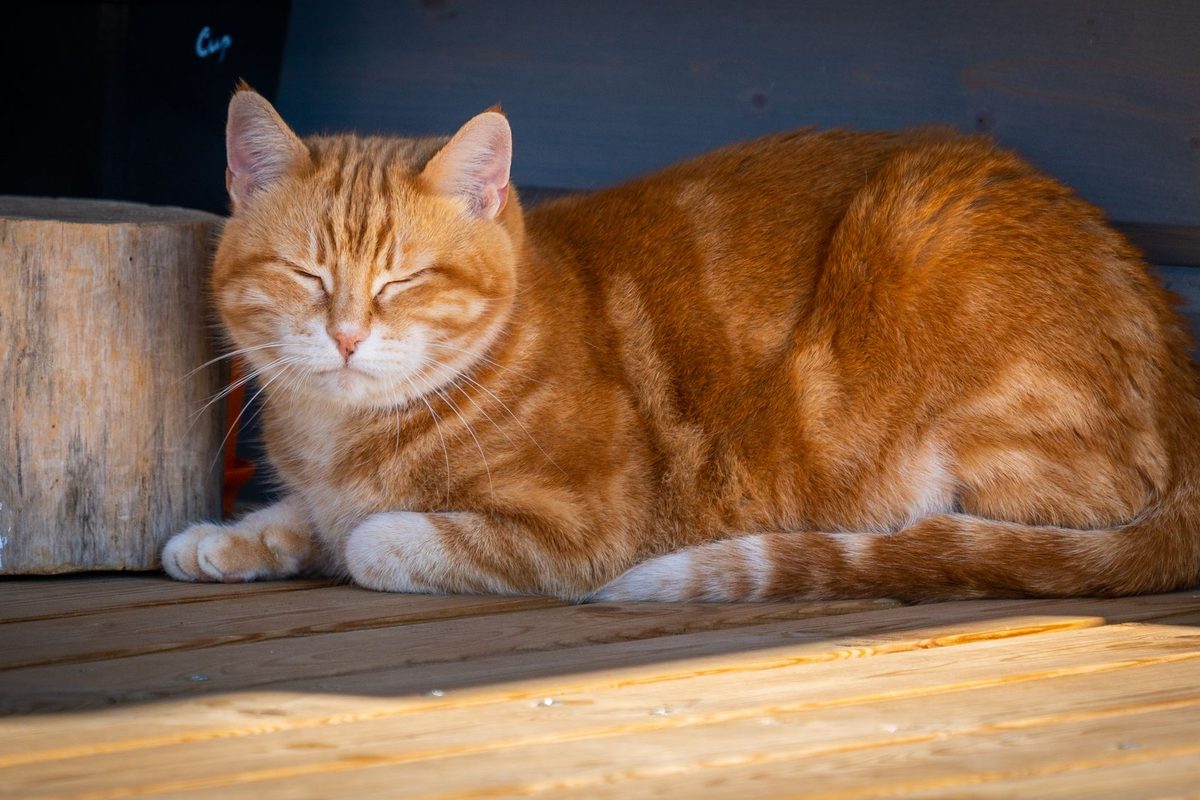
Cats do not say thank you the way people do, and I found no study that tests whether cats feel gratitude. People often read thanks into slow blinks, head rubs, leg rubs, a raised tail, kneading and purring. Research supports several of these as social signals, but most also appear in other situations, so no single behavior proves a feeling.
Can a cat feel grateful?
None of the cat studies I found measures gratitude. They record behavior: approaching a person, eye movements, rubbing, and how a cat acts when its owner leaves and returns.123
Cats form attachments to their caregivers, as children do. In a 2019 test, each cat spent two minutes in a new room with its caregiver, two alone and two after the person returned. Of 70 classifiable kittens, 64.3% were securely attached, as were 65.8% of 38 cats aged one year or older. For human infants the figure is 65%.3
Oxytocin levels in cats and their owners appear linked. In a one-month 2026 study of 29 cats and 19 owners, owners with higher urinary oxytocin, a hormone associated with social relationships, tended to have cats with higher levels too.4 The researchers say this is an association, so cause and effect is still unclear.4 More is in what the cat and owner oxytocin study found.
What the slow blink studies found
A slow blink is typically a series of half-blinks followed by a prolonged narrowing or closing of the eyes.1 In 2020, psychologists at the Universities of Sussex and Portsmouth tested it in cats' own homes.5
- Owners first. Of 21 cats from 14 households, 18 cat-owner pairs were analyzed. Cats half-blinked and narrowed their eyes more when owners slow-blinked at them than when owners did not interact.1
- Then a stranger. Of 24 other cats, 18 from 8 households were analyzed. They were more likely to approach an unfamiliar researcher's outstretched hand after she slow-blinked than after she kept a neutral face without eye contact.1
The authors concluded that slow blinks "may function as a form of positive emotional communication between cats and humans," though firm conclusions about the emotion need more research. They suggest it may have started as a way to break a stare, which can be threatening.1
In a second 2020 study of 18 shelter cats, those that answered a person's slow blink with more and longer eye closures were rehomed faster. Nervous cats, the ones needing desensitization to people, also tended to slow blink longer, a trend short of statistical significance. The researchers suggest the signal may occur in both friendly and submissive contexts.6
The researchers' method for slow blinking at your cat is in why your cat stares at you.
Head rubs, leg rubs and the raised tail
A head bump leaves scent behind. Glands on a cat's cheeks, forehead and chin contain pheromones that people cannot detect, and a cat that bunts you rubs them onto you.7
Between cats, rubbing is social. Colony cats rub heads, sides and tails together, often while purring, and the exchanged scent is thought to maintain a shared colony odor.8 A 2004 review calls a cat rubbing your legs when you come home a greeting that cats otherwise reserve for cats they know.8
The raised tail usually comes first. A vertical tail signals friendly intentions on approach, and rubbing between cats usually follows at least one cat approaching tail up.8 Kittens greet their mother this way, and adult cats do it when meeting a cat they intend to interact with amicably. In a 2009 study, lower-ranking cats showed it more and higher-ranking cats received it more.9
People seem to respond to rubbing. Among 106 cats at three shelters, each tested with an unfamiliar person, the ones that rubbed more were rehomed faster. Their facial movements were not related to rehoming speed.2
Quick quiz: how well do you know cat behavior?
According to veterinary behaviorists, what circumstance most commonly sparks territorial aggression between cats?
Answer: Bringing a new cat into the household. Established cats often perceive a newcomer as a threat to their territory and resources, which is why introducing a new cat is the most frequently cited trigger of aggression in multi-cat homes. Source
According to veterinary research, what characterizes the first stage of feline grief after a companion cat dies?
Answer: Increased vocalization, pacing, and searching throughout the house. The first stage of feline grief is relatively short, characterized by increased vocalization, pacing, and searching. Cats may look out windows or sniff while moving through the house, apparently attempting to find the missing companion. Source
Apart from mother-kitten interactions, adult pet cats mostly reserve meowing to communicate with whom?
Answer: Their human caregivers. Studies note that outside mother-kitten bonds, adult cats rarely meow at each other; meowing seems to have developed largely as a signal aimed at people, since cats learned it reliably gets a human response. Source
Kneading, purring and prey on the doorstep
Kneading goes back to nursing: kittens knead to bring down their mother's milk, and the movement is thought to stimulate oxytocin, a hormone involved in maternal bonding. Adult cats may knead to recreate those feel-good hormones, and they don't usually knead on people or animals they dislike. Kneading may also mark territory with scent glands in the paws, or soothe a cat that feels unwell.10
Purring has several meanings, among them contentment, stress relief, greeting, attention-seeking and illness. Cats can purr when sick or in pain.11
Some purrs are requests. In a 2009 study, owners recorded their cats purring while seeking food and at other times. Played at equal volume, the food-seeking purrs sounded more urgent and less pleasant, even to listeners with no experience of cats. The difference was a high-frequency element embedded in the purr, similar to a cry or meow. Removing it lowered the urgency ratings.12
Dead prey at the door is often read as a gift. Cats Protection calls that belief mistaken and the hunting-lesson idea a myth. It says home is the cat's core territory, a safe place to eat the catch undisturbed or store it for later.13 Ways to reduce hunting are in why cats bring home dead animals.
Eight behaviors people read as thanks
| Behavior | Often read as | What the evidence supports |
|---|---|---|
| Slow blink | Popularly called a cat smile.5 In a 2013 survey, 69% of UK owners knew cats slow-blink when relaxed around people.14 | Cats returned owners' slow blinks and approached a stranger more after hers; nervous shelter cats tended to slow blink longer.16 |
| Head bunting | Affection. One in 20 owners surveyed thought cats rub their cheeks on surfaces because of an itchy face.14 | Leaves pheromones from glands on the cheeks, forehead and chin.7 |
| Rubbing your legs at the door | "Welcome home" | A greeting cats otherwise reserve for familiar cats.8 |
| Tail up on approach | Happy to see you. 76% of owners surveyed did not recognize it as a greeting.14 | Signals the intention to interact amicably.9 |
| Kneading | Contentment or love | Begins with nursing; may also mark territory or soothe a cat that feels unwell.10 |
| Purring | Happiness. 65% of owners surveyed thought a cat only purrs when happy.14 | Also occurs with stress, illness and pain; food-seeking purrs can carry a cry-like sound.1112 |
| Bringing prey home | A present, or a hunting lesson | Cats Protection calls the gift idea mistaken and the hunting lesson a myth.13 |
| Leaning into a head scratch | Thanks for the scratch | Cats usually groom each other on the head and neck, and rotate the head and purr when petted there; petting elsewhere may contribute to petting-induced aggression.8 |
True or false: cats and thank-yous
Make a call, then open each claim for the verdict.
A stranger can get a slow blink back from a cat.
TrueIn the 2020 tests, cats slow-blinked more at an unfamiliar researcher after she slow-blinked than when she kept a neutral face.5
A dead mouse on the doormat is a present for you.
FalseCats Protection calls that a mistaken belief. It says cats bring prey home to eat or store it where other animals cannot steal it.13
Cats purr only when content.
FalseSome cats purr when anxious or during a veterinary exam, and cats can purr when sick or in pain.11
Some cats hide a cry inside their purr when they want food.
TrueFood-seeking purrs carried a cry-like, high-frequency element. Lead researcher Karen McComb said this purring seems to develop most often in cats with a one-on-one relationship with their owner.12
Kneading began as a nursing behavior.
TrueKittens knead along their mother's mammary chain to bring down milk, and the behavior carries over into adulthood.10
Frequently asked questions
My cat does none of these things. Is something wrong?
Not necessarily. Some cats never headbutt, and that is normal. Stopping is different: a cat that used to headbutt and stops may not be feeling well, especially with other signs such as lethargy, so check with your veterinarian.7 In a 2019 study of pet and shelter cats, sociability scores varied widely from cat to cat.15
Does my cat notice when I pay attention to it?
It seems to. In that study, pet and shelter cats spent significantly more time near a person paying attention to them than near one who was not.15
Can my cat share the Thanksgiving turkey?
The ASPCA recommends sticking to your pet's normal diet. If you share, it suggests a small bite of boneless, fully cooked turkey: raw or undercooked turkey may contain salmonella, poultry bones can cause choking, and onions and garlic, common in Thanksgiving dishes, can be toxic to pets.16
Up next
Christopher writes and runs Cat Trivia Games. The sources for this article are listed below, and how the site is made and corrected is on the editorial policy page. More about the author.
References
- Humphrey, T., Proops, L., Forman, J., Spooner, R. and McComb, K. (2020). The role of cat eye narrowing movements in cat-human communication. Scientific Reports 10, 16503. back
- Caeiro, C. C., Burrows, A. M. and Waller, B. M. (2017). Development and application of CatFACS: are human cat adopters influenced by cat facial expressions? Applied Animal Behaviour Science 189, 66-78. back
- Oregon State University (2019), on Vitale, K. R., Behnke, A. C. and Udell, M. A. R., Current Biology. Cats, like children and dogs, develop attachments to their caregivers, study shows. back
- Kyoto University (2026), on Takagi, S. et al., iScience. Owners who spend more time close to their cats tend to have more positive moods. back
- University of Sussex, via ScienceDaily (2020). Feline friendly? How to build rap-paw with your cat. back
- Humphrey, T., Stringer, F., Proops, L. and McComb, K. (2020). Slow blink eye closure in shelter cats is related to quicker adoption. Animals 10(12), 2256. back
- Hovis, S., DVM, PetMD. Why does my cat headbutt me? back
- Crowell-Davis, S. L., Curtis, T. M. and Knowles, R. J. (2004). Social organization in the cat: a modern understanding. Journal of Feline Medicine and Surgery 6(1), 19-28. back
- Cafazzo, S. and Natoli, E. (2009). The social function of tail up in the domestic cat (Felis silvestris catus). Behavioural Processes 80(1), 60-66. back
- VCA Animal Hospitals. Why do cats knead? (Or, the art of biscuit making!) back
- Sung, W., DVM, DACVB, PetMD. Why do cats purr? 5 meanings behind a purring cat. back
- University of Sussex (2009), on McComb, K., Taylor, A. M., Wilson, C. and Charlton, B. D., Current Biology. Research reveals how cats purrfect the art of exploitation. back
- Cats Protection. Why do cats bring you dead animals? back
- Cats Protection (2013). Moggies remain a mystery to many, suggests survey. back
- Vitale, K. R. and Udell, M. A. R. (2019). The quality of being sociable: the influence of human attentional state, population, and human familiarity on domestic cat sociability. Behavioural Processes 158, 11-17. back
- ASPCA. Thanksgiving safety tips. back
This is general information, not veterinary advice. Written by Christopher Fox under our editorial policy.