 Cat Trivia Games
iOS App
Why Do Cats Headbutt You?
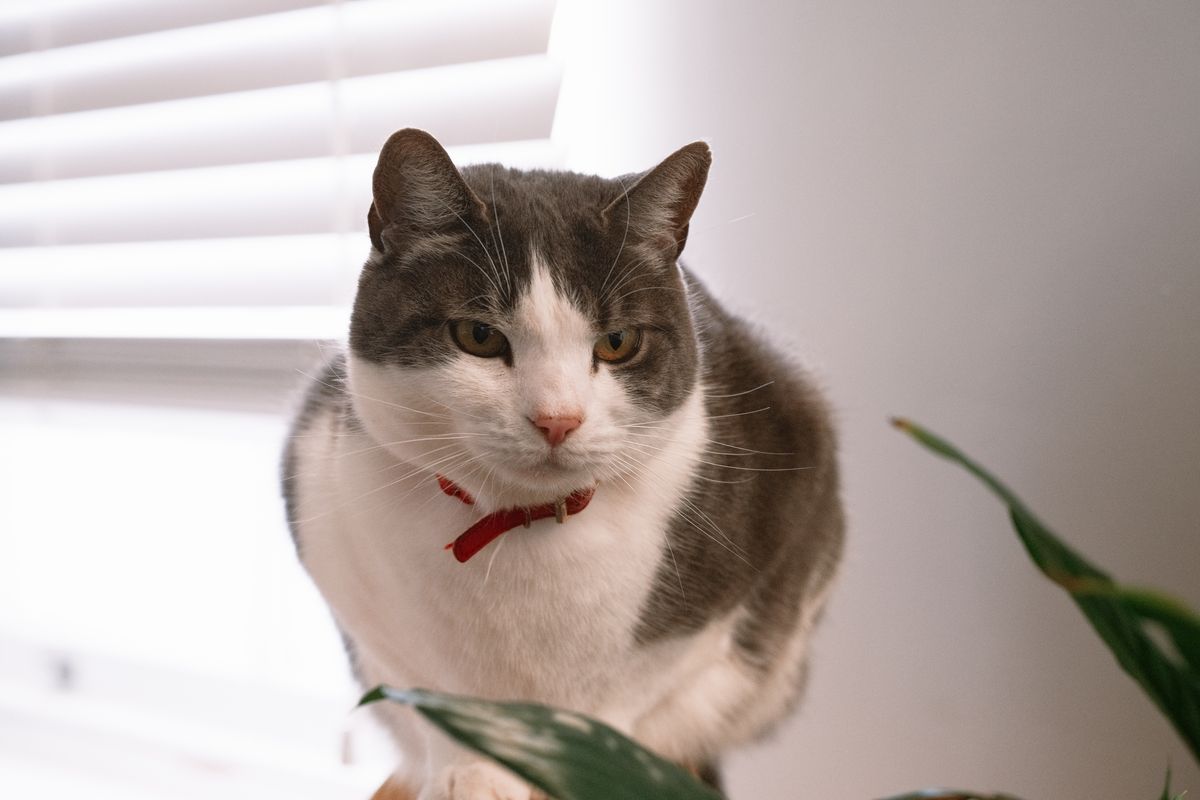
A brief head or face rub is often called bunting. Cats may use it during friendly contact and scent marking. Watch the rest of the interaction, and let your cat decide whether it wants more contact.
What bunting is
Cats have areas of skin rich in scent glands beneath the chin, at the sides of the mouth and cheeks, at the sides of the forehead, and at the base of and along the tail. When a cat rubs its head against an object, that is known as bunting.1 Cats that know each other also rub against each other, usually around the mouth and cheeks, and along the body and tail; scent passes between them as they do.1
International Cat Care says bunting often happens in the core of a cat's territory and seems to be associated with comfort, reassurance and friendly social contact. When your cat rubs around your legs to greet you, it is doing what it would do when greeting another cat it knows.12 The scent carries information that other cats can pick up. It is not a message we can translate word for word.
Why your cat may bunt you
- Greeting and friendly contact. Bunting and rubbing are common when a cat meets a person or cat it knows, often with the tail held up, which signals friendly intent.1
- Mixing scents. Rubbing leaves the cat's scent on you and picks up yours. Afterward, a cat may groom and check out your scent.1
- Asking for something. If head rubs have been followed by a chin scratch or a meal, your cat may offer them at those times. Cats Protection points out that people often reward a behavior without meaning to, and the cat repeats it.3 That is still social behavior, and it is fine to answer on your own schedule.
A head bump is one moment in a longer exchange. A cat that bunts and then settles beside you is in a different situation from one that bunts, walks to the kitchen and looks back.
How to respond
Offer a relaxed hand and keep it still, then let your cat come to you. If it approaches and rubs against your hand, a gentle stroke on the cheeks or chin is what most cats like. If it does not come over after a minute or two, it probably does not want to be touched right now.4 Pause after a few strokes and see whether your cat asks for more.
You do not have to put your face close to your cat's to return the greeting; a still hand lets it choose. You can also move away when you need to. People can set boundaries, and a cat will cope with a short pause.
If the head rubs cluster around mealtimes, a regular feeding routine may help. A real change in appetite needs a different response: a cat that suddenly seems much hungrier, especially while losing weight, should see a vet, since Cornell lists those among the common signs of diabetes and an overactive thyroid.56
Head pressing is different
Key takeaways
- Bunting spreads scent from glands on the face and is linked with friendly contact.
- Offer a still, relaxed hand and let your cat choose how much contact it wants.
- A sudden change in appetite deserves a vet visit, not just a feeding schedule.
- Prolonged or repeated pressing of the head against a surface warrants a vet visit.
Frequently asked questions
Why does my cat rub its face on doorways and furniture?
International Cat Care notes that cats often rub against objects in their home area, leaving their scent there. It is the same kind of facial rubbing they use on people and other cats.
Should I headbutt my cat back?
Let your cat lead. A still, relaxed hand gives it the choice to approach, rub and walk away when it has had enough. Many cats are more comfortable with that than with a face coming toward them.
Why does my cat headbutt me and then bite?
It may be play, or petting that has gone on long enough. The guide to why a cat bites, then licks covers the warning signs to watch for.
Christopher writes and runs Cat Trivia Games. The sources for this article are listed below, and how the site is made and corrected is on the editorial policy page. More about the author.
References
- International Cat Care. Cat communication. back
- International Cat Care. Why do cats..? (rubbing and bunting). back
- Cats Protection. Why does my cat follow me around? back
- Cats Protection. How to pick up a cat (approaching and stroking). back
- Cornell Feline Health Center. Feline diabetes. back
- Cornell Feline Health Center. Hyperthyroidism in cats. back
- PetMD. Head pressing in cats. back
This is general information, not veterinary advice. Written by Christopher Fox under our editorial policy.