 Cat Trivia Games
iOS App
Big Cat Trivia Questions and Answers
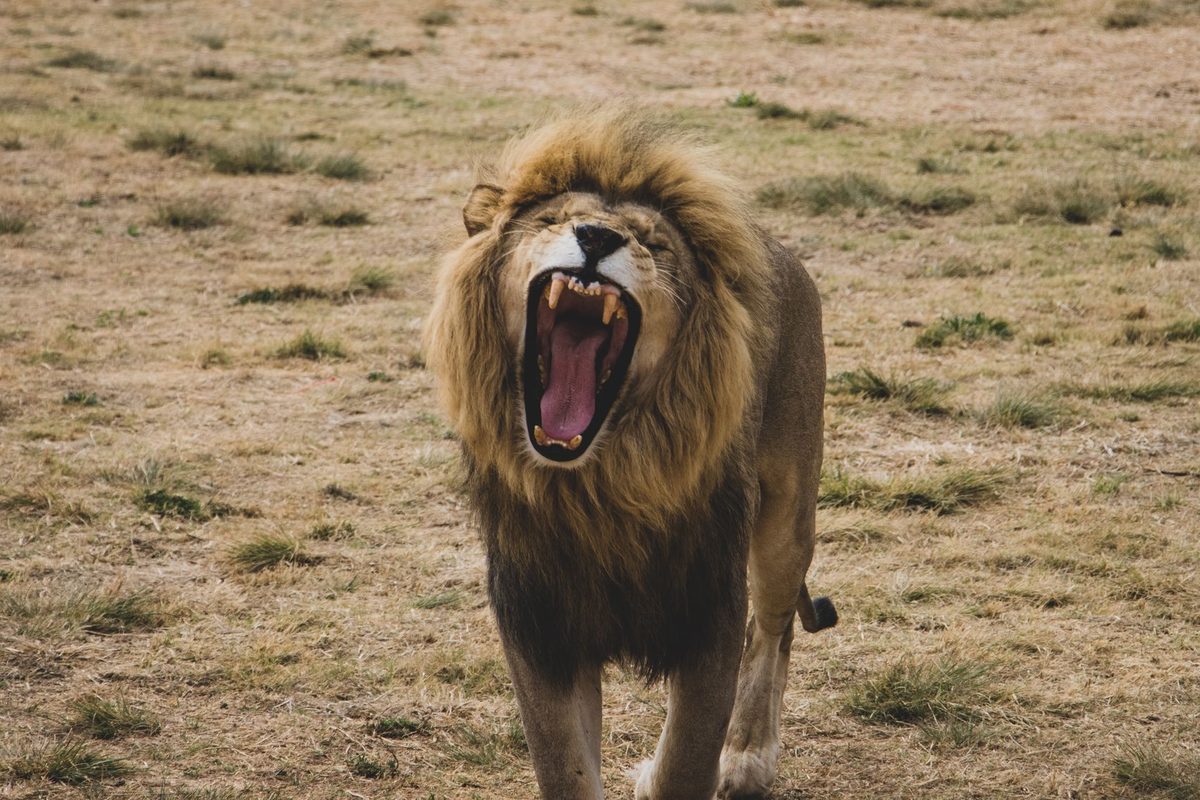
Lions, tigers, cheetahs and pumas appear in these 25 big cat trivia questions and answers, split into three rounds: big cat or not, records, and Red List status. Among the answers: only five living species make up the genus Panthera, the snow leopard is one of them yet cannot roar, and in one GPS collar study the fastest wild cheetah ran about 58 mph.
In round 1, "big cat" means a member of the genus Panthera unless a question says otherwise. Round 3 uses IUCN Red List categories as listed on October 31, 2026. For house cat questions, see these cat trivia questions and answers.
Answers, explanations and sources
Answers to round 1: big cat or not?
Answer to question 2
Cheetah and puma. Panthera counts them for size and ecology; many adult pumas can be bigger than adult leopards. By descent, both are closer to house cats than to lions or tigers.1
Answer to question 4
The structure of the larynx. The 2017 taxonomy found the hyoid rule fails: long, fleshy, elastic vocal folds in the larynx produce the roar.2
Answer to question 6
The puma and jaguarundi. All three form the "Puma lineage" in the small cat subfamily, Felinae. Genetic studies moved the cheetah there from a subfamily of its own.2
Answer to question 7
The tiger. Molecular work makes the snow leopard the tiger's sister species. Some scientists gave it its own genus, Uncia; the 2017 taxonomy kept it in Panthera.2
Answer to question 9
Four. The bobcat and the Canada, Eurasian and Iberian lynx. The caracal shares a separate lineage with the serval and African golden cat.2
Answers to round 2: records and real lives
Answer to question 10
Tiger. Size varies by subspecies, from 75 to 325 kg (about 165 to 717 pounds).8
Answer to question 13
More than 5 miles (8 km). One experiment measured a male lion's roar at 114 decibels.6
Answer to question 14
Jaguar. No other big cat does this regularly. The jaguar is also the largest cat in the Americas and a strong swimmer that catches fish, capybaras and caimans.11
Answer to question 16
75 to 90 percent. The tail is thought to aid balance on steep slopes.4
Answer to question 17
Puma. More than 40 names in English alone, from cougar, panther and mountain lion to regional names like painter and catamount.13
Answer to question 18
A black leopard. In the United States, "panther" usually means the puma. Black jaguars exist too, mostly in the Amazon. Panthera's chief scientist knew of no black pumas, truly black tigers or black snow leopards.14 For black house cats, see black cat facts.
Answers to round 3: conservation status
Answer to question 19
Endangered. The IUCN kept it there in 2022 and said global tiger numbers appear stable or increasing.15
Answer to question 24
Amazonia. That is an estimated 57,000 to 64,000 jaguars. The species occupies 51 percent of its historic range.11
Answer to question 25
Iran. Fewer than 50 mature Asiatic cheetahs are thought to remain, and the subspecies is Critically Endangered.22
Quick quiz: how well do you know cat biology?
What are the small sensory organs at the base of each whisker follicle that help a cat with body awareness and balance called?
Answer: Proprioceptors. Proprioceptors sit at the base of each whisker and feed the brain information about body position, which helps a cat coordinate its movements and land steadily. Source
What behavioral change might indicate a cat is experiencing dental disease?
Answer: Drooling and reluctance to eat hard kibble. Dental pain makes chewing hard food uncomfortable, so affected cats often turn their heads to the side while eating, favor soft food, become hesitant or unwilling to eat, or drool as they try to avoid pressure on sore teeth and gums. Source
What causes a tortoiseshell cat's patchy mix of orange and black fur?
Answer: Random inactivation of one X chromosome in each skin cell. Each of a female cat's cells randomly shuts off one of her two X chromosomes early in development. Since the orange color gene sits on the X chromosome, patches of cells end up showing whichever X, and whichever color, stayed active. Source
Big cat or not: eight wild cats compared
"Big cat" has no single agreed definition.1 I use two: the genus Panthera's five species,2 and the conservation group Panthera's seven, which adds the cheetah and puma for similar size and ecology.1
| Cat | Genus (subfamily) | In Panthera? | Roars? | Purrs? | Red List category |
|---|---|---|---|---|---|
| Lion | Panthera (Pantherinae) | Yes | Yes | No | Vulnerable21 |
| Tiger | Panthera (Pantherinae) | Yes | Yes | No | Endangered8 |
| Leopard | Panthera (Pantherinae) | Yes | Yes | No true purr | Vulnerable23 |
| Jaguar | Panthera (Pantherinae) | Yes | Yes | No true purr | Near Threatened11 |
| Snow leopard | Panthera (Pantherinae) | Yes | No | Purr-like sounds | Vulnerable4 |
| Mainland clouded leopard | Neofelis (Pantherinae) | No | No | Sources disagree | Vulnerable7 |
| Cheetah | Acinonyx (Felinae) | No | No | Yes | Vulnerable22 |
| Puma | Puma (Felinae) | No | No | Yes | Least Concern20 |
The sources split on whether the clouded leopard purrs: the Smithsonian's National Zoo says it cannot,12 and the Cat Specialist Group says it purrs like smaller cats.7 Genus and subfamily follow the 2017 taxonomy;2 roaring and purring follow Panthera,3 the zoo56 and the puma page.20
Why big cats roar: the hyoid is only part of it
The usual explanation, from the Smithsonian's National Zoo: a hyoid bone vibrating against the larynx lets small cats purr, and muscle and cartilage in its place let big cats roar.6 The snow leopard has the big cat arrangement and still cannot roar.1
A 2002 study of the lion, tiger, jaguar, cheetah and house cat found the larynx sat much lower in the three roaring species. It cited earlier work on a large pad of fibroelastic tissue in the vocal folds of lions, tigers, leopards and jaguars, which the authors wrote would make purring difficult, if not impossible.24 A 2011 study of three lion and three tiger larynges proposed that fat squares off those folds so they vibrate more easily, and that adding mass is probably not its main job.25
A 2025 machine learning study split a lion's roaring bout into four call types, including a newly named intermediary roar. Each lion's full-throated roar is individually identifiable, so the authors suggest roars could help count lions by sound.26
How fast is a cheetah? The claim, checked
The Smithsonian's National Zoo says a cheetah's top speed averages 60 to 70 mph.5 The Cat Specialist Group gives up to 103 km/h (about 64 mph) and expects slower hunting speeds, since prey change direction and cheetahs must avoid obstacles.22 In 2013 Ed Yong reported that the published 64 mph rested on one 1960s measurement.10 The wild collars from question 12 topped out near 58 mph and recorded some of the highest acceleration, deceleration and power per kilogram measured in any land mammal.9
Conservation status by the numbers
All four cats below are listed as Vulnerable. Tiger and Iberian lynx estimates are in round 3.
- Lion. About 22,000 to 25,000 adult and subadult lions in Africa in 2025, in 6.13 percent of the historical range.21 India's May 2025 census estimated 891 Asiatic lions in Gujarat, up from 674 five years earlier.27
- Cheetah. The Cat Specialist Group tentatively estimates 6,517 mature cheetahs;22 the Smithsonian's National Zoo, counting all wild cheetahs, gives 7,500 to 10,000.5
- Snow leopard. The latest estimate the Cat Specialist Group cites is 2,710 to 3,386 mature cats, across 12 range countries.4
- Leopard. Its range shrank 11 percent from 2016 to 2023, and it has probably disappeared from all its former North African range.23
Frequently asked questions
Is a lynx a big cat?
Not under either definition here. The four lynxes form the genus Lynx in the small cat subfamily, Felinae,2 and Panthera's seven big cats leave them out.1 The Eurasian lynx, tallest of the four, mostly hunts small to medium-sized hoofed animals such as roe deer and chamois.28
When do lions roar?
Field studies cited in the 2025 roar paper find lions most vocal in the hours before dawn. Males and females both roar, lions under 2.5 years roar less often, and nomadic males without a pride or territory stay silent.26
Up next

Christopher writes and runs Cat Trivia Games. The sources for this article are listed below, and how the site is made and corrected is on the editorial policy page. More about the author.
References
- Ross Rosenthal, Panthera (2021). Wild cats 101: what makes a big cat? back
- Kitchener A. C., Breitenmoser-Würsten Ch., Eizirik E. and others, IUCN/SSC Cat Specialist Group (2017). A revised taxonomy of the Felidae. Cat News Special Issue 11 (PDF). back
- Panthera (2026). Which big cats purr? back
- IUCN SSC Cat Specialist Group. Snow leopard (species page and Red List status). back
- Smithsonian's National Zoo and Conservation Biology Institute. Cheetah. back
- Smithsonian's National Zoo and Conservation Biology Institute (2024). Do lions actually purr? And other questions, answered. back
- IUCN SSC Cat Specialist Group. Mainland clouded leopard (species page and Red List status). back
- IUCN SSC Cat Specialist Group. Tiger (species page and Red List status). back
- Wilson A. M., Lowe J. C., Roskilly K. and others, Nature (2013). Locomotion dynamics of hunting in wild cheetahs. back
- Ed Yong, National Geographic (2013). Collars reveal just how extreme cheetahs can be. back
- IUCN SSC Cat Specialist Group. Jaguar (species page and Red List status). back
- Smithsonian's National Zoo and Conservation Biology Institute. Clouded leopard. back
- Guinness World Records. Mammal with the most names. back
- Angela Cave, Panthera (2018). What are black panthers, anyway? back
- IUCN (21 July 2022). Migratory monarch butterfly now Endangered: IUCN Red List (includes the tiger reassessment). back
- Mike Gaworecki, Mongabay (2017). Snow leopards no longer endangered, but still in decline and in need of urgent conservation measures. back
- Snow Leopard Trust (2017). Statement on IUCN Red List status change of the snow leopard. back
- IUCN (20 June 2024). Iberian lynx rebounding thanks to conservation action: IUCN Red List. back
- IUCN SSC Cat Specialist Group. Iberian lynx (species page and Red List status). back
- IUCN SSC Cat Specialist Group. Puma (species page and Red List status). back
- IUCN SSC Cat Specialist Group. Lion (species page and Red List status). back
- IUCN SSC Cat Specialist Group. Cheetah (species page and Red List status). back
- IUCN SSC Cat Specialist Group. Leopard (species page and Red List status). back
- Weissengruber G. E., Forstenpointner G., Peters G., Kübber-Heiss A. and Fitch W. T., Journal of Anatomy (2002). Hyoid apparatus and pharynx in the lion, jaguar, tiger, cheetah and domestic cat. back
- Klemuk S. A., Riede T., Walsh E. J. and Titze I. R., PLoS ONE (2011). Adapted to roar: functional morphology of tiger and lion vocal folds. back
- Growcott J., Lobora A., Markham A. and others, Ecology and Evolution (2025). Roar data: redefining a lion's roar using machine learning. back
- DTE Staff, Down To Earth (21 May 2025). Asiatic lion population in Gujarat rises from 674 to 891 in 5 years. back
- IUCN SSC Cat Specialist Group. Eurasian lynx (species page and Red List status). back
Written by Christopher Fox under our editorial policy.