 Cat Trivia Games
iOS App
Why Do Cats Purr?
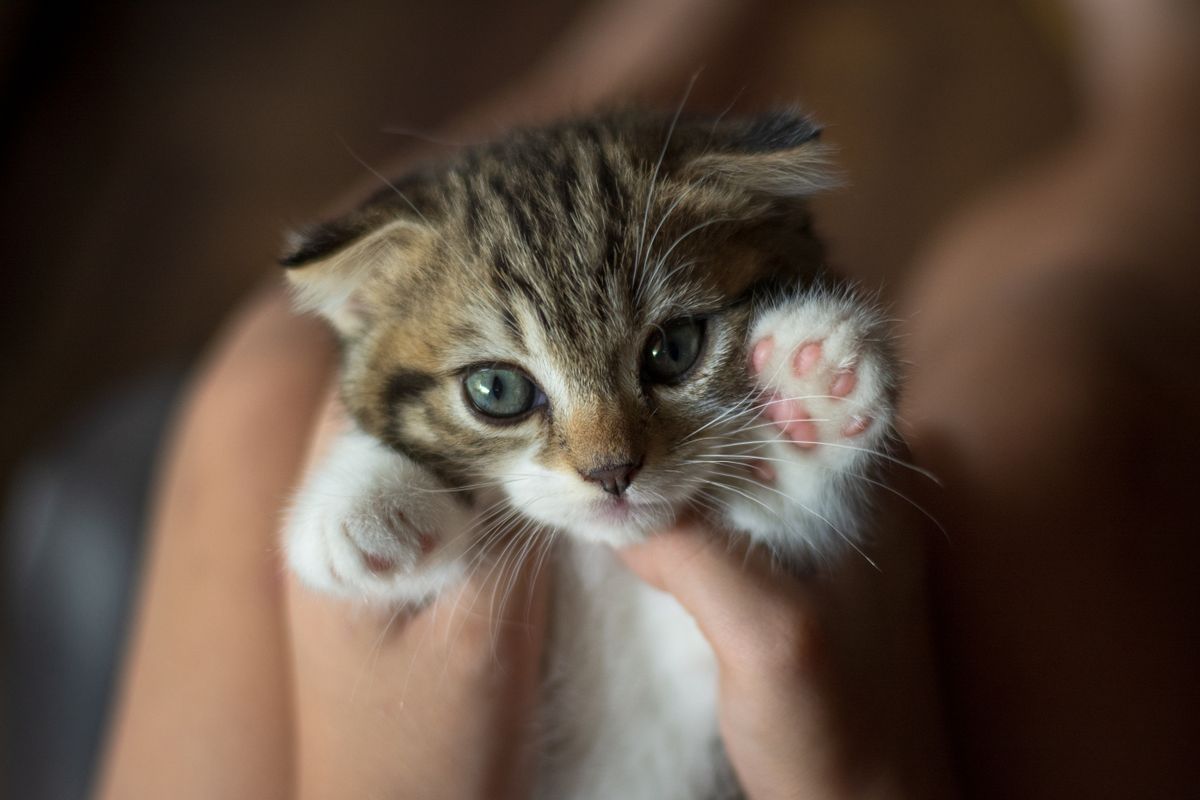
Cats purr in several situations: when they are relaxed, seeking contact, or sometimes stressed or unwell. The sound alone does not tell you which. Look at what your cat is doing and whether its behavior has changed.
When cats purr
Purring starts early. Kittens can purr when they are about two days old, usually while nursing.1 Their mother purrs too, and International Cat Care describes that as a quiet way of reassuring the litter.2 Adult cats keep using the sound in quite different moments:
- Relaxed and comfortable. A drowsy cat in a warm spot, a cat being stroked or kneading something soft, a cat lying on a lap.1
- Greeting. A short purr when meeting a person or another cat, often in a friendly exchange.1
- Asking for something. Cats often purr while asking for attention.1 In a 2009 study, some cats mixed a higher-pitched cry into their purr when asking for food, and people who listened to recordings rated those purrs as more urgent and less pleasant than ordinary ones.3
- Under stress or unwell. Cats can also purr when anxious, during a vet visit, or when sick or in pain.14
That range is why the purr is a weak clue on its own. A purring cat that walks up with its tail held high may be greeting you. A purring cat that is crouched, with its ears turned slightly sideways, may not be feeling well.1
Moe, my Snowshoe, loves his treats and starts purring like crazy for them.
How cats make the sound
A purr is made with the mouth closed. As the cat breathes in and out, the opening between the vocal folds in the larynx opens and closes in very fast cycles, and the diaphragm helps keep the sound going, so the purr runs through both breaths.1
For about fifty years, the leading explanation was that the brain drives those cycles with a steady rhythm of signals to the muscles of the larynx. A 2023 laboratory study from the University of Vienna found that cat larynges could produce sounds at purring frequencies without any rhythmic nerve signal or muscle contraction, and it described a pad of tissue in the vocal folds that may help such a small animal make such a low sound. The researchers say this does not overturn the older theory, but it shows the explanation is incomplete.5 So the larynx makes the sound, and exactly how is still being worked out. A mathematical model accepted by Physical Review E in October 2026 combines both ideas: the larynx sustains the purr and the brain recruits it. I like that a cat on the sofa still holds an open research question.
Can purring heal bones?
Cat purrs fall roughly between 25 and 150 hertz, and other studies have linked vibration in that range to bone density and healing. That overlap is where the popular idea comes from.4 International Cat Care lists healing as one theory for why sick cats purr, alongside self-soothing.2 A shared frequency range is not evidence that a purr heals a cat or a person, and no study I found has shown that it does. Treat it as a hypothesis.
When a purring cat needs a vet
A purr is one part of the picture. Familiar relaxed behavior is different from a new change accompanied by signs of illness. If your cat purrs while hiding more, eating less or moving stiffly, call your vet; cats can purr when they are in pain.1
Key takeaways
- A purr can go with contentment, a greeting, a request or discomfort. Read it with the rest of the cat.
- The larynx makes the sound, and researchers are still working out exactly how.
- Healing claims rest on a frequency overlap, not on evidence that purring heals.
- Breathing with effort or with the mouth open needs a vet right away.
Frequently asked questions
Why does my cat purr and then bite me?
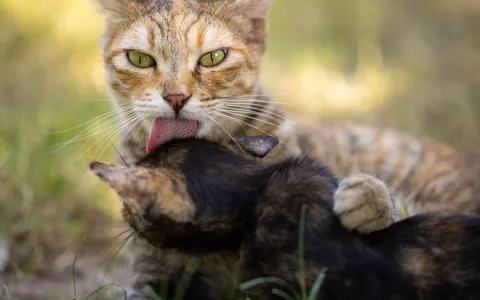
There is more than one possible reason: petting that has gone on long enough, an invitation to play, or discomfort. The guide to why a cat bites, then licks covers the signs to watch for and what to do.
Why is my cat purring at the vet?
Cats often purr under stress, at the vet or while recovering from an injury. A purr in the exam room does not mean your cat is enjoying the visit; it may be trying to settle itself.
Do big cats purr too?
Many do. Scientific American notes that most species in the cat family make a purr-like sound, and International Cat Care says many of the larger members of the family can produce the vibration too.
Christopher writes and runs Cat Trivia Games. The sources for this article are listed below, and how the site is made and corrected is on the editorial policy page. More about the author.
References
- Sung, W., DVM, DACVB, PetMD. Why do cats purr? 5 meanings behind a purring cat. back
- International Cat Care. Why do cats..? (purring section). back
- McComb, K. et al., Current Biology (2009). The cry embedded within the purr. back
- Scientific American. Why do cats purr? back
- University of Vienna, via ScienceDaily (2023), on Herbst, C. T. et al., Current Biology. Cats purr differently than previously thought. back
- Cornell Feline Health Center. Dyspnea (difficulty breathing). back
This is general information, not veterinary advice. Written by Christopher Fox under our editorial policy.