 Cat Trivia Games
iOS App
Why Does My Cat Follow Me to the Bathroom?
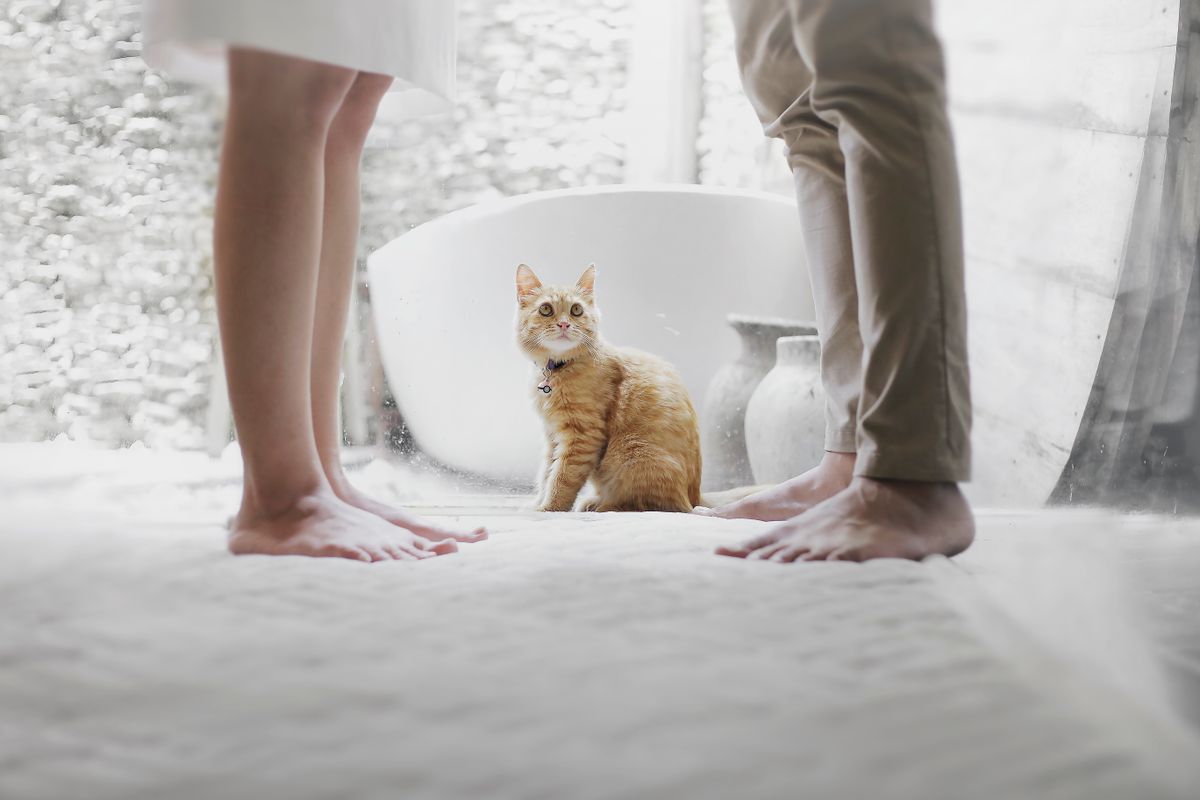
Your cat may want company, be curious about the room or have learned that following you gets your attention. A bathroom has plenty to investigate, and you are often sitting still. There may be several reasons for the visit.
Why cats follow people around
Some cats keep to themselves; others follow their people from room to room. Cats Protection notes that following is more common in older cats and lists a few everyday reasons:1
- Attention. Especially when you have just come home, your cat may want a stroke, a chin scratch or a game.
- Food. Following often peaks just before mealtimes, or at dawn and dusk when many cats are most active. If walking into the kitchen has often ended with food, your cat has learned to come along.
- Company. A cat with a strong bond may simply want to be near you and see what you are doing.
- Boredom. A cat without enough to do may follow you because you are the most interesting thing happening.
There is evidence that many cats use their caregiver as a source of security. In a 2019 Oregon State University study, about 64 percent of 70 kittens and 66 percent of 38 adult cats were classed as securely attached, using a test adapted from studies of human infants.2 The study did not test bathroom visits, so it cannot explain why your particular cat comes along.
What makes the bathroom interesting
A room your cat is often shut out of may be especially interesting. Cats Protection considers curiosity the most likely explanation: there is a tap that might run, a sink to curl up in and a bathtub to climb.1 Your attention is another attraction.
Some cats prefer running water, and International Cat Care suggests a pet drinking fountain as a more practical source for those cats than a dripping tap. It also suggests putting water bowls away from the food bowl.3 That is an individual preference, so a fountain is worth a try rather than a guaranteed fix.
Is it okay to close the door?
It is okay to close the door. Offer a comfortable place or activity outside and keep the routine calm. Following you does not, by itself, mean your cat has separation anxiety. If your cat becomes persistently distressed or its behavior changes suddenly, discuss that with your vet.
To give your cat something else to focus on, Cats Protection suggests short, regular play sessions, puzzle feeders, and regular times for attention and grooming spread through the day. If food is the draw, splitting the day's food into smaller meals may help.1 There is no need to scold a cat for following you or for meowing at the door.
If your cat does come in, the room has its own hazards. Keep the toilet lid down and keep medicines and cleaning products out of reach. If you think your cat has swallowed a medicine or a cleaning product, call your vet or the ASPCA Animal Poison Control Center at (888) 426-4435 right away.4
When following is worth a call to your vet
If your cat becomes much more clingy than usual, Cats Protection suggests speaking to your vet to rule out a medical cause.1 Bathroom visits can also make other changes easier to spot. A cat that is suddenly drinking or urinating much more than usual should see a vet; Cornell lists increased thirst and urination among the common signs of diabetes, an overactive thyroid and kidney disease.567
Frequently asked questions
Why does my cat sit in the sink?
Cats Protection lists a nap in the sink among the usual attractions of the bathroom, and some cats like to be close to the tap. Check that the sink is dry and free of cleaning products before letting your cat settle there.
Why does my cat cry outside the bathroom door?
A closed door keeps your cat away from you and from a room it wants to explore, and some cats have learned that crying gets the door opened. Offering a toy or a puzzle feeder before you go in can help. If the crying is constant and new, mention it to your vet.
Christopher writes and runs Cat Trivia Games. The sources for this article are listed below, and how the site is made and corrected is on the editorial policy page. More about the author.
References
- Cats Protection. Why does my cat follow me around? back
- Oregon State University (2019), on Vitale, K. R. et al., Current Biology. Cats, like children and dogs, develop attachments to their caregivers, study shows. back
- International Cat Care. Why do cats..? (drinking from the tap). back
- ASPCA. ASPCA Animal Poison Control Center. back
- Cornell Feline Health Center. Feline diabetes. back
- Cornell Feline Health Center. Hyperthyroidism in cats. back
- Cornell Feline Health Center. Chronic kidney disease. back
- Cornell Feline Health Center. Feline lower urinary tract disease. back
This is general information, not veterinary advice. Written by Christopher Fox under our editorial policy.