 Cat Trivia Games
iOS App
Sagwa, the Chinese Siamese Cat: The Ink Legend and Real Cats
Sagwa is a girl kitten born "pearl white" in Amy Tan's 1994 picture book The Chinese Siamese Cat, and she gets her dark Siamese-style markings from a pot of ink.12 The book says her descendants are Chinese cats, not Siamese ones. PBS KIDS made her the star of a cartoon series in 2001.3 Real cats with her markings get muddled names too, as shelter records show.
Sagwa falls in the ink pot
Sagwa lives with her parents in the House of the Foolish Magistrate.1 Her parents have an important job: they write down the Magistrate's rules by dipping their tails in ink. Sagwa falls into the ink pot and climbs out with a dark face, ears, paws and tail.2
Her inky paws then change the law. Publishers Weekly says her prints blot out the word "not" in his newest rule, so it now orders people to sing until sundown. He is furious until he hears his people singing his praises. Then he declares that all Chinese cats will have dark faces, ears, paws and tails, in honor of Sagwa.2 By the last page, stray cats may eat as much catfish as they wish.1
"You are not Siamese cats but Chinese cats"
The story is told by a mother cat to her kittens, about their ancestor Sagwa, and she ends it with that line. Publishers Weekly called the book an "original folktale": Tan invented the legend rather than retelling an old one.2
The real breed's history points elsewhere. The Cat Fanciers' Association says the Siamese was first documented in a Thai collection of cat poems from the Ayutthaya period, 1350 to 1767. In 1878 the American Consul in Bangkok gave a cat named Siam to President Rutherford B. Hayes.4
Face, ears, paws and tail: where the ink landed
Tan's Magistrate chose the right four places. In a real pointed cat, a CFA judge explains, a heat-sensitive gene puts color on the coolest parts of the body, "the face, ears, feet, and tail," while the body stays cream or white, darkening with age.5
Of the Siamese colors the CFA describes, seal point is the nearest match for ink, with points of "deep seal brown."4 And the pattern is not only Siamese: the same CFA article lists it in the Ragdoll, Birman, Balinese, Himalayan Persian and Colorpoint Shorthair, among others.5
What shelters write on a cat with Sagwa's markings
Would a real Sagwa be called Siamese? Ten shelters publish records with both a cat's color and a breed, in eleven datasets because Austin changed systems. They hold 7,855 cats whose color is written as a point: Seal Point, LYNX PT, Flame Point and so on. Staff labeled 55.0% of them Siamese or Siamese mix and 28.1% plain domestic shorthair, medium hair or longhair.
The label depended a lot on the shelter. Among the ten datasets with more than 200 pointed cats, the Siamese share ran from 26.0% in Sacramento to 75.5% in Corona, whose file lists only adoptions. A shelter breed is a guess from looks, not a pedigree, and Tan's mother cat would approve: many cats with these markings are not called Siamese at all.
Seal point, the nearest match for Sagwa's ink, was 27.4% of the pointed cats. Lynx point was more common, at 31.6%, and flame point came third at 14.4%.
Seven cats in the same records were named Sagwa, from 2019 to 2026. That is far too few for percentages, but all seven were female, like the cartoon, and five had a pointed coat or a Siamese label. One, a kitten Montgomery County took in during 2020, was written down as white and black and labeled Siamese. The cat name lookup lists the two cities with more than one.
How I counted. Each cat counts once per dataset, at its first stay. Pointed means the color text contains "point" or its short form "PT". A breed counts as Siamese when its text contains the word, so "Siamese Mix" is in. I read all eleven files on November 19, 2026.678910111213141516 Long Beach records color but no breed, so it is left out. The counts are mine, made by combining the files; no shelter, city or county had a hand in them.
Sagwa on PBS KIDS
The cartoon Sagwa, the Chinese Siamese Cat launched on PBS KIDS on September 3, 2001.3 PBS had announced 40 half-hour episodes, each with two 11-minute stories set in ancient China, with Sagwa searching for "her own place" in the world. CinéGroupe produced it with Children's Television Workshop and IF/X Productions. Tan and Schields were creative consultants, and Jacques Pettigrew and George Daugherty were executive producers.17
Common Sense Media rates the show for ages 4 and up. It notes that Sagwa plays with her siblings, that the family looks up to its grandparents, and that a segment between stories, "What about you?", features real children.18 In May 2002 background artist Valery Mihalkov won a Daytime Emmy for Outstanding Individual Achievement in Animation for his work on the series.19 That September PBS licensed new Sagwa books to Scholastic, starting with Princess Sheegwa and Acrobat Cats.3 To test what you know about other cartoon cats, try a round of cat trivia.
Up next
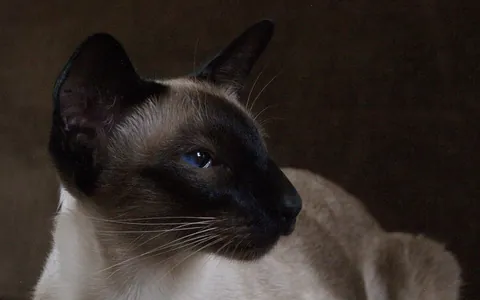 Cat BreedsSiamese Cat Breed: Why So Many Pointed Cats Get Called SiameseThe real breed whose markings Sagwa shares.
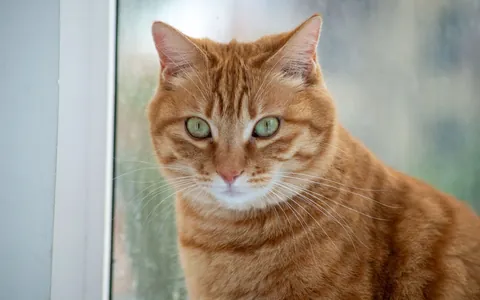 Cat Facts30 Famous Cartoon Cats, From 1919 to TodayMore cartoon cats, each with its first appearance.
Breed photos: mostly Wikimedia Commons contributors under free licenses, cropped. Every photographer and license is on the photo credits page.
Christopher writes and runs Cat Trivia Games. The sources for this profile are listed below, and how the site is made and corrected is on the editorial policy page. More about the author.
References
- Kirkus Reviews. The Chinese Siamese Cat by Amy Tan, illustrated by Gretchen Schields (review; release date September 1, 1994). back
- Publishers Weekly (August 29, 1994). The Chinese Siamese Cat by Amy Tan, illustrated by Gretchen Schields (review). back
- PBS press release (September 16, 2002). PBS grants license for Sagwa books to Scholastic. back
- Cat Fanciers' Association. Siamese (breed profile). back
- Pat Jacobberger, Cat Fanciers' Association, Cat Talk. Patterns in the domesticated cat, part 3: the pointed patterns. back
- City of Austin, Texas, data.austintexas.gov, public domain, read November 19, 2026. Austin Animal Center Intakes (10/01/2013 to 05/05/2025) and Austin Animal Center Outcomes (10/01/2013 to 05/05/2025). back
- City of Austin, Texas, data.austintexas.gov, no license stated on these datasets, read November 19, 2026. Austin Animal Center Intakes and Austin Animal Center Outcomes (new system). back
- City of Bloomington, Indiana, data.bloomington.in.gov, no license stated on the dataset, read November 19, 2026. Animal Shelter Animals. back
- City of Corona, Corona Animal Services, CorStat, no license stated on the dataset, read November 19, 2026. CorStat - Animal Adoptions. back
- City of Edmonton, data.edmonton.ca, under the City of Edmonton Open Data Terms of Use, read November 19, 2026. Animals Admitted to the Animal Care & Control Centre. back
- Louisville Metro Animal Services, Louisville Metro open data (LOJIC), under the Open Data Platform Terms and Use, read November 19, 2026. Louisville Metro KY - Animal Service Intake and Outcome. back
- City of Midland, Texas, ArcGIS Hub, no license stated (the city provides the data as is, with no guarantee), read November 19, 2026. Animal Intake (public view). back
- Montgomery County, MD, dataMontgomery, public domain, read November 19, 2026. OAS - Animal Shelter Pathway. back
- City of Norfolk, data.norfolk.gov, no license stated on the dataset, read November 19, 2026. Norfolk Animal Care and Adoption Center (NACC). back
- City of Sacramento, ArcGIS Hub, no license stated, read November 19, 2026. Animal Intakes and Outcomes for the Last 3 Years. back
- County of Sonoma Department of Health Services, data.sonomacounty.ca.gov, no license stated on the dataset, read November 19, 2026. Animal Shelter Intake and Outcome. back
- PBS press release (January 19, 2000). Amy Tan's Sagwa, the Chinese Siamese Cat, produced by CinéGroupe in association with Children's Television Workshop and IF/X Productions, is coming daily to PBS KIDS. back
- Joly Herman, Common Sense Media. Sagwa, the Chinese Siamese Cat (TV review). back
- Animation World Network (May 13, 2002). Daytime Emmy Awards presented. back
Written by Christopher Fox under our editorial policy.