 Cat Trivia Games
iOS App
Birman Cat Breed
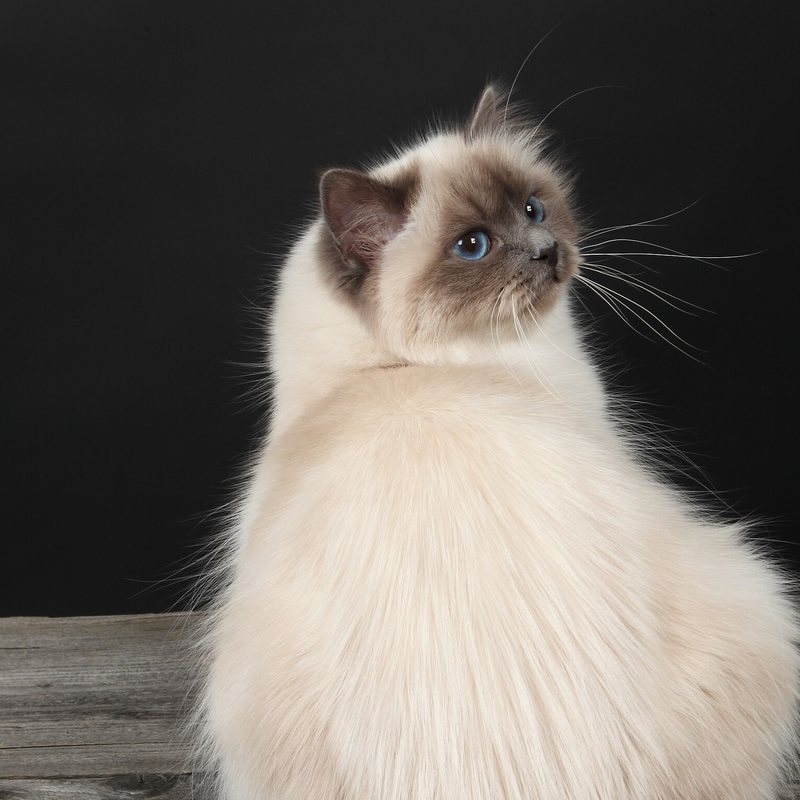

Birmans have blue eyes, a silky pointed coat, and distinctive white paws. They are often described as affectionate and relatively gentle, although some prefer sitting beside a person to sitting on their lap. Their coat and markings help distinguish them from other longhaired pointed breeds.
Quick facts
- Build: medium to large with substantial boning; males are usually larger than females
- Life expectancy: 9 to 15 or more years per TICA; PetMD gives 9 to 13
- Coat: medium long to long and silken, with a heavy ruff and no undercoat
- Markings: pointed, with four white gloves; the back gloves extend up the hock as laces
- Maturity: about three years, per CFA
Temperament and daily life
Birmans are often described as patient, even-tempered, and tolerant, and as relatively quiet cats, most of them soft-spoken with chirp-like voices. Many do not do well alone for long periods of time.
Many keep playful kitten personalities well into their third or fourth year, and a Birman might not always cuddle on your lap. Plenty prefer to sit beside their people, which is a normal preference rather than a sign of distance.
Grooming and care
CFA says that with no undercoat to get tangled or matted, the coat is easy to care for and a weekly combing should be sufficient. PetMD suggests a slicker brush a few times a week. Adjust grooming to the individual coat and watch for tangles, especially in the ruff. General care advice adds nail trims every two to three weeks.
A cat that matures slowly and stays playful for years needs regular play, climbing space and company during the day.
Health considerations
PetMD says Birmans can be susceptible to hypertrophic cardiomyopathy (HCM) and that genetic testing for HCM in Birmans isn't available yet, but Cornell's list of breeds in which HCM is more prevalent does not include the Birman, so treat this as a point to discuss with your veterinarian rather than a measured breed risk. HCM is diagnosed by echocardiography.
Birmans can be genetically tested for polycystic kidney disease (PKD), but a genetic test does not show how seriously a cat is affected, and ultrasound is the way to a definitive diagnosis. Ask for documented health information and discuss it with your veterinarian.
History
The Birman is often called the Sacred Cat of Burma, after a legend that the breed descends from Burmese temple cats raised by Kittah priests. Numerous folk tales explain the markings, while the breed's real early history is uncertain.
CFA's account is that a breeding pair was shipped from Burma to France in approximately 1919, and that the female arrived pregnant and became the foundation of the breed in France. The breed was almost wiped out during the Second World War, with only two Birmans left in Europe by the end of the war, and breeders outcrossed to other breeds, presumably Persians, to rebuild it. Birmans arrived in the United States in 1959 and were accepted for CFA registration in 1967.
Appearance
The Birman is a strongly built, elongated cat with substantial boning and blue, almost round eyes set well apart. The coat is medium long to long, silken and slightly curly on the stomach, with a heavy ruff around the neck. The white front gloves should run across the paws in an even line, and the back gloves extend up the back of the hock as laces, ideally ending in a point or inverted V. Show standards set detailed requirements for the white markings; those details do not determine a cat's value as a companion. CFA itself notes that faultlessly gloved cats are a rare exception.
Before choosing a Birman
A Birman may suit a home where someone is around for much of the day and where regular combing fits the routine. Expect a cat that often prefers your side to your lap. Ask for documented health information on the parents and discuss it with your veterinarian.
Birman FAQ
What is the difference between a Birman and a Ragdoll? Both are blue-eyed, pointed longhairs, but they are separate breeds with separate standards. CFA describes the Ragdoll as one of the larger breeds of cat, with four patterns, while the Birman's standard calls for four white gloves, with the back gloves extending up the hock as laces.
Do Birmans get along with children? Many live comfortably with children, and CFA's description of a patient, tolerant cat fits that. Supervise interactions and give the cat places where it can rest undisturbed.
Sources
- Cat Fanciers' Association: Birman (breed profile and standard)
- The International Cat Association: Birman
- PetMD: Birman
- Cat Fanciers' Association: Ragdoll
- Cornell Feline Health Center: hypertrophic cardiomyopathy and polycystic kidney disease
- ASPCA: general cat care
Try a mixed breed question
What is a defining feature of the Mekong Bobtail’s eyes?
Answer: A vivid, intense blue. The WCF breed standard specifically calls for large, oval eyes in an intense blue. The brighter the shade, the more prized it is at shows. Source