 Cat Trivia Games
iOS App
Siamese Cat Breed
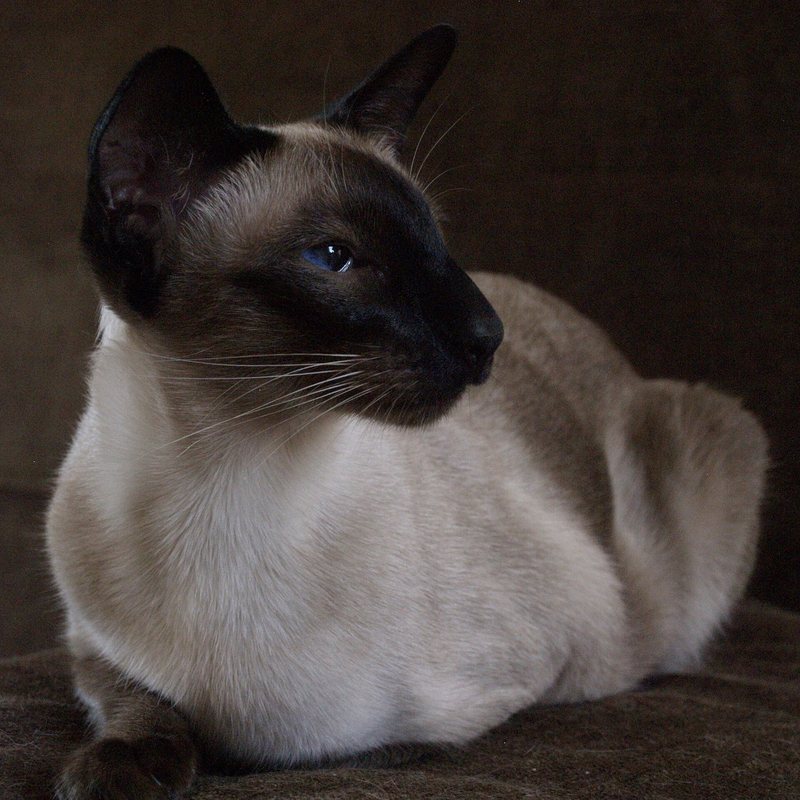

The Siamese is a pointed, blue-eyed cat often known for a strong voice and an interest in people. Many enjoy frequent interaction and active play. Modern show lines and more traditional types differ in appearance, so it helps to understand the terminology used by each registry.
Quick facts
- Origin: the pointed cats of Thailand, recorded in Thai cat poems from the Ayutthaya period (1350 to 1767)
- Size: medium; TICA gives about 5 to 8 pounds for females and 8 to 12 for males
- Life expectancy: 10 or more years, with some living past 20 (TICA); PetMD gives an average of 15 years
- Coat: very short and fine; CFA's four colors are seal, chocolate, blue and lilac point
- Registries: one of the first breeds CFA recognized, at its founding in 1906; TICA registers the Siamese and, separately, the Thai
Temperament and daily life
Many Siamese announce themselves, then explain themselves. The breed is known for its voice, sometimes earning the nickname Meezer, and many cats enjoy warmth, closeness and being involved in whatever their people are doing. CFA describes their wide range of sounds and body language; TICA also notes their reputation for conversation.
That interest in people is worth thinking about before you bring one home. Daily play, climbing space and puzzle feeders give an active cat things to do. Many Siamese get on well with other pets, but introductions matter. How a cat handles children, other animals or time alone depends on the individual.
Grooming and care
Siamese do shed, but the short, fine coat is easy to keep: stroke it with damp hands until they are dry, or use a rubber brush. A Siamese should not need bathing unless it is being shown. Trim the nails, check the ears and keep up dental care as for any cat.
Health considerations
Most Siamese are healthy, and breeders are working on two inherited conditions. Progressive retinal atrophy (PRA), which leads to blindness, is recessive, and a DNA test for the rdAc variant lists the Siamese among the breeds suitable for testing; it covers that variant only. Amyloidosis, which damages the liver, is harder: research is still working out the responsible genes, so there is no simple screening test; ask whether the disease has appeared in a kitten's family lines.
Pica, asthma and dental disease are also worth knowing about (PetMD). Pica, the eating of non-food items, is reported in Asian breeds such as the Siamese, especially as wool-sucking, and swallowed string, hair ties or fabric can block the gut, so keep them out of reach and talk to your veterinarian if your cat chews or eats things it should not. Some studies suggest Siamese may be predisposed to asthma, but the Cornell Feline Health Center says this has not been definitively proven; in cats generally, the average age at diagnosis is 4 to 5 years.
Breathing problems can be urgent. A cat breathing rapidly, with effort or with an open mouth needs a veterinarian right away, as Cornell's page on breathing difficulty explains. CFA's standard calls for uncrossed eyes and disqualifies a visible kink in the tail; any new change in how a cat's eyes look or move, or a tail that seems painful, is worth a veterinary check.
History, type and registry names
Pointed cats appear in Thai cat poems from the Ayutthaya period. A Siamese named Siam was given to President Rutherford B. Hayes by the American consul in Bangkok in 1878, the first known example in the United States. Around the same time, Siamese appeared in the catalogues of England's Crystal Palace cat shows.
CFA recognized the breed at its founding in 1906. Seal point was the only accepted color at first; blue point followed in 1934, chocolate in 1952 and lilac in 1955.
The names get confusing because registries describe the breed's history differently. CFA says its earliest standards describe a cat that could excel in the show ring today. Its history article describes rounder-headed, heavier-boned cats being bred to meet demand in the 1950s and treats "Traditional Siamese" as a widely held notion rather than a separate breed.
TICA separately registers the moderate, old-style pointed cat as the Thai, known in Thailand as the Wichienmaat. It notes that "applehead" is an informal American term with no single agreed meaning. A registry pedigree identifies a breed; a shelter's "Siamese" label describes appearance.
Appearance
The CFA standard describes a medium-sized, slender cat with a long neck, body, legs and tail. The head is a long wedge with a flat profile, large ears and almond-shaped, deep blue eyes. A short, fine coat lies close to the body, with darker points on the face, ears, feet and tail.
Before choosing a Siamese
Think about whether you would enjoy a cat that wants frequent company and has plenty to say. If you are talking to a breeder, ask about PRA testing and any family history of amyloidosis. If you are adopting, spend time with the cat and ask about its daily habits. Either way, the individual matters more than the label.
Siamese FAQ
Why do Siamese cats have darker faces, ears, feet and tails? The gene behind the pointed pattern is heat-sensitive: it deposits color on the coolest parts of the body, and the body color usually darkens as a pointed cat grows older (CFA).
Is every pointed, blue-eyed cat a Siamese? No. The pointed pattern also appears in other breeds, such as the Balinese, Himalayan, Birman and Ragdoll, and in cats of mixed or unknown ancestry. Only a pedigree identifies a Siamese.
Are Siamese cats hypoallergenic? No breed can be assumed safe for someone with a cat allergy, and a short coat does not change that. Spend time with the individual cat before committing.
Sources
- Cat Fanciers' Association (CFA): Siamese and its breed standard, a Siamese history article (2000) and pointed patterns
- The International Cat Association (TICA): Siamese and Thai
- PetMD: Siamese
- UC Davis Veterinary Genetics Laboratory: progressive retinal atrophy (rdAc) test
- Cornell Feline Health Center: feline asthma and breathing difficulty
Quick quiz: 3 questions about the Siamese cat
What is the term for the color pattern seen in Siamese cats?
Answer: Point coloration. Siamese show 'point coloration' (colorpoint): the ears, face, paws, and tail are darker than the body. It comes from a temperature-sensitive form of the pigment enzyme that only works in the cooler extremities. Source
What color are the eyes of most Siamese cats?
Answer: Blue. Deep, vivid blue almond-shaped eyes are a defining Siamese trait; the breed standard treats any other eye color as a disqualification. The blue comes from the same colorpoint (partial-albino) gene that creates their dark points. Source
Siamese cats are believed to come from which country?
Answer: Thailand (Siam). Siamese cats originated in Thailand, formerly known as Siam. The breed was highly valued by Thai royalty and monks, living exclusively within palace walls and temples for centuries before introduction to the Western world. Source