 Cat Trivia Games
iOS App
Cat Island, Japan: Tashirojima, Aoshima and Three More
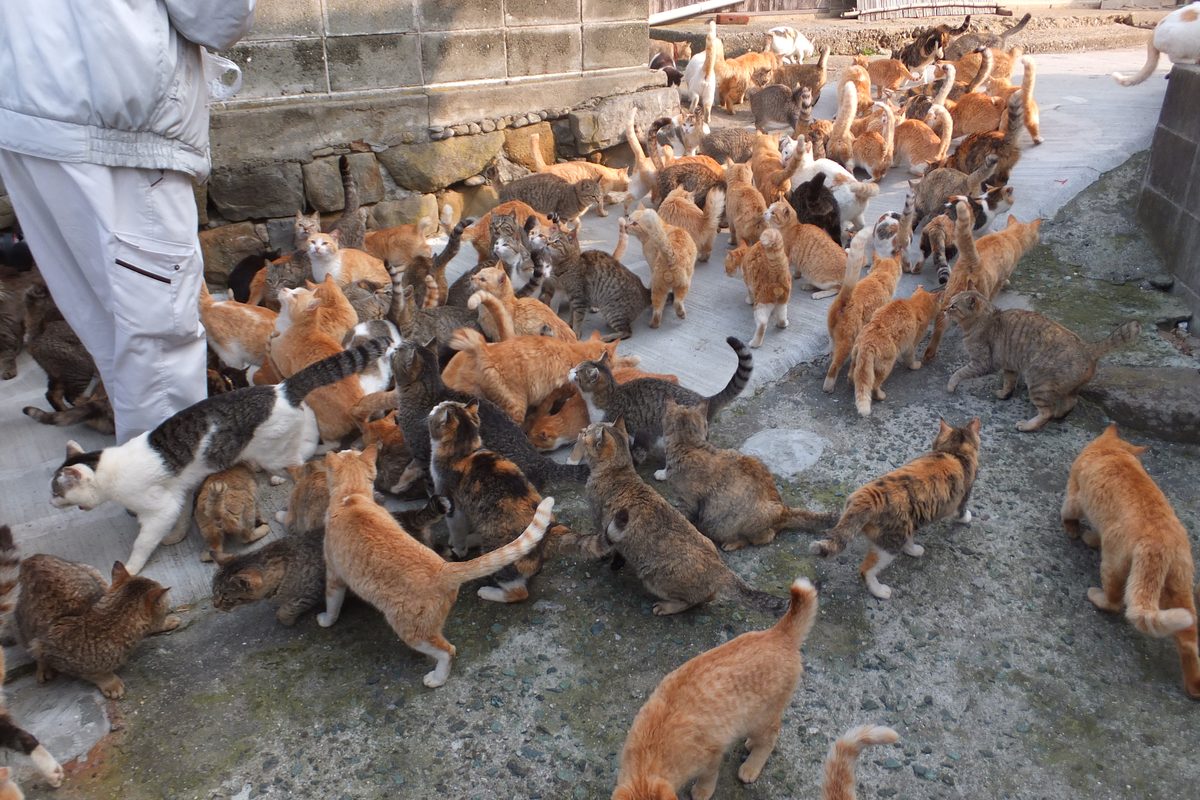

Several Japanese islands are nicknamed cat islands. Tashirojima in Miyagi Prefecture had 48 residents in March 20241 and more than 100 cats, according to a 2021 government magazine.2 Aoshima in Ehime Prefecture was down to about 70 cats and three people in 2025.3 Ainoshima and Sanagishima are also known for their cats, which people brought to islands like these to keep rats off fishing gear and silkworms.4
How many cats live on each island
Every cat count here is an estimate. Ishinomaki City calls Tashirojima a cat island but says nobody knows exactly how many cats live there;1 the other figures are dated reports from news outlets, cat groups and magazines.
| Island | Prefecture | People | Cats | Boat |
|---|---|---|---|---|
| Tashirojima | Miyagi | 48 (March 2024)1 | Said to be more than 100 (2021)2; exact number unknown1 | From Ishinomaki, about 45 to 60 minutes5 |
| Aoshima | Ehime | 3 (April 2025)3 | About 70 (April 2025)3; about 130 in February 20186 | From Nagahama Port, 35 minutes, two round trips a day7 |
| Ainoshima | Fukuoka | 246 (February 2021)8 | About 180 (2024, estimate by cat group SCAT)9 | From Shingu fishing port, 5 or 6 round trips a day in 20249 |
| Sanagishima | Kagawa | 57 (2020 census)10 | Said to be more than 100 (2026)11 | From Tadotsu, about 50 minutes to Honura Port (70 to Nagasaki Port)11 |
| Manabeshima | Okayama | Fewer than 300 (2020)12 | More than 300 (2020)12 | From Sumiyoshi Port, about 45 minutes by high-speed boat11 |
Sources differ on Tashirojima's ratio. Japan Guide says almost four cats per person,5 while JAL's SKYWARD+ travel site put the cats at about 130 in 2020, twice the number of islanders.12
Why the islands have so many cats
People brought cats to the islands to keep rats and mice away from fishing gear and silkworms, and fishermen shared fish with them. Islands have few stray dogs or cars, and with little veterinary care, neutering lags and the cats breed on their own.4
Tashirojima had both trades. Its silkworm farmers kept cats to protect the cocoons from mice, and fishermen are said to have watched the cats to forecast the weather and the catch.2 Aoshima's cats arrived in the mid-20th century to curb the rats damaging fishing nets.13
English Wikipedia's Tashirojima article says the island's wild cats descend from pets freed by a 1602 order meant to fight the rodents threatening silkworms.14 Ishinomaki City, the government's Highlighting Japan magazine and JAL do not mention that order; the city links the cats to fishing luck, and the other two add silkworms.1212
Tashirojima, its cat shrine and Manga Island
Tashirojima is a 2.92-square-kilometer island about 17 km southeast of the old Kitakami River mouth, off Ishinomaki, with two villages: Nitoda in the south and Odomari in the north.1 Its population fell from 55 in September 20212 to 48 in March 2024.1 Its fame among cat lovers dates to a mid-2000s media report of cats lounging under the eaves and around the streets. The cats are used to people, and at Nitoda Port some walk up and rub against visitors' legs.2
Neko-jinja, a small stone cat shrine in the middle of the island, was set up to pray for the cats' safety and for big catches.1 Its founding story varies. In Highlighting Japan's version, a rock splinter from a fisherman's work on his gear killed a cat; he built a small shrine to bury it, and the fishing was good from then on.2 In JAL's, the fisherman was breaking stones to make anchors, and a fishing-net owner built the shrine to mourn the cat.12 The city leaflet's entry on the shrine says it was chosen for the land ministry's list of 100 island treasure views.1
Manga Island, a hilltop campsite, has lodges with cat-themed exteriors designed by manga artists including Machiko Satonaka and Tetsuya Chiba.12
Quick quiz: how well do you know cat history?
According to the Gotoku-ji Temple legend behind Japan's beckoning cat, or maneki-neko, a cat named Tama saved a feudal lord from what danger by waving him inside?
Answer: Being struck by lightning. The Edo-period legend holds that a temple cat named Tama beckoned regional ruler Ii Naotaka to come inside just before a lightning strike hit the spot where he had been standing, inspiring the lucky waving-cat figurine tradition. Source
According to the ancient Greek historian Herodotus, pilgrims attending Bastet's festival at Bubastis engaged in celebration and what activity in excess?
Answer: Drinking wine and merrymaking. Herodotus described the Bubastis festival as featuring boisterous celebrations where pilgrims drank more wine than in all the rest of the year combined. The festival was not primarily solemn religious observance but a joyous, festive occasion reflecting Bastet's role as a goddess of happiness and protection. Source
Approximately how many thousand years ago were domestic cats first domesticated from their wild ancestor?
Answer: approximately 10 thousand years ago. Archaeological evidence indicates that Felis silvestris lybica was domesticated approximately 10,000 years ago in the Near East during the early agricultural period. This timing matches the rise of grain storage that attracted rodents, creating the conditions for the commensal relationship that launched cat domestication. Source
Aoshima, the island running out of cats
Aoshima, in Ozu, Ehime Prefecture,7 has lost most of its people and many of its cats:
- After World War II: about 900 people.15
- 2017: 13 people.15
- February 2018: the Ehime Shimbun reported a plan to spay or neuter all of the roughly 130 cats.6
- October 2018: the cats were spayed and neutered, as the Aoshima Cat Protection Society had recommended.15
- September 2024: five residents, every cat over 7 and no kittens since the 2018 operations, said an X post by aoshima_cat quoted by Tokyo Weekender.15
- April 2025: about 70 cats and three islanders, in an NHK documentary.3
Aoshima's cats are mostly red (orange) and tortoiseshell, a 2023 genetics paper found. Scoring coat-color genes from Reuters photos published in 2015 (three overlapping samples of 75, 56 and 70 cats), it put the orange allele's frequency at 0.580, against 0.220 for Japan as a whole. The author explains this as a founder effect: the cats descend from a few brought in for rodent control.13 Inferring genes from photos makes this a first look. The photos also showed some bobtail cats, but the paper could not say how many; earlier studies of Japanese cats found bobtail shares from 0 to 79.6%.13 The same trait gives the Japanese Bobtail breed its name.
Ainoshima, Sanagishima and Manabeshima
Ainoshima, a 1.25-square-kilometer island off Shingu in Fukuoka Prefecture, had 246 residents in February 2021, down from 1,318 in 1960, and more than 60% were older residents. About 94,000 people visited in fiscal 2019, a growing number of them for the cats.8
Before a four-day neutering project in March 2021, Ainoshima had more than 230 unneutered cats. Volunteers put in about 100 person-days and caught 182; the Doubutsu Kikin foundation operated on 150 in a temporary clinic in a house, and a local group paid for 32 more at animal hospitals elsewhere in the prefecture. Of the 77 females, 47 (61%) were pregnant.16 By 2024, three cat groups and volunteers had neutered a little over 300 of the island's cats.9
Sanagishima, off Tadotsu in Kagawa Prefecture, had 57 residents in 42 households at the 2020 census.10 Serai magazine wrote in 2026 that about 50 people and more than 100 cats are said to live there, and photographed cats jumping one after another across a gap in a breakwater.11
Manabeshima, in Kasaoka, Okayama Prefecture, keeps the look of an old fishing town and was a location for films such as Gokumon-to. Its cats gather around the small shrines, and in each area a caretaker feeds even unowned cats and cleans up after them.11
Feeding and visitor rules on each island
- Tashirojima: do not feed the cats. For the cats' health, the city asks visitors to leave that to residents and the staff of Shima no Eki, a visitor facility selling snacks and souvenirs.12 Carry all your garbage home.5
- Aoshima: feed the cats only at the set feeding place, and not too much; take your trash home, leave residents in peace, and save water.17 There are no shops or vending machines, and the ferry carries 34 passengers a day in total, residents first.7
- Ainoshima: feeding was once banned across the island; the rule now is cat food only.9
- Sanagishima: a noticeboard asks visitors to take food waste home, stay off private land and, if feeding the cats, avoid roads and other dangerous spots and give only what a cat eats at once.11
- Manabeshima: do not take a cat off the island, however friendly it is.11
Frequently asked questions
Can you stay overnight on Tashirojima?
Yes. Ishinomaki City lists three guesthouses, Fujiya and Marine Life in Nitoda and Hamaya in Odomari, and says to check with each whether it is taking guests. Manga Island's lodges open from April to the end of October; a small lodge cost 8,140 yen in the city's 2024 leaflet, booked at least a week ahead.1
Can I bring my own pet on the Aoshima ferry?
Not into the passenger cabin. A pet travels in a cage handed to the crew, with a small-baggage fee of 250 yen each way.18
Can you visit two cat islands in one day?
Serai magazine suggests Sanagishima and Manabeshima on a Saturday, the only day the ferry between them runs; it takes about 20 minutes. Each island takes two to three hours to see on foot.11
Up next
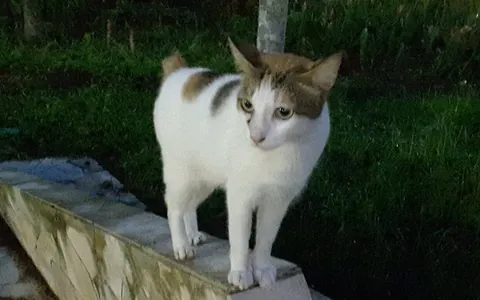 Cat BreedsJapanese BobtailThe Japanese breed known for its short, bobbed tail.
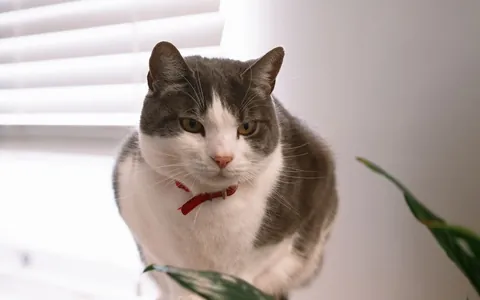 Cat BehaviorWhy Do Cats Headbutt You?Why cats rub against legs, as some do at Tashirojima's port.
Breed photos: mostly Wikimedia Commons contributors under free licenses, cropped. Every photographer and license is on the photo credits page.

Christopher writes and runs Cat Trivia Games. The sources for this article are listed below, and how the site is made and corrected is on the editorial policy page. More about the author.
References
- Ishinomaki City. Tashirojima leaflet, with population as of March 2024 (PDF, in Japanese). back
- Sato Kumiko, Highlighting Japan (Cabinet Office, Government of Japan), November 2021. Cat Island. back
- amass, April 2025. 70 cats and 3 islanders: NHK's Document 20min. on Aoshima, Ehime (in Japanese). back
- Hanarejima Kohobu, August 2026. Why do islands have so many cats? How cat islands came about (in Japanese). back
- Japan Guide. Tashirojima. back
- Ehime Shimbun, 21 February 2018. All cats on Aoshima, an island with many cats, to be spayed and neutered (in Japanese). back
- Ozu City. Aoshima ferry timetable and access (in Japanese). back
- Kyushu Electric Power, 2021. Ainoshima: basic information (PDF, in Japanese). back
- Hanarejima Kohobu, December 2024. Ainoshima: lucky cats or pests? Interview with SCAT (in Japanese). back
- Kagawa Prefecture. Kagawa's islands, with 2020 census figures (in Japanese). back
- Serai, September 2026. Sanagishima and Manabeshima: a trip to the Setouchi cat islands (in Japanese). back
- JAL SKYWARD+, February 2020. Japan's cat islands worth visiting once (in Japanese). back
- Kholin S.K., Vavilov Journal of Genetics and Breeding, 2023. Genetic profile of domestic cat (Felis catus L.) population of Aoshima Island (Japan). back
- Wikipedia. Tashirojima. back
- Matthew Hernon, Tokyo Weekender, September 2024. Japan's Cat Island won't survive much longer. back
- Doubutsu Kikin, March 2021. Ainoshima, Fukuoka: 233 stray cats spayed and neutered (in Japanese). back
- Ozu City. Requests for visitors to Aoshima (PDF, in Japanese and English). back
- Ozu City. For passengers with pets on the Aoshima ferry (PDF, in Japanese). back
Written by Christopher Fox under our editorial policy.