 Cat Trivia Games
iOS App
When Were Cats Domesticated? What Bones and Ancient DNA Show
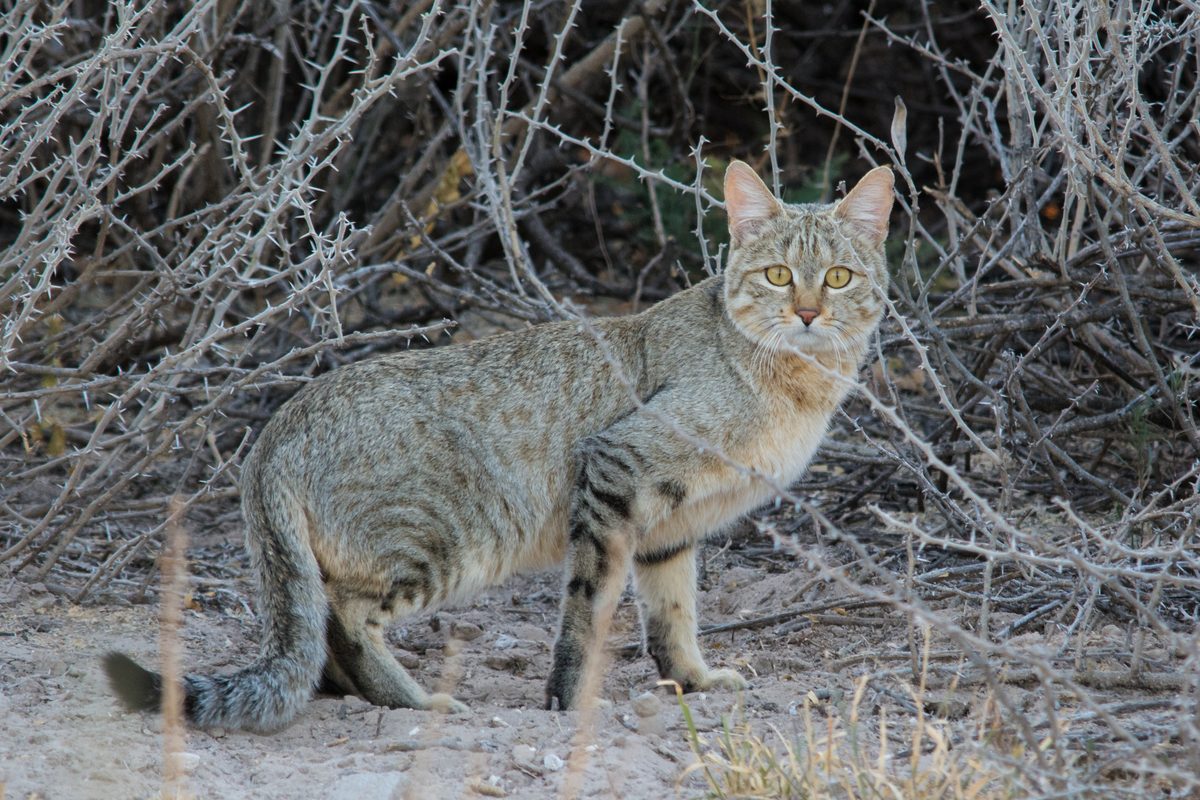
Cats and people were close by about 9,500 years ago, when a young cat was buried near a person on Cyprus, though no exact year of domestication is known. Every house cat traces back to the African wildcat of North Africa and the Near East, and where it became domestic is still debated. Ancient DNA shows domestic cats spread late: to Europe about 2,000 years ago and to China about 1,400.
House cats come from the African wildcat
In a 2007 study of samples from 979 cats, including wildcats and feral cats from three continents and 112 pedigreed cats, every domestic cat tested fell into one genetic group with Near Eastern wildcats. Carlos Driscoll's team concluded that cats were domesticated there, probably as Fertile Crescent farming villages grew, from at least five wild founders whose maternal DNA lineages date back 100,000 years before any archaeological record of domestication.1
The start is hard to date: felid bones are scarce at archaeological sites, wild and domestic skeletons overlap in size and shape, and few ancient or modern cat genomes have been analyzed. A 2025 study of ancient cats in Europe calls current ideas about when, where and how cats were domesticated "poorly supported by empirical evidence." It names the ancestor the African wildcat, Felis lybica lybica, which Driscoll's team called the Near Eastern wildcat, Felis silvestris lybica.2
The Cyprus burial, about 9,500 years ago
At Shillourokambos, a Neolithic village on Cyprus, excavators in 2001 found a complete cat about eight months old, with no butchery marks, 40 centimeters (16 inches) from a person's grave, whose offerings included ochre, flint tools, axes and seashells. Jean-Denis Vigne's team published the find in Science in April 2004.3
Cyprus, 70 kilometers (43.5 miles) south of mainland Turkey, has no native cats, so people must have brought them. Whether people of the time had domesticated cats is unclear, the researchers wrote, and Smithsonian curator Melinda Zeder noted that domestic and wild cats are physically very similar. Still, she said, the deliberate burial "makes a strong case that cats had a special place" in the villagers' lives and afterlives.3
Ancient DNA points to the Near East and Egypt
Claudio Ottoni's 2017 study of DNA from over 200 cats aged 100 to 9,000 years found that wildcats from the Near East and Egypt both contributed to the domestic cat, at different times.45 The spread began in the Neolithic Near East and gained momentum in the Classical period, as the Egyptian cat moved through the Old World, perhaps along trade routes by sea and land.4 Cats with an Egyptian signature turned up at Viking sites near the Baltic Sea.5 Most ancient cats were striped, and the blotched tabby pattern became common only in the Middle Ages or later.54 The authors took that as a sign that deliberate cat breeding began later than for most other domestic animals.4
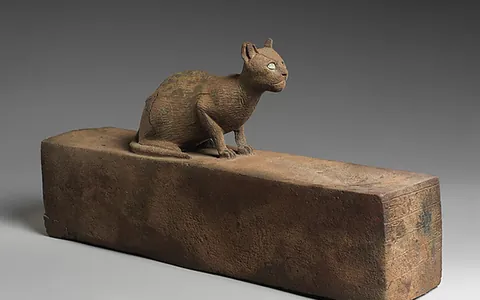
Art and burials from about 2,200 BCE underpin a traditional view that the domestic cat began in Pharaonic Egypt, where attempts to tame cats may date to the Predynastic period, about 3,700 BCE.2 In 2017 Ottoni said it was unclear whether Egypt's domestic cats came from Near Eastern imports or "a separate, second domestication" there.5
Quick quiz: how well do you know cat history?
What wild species is considered the ancestor of all domestic cats?
Answer: The Near Eastern wildcat. Mitochondrial DNA studies show Near Eastern wildcats, Felis silvestris lybica, are the maternal ancestors of every domestic cat alive today. Source
When British antiques dealer Ben Rea died in 1988, he left his entire multi-million-pound fortune to which of his fifteen cats, making her the world's wealthiest feline?
Answer: Blackie. Blackie, the last surviving of Rea's fifteen cats, inherited roughly seven million pounds, an amount later split between cat charities tasked with caring for her. Source
When Chuck Jones took over directing Tom and Jerry shorts from 1963 to 1967, how was Tom's design changed?
Answer: He got bushier eyebrows and a darker, fluffier coat. Jones, fresh off Looney Tunes, redesigned Tom with larger bushy eyebrows, a darker grey coat, and fluffier cheeks, giving him a look closer to Sylvester the Cat. Source
Europe: domestic cats arrived about 2,000 years ago
Domestic cats probably spread into Europe several millennia after the Neolithic, according to that 2025 study, published in Science with Ottoni as corresponding author. It drew on 225 ancient cat specimens from 97 sites in Europe and Anatolia, 87 ancient and modern genomes and 37 direct radiocarbon dates.2 The genomes do not support the 2017 press release's claim that "migrating farmers took the domesticated cat with them."5 Cats from Neolithic Anatolia (about 8,000 to 6,000 BCE) and Neolithic and Chalcolithic southeast Europe (about 5,500 to 4,000 BCE), once read as domestic from their mitochondrial DNA, were European wildcats whose ancestors had interbred with African wildcats.2
The oldest cat in the study with today's domestic cat ancestry lived at Mautern, Austria, between 50 BCE and 80 CE. Cats with that ancestry then appear in Italy and at Roman military sites along the Danube in Austria and Serbia. The authors say this confirms the Roman army and its entourage helped spread cats into central and eastern Europe. A cat from Fishbourne, Britain, dated 24 to 123 CE, shows they reached northern Europe early in the Roman Imperial era. With only three genomes from the 1st millennium BCE, an earlier arrival still needs testing. Sardinia's wildcats have a separate history: the authors suggest people brought their ancestors from Northwest Africa in the 1st millennium BCE.2
Europe's domestic cats likely came from North Africa rather than the Levant, since present-day domestic cats share more genetic drift with a Tunisian wildcat than with Levantine ones. That may point to the west or central North African coast, in addition to or instead of Egypt. The authors call this preliminary: only five wildcat genomes (three Levantine, two North African) represent the region, and genomes from Egyptian cats are still missing.2
China: leopard cats came first
Small cats from Quanhucun, a Neolithic farming village in Shaanxi dated about 5,560 to 5,280 years ago, were read in 2014 as evidence of cat domestication in China. A 2016 jaw-shape analysis showed these and other Neolithic Chinese cat bones were leopard cats (Prionailurus bengalensis), a different wild species.6
Leopard cats lived around people in China from at least 5,400 years ago until 150 CE, according to a 2025 Cell Genomics study based on DNA and radiocarbon dates from 22 small cat bones at 14 sites. The Book of Rites, compiled in the 5th to 3rd centuries BCE, mentions people welcoming "wild cats" on farms for pest control; the authors think these were leopard cats. The two species do not naturally interbreed, and human-made crosses later produced the Bengal breed.7
After a gap of several centuries, China's earliest known domestic cat appears at Tongwan City, a Silk Road hub in Shaanxi, about 730 CE (706 to 883 CE), in the Tang Dynasty. Its genome suggests it was all white or a white-marked mackerel tabby, and 85% of 91 cats in 33 Chinese paintings from 827 to 1930 CE show some white. Its Levantine maternal lineage is carried by 30 of 38 modern Chinese domestic cats studied. The authors propose that Silk Road merchants brought cats around 1,400 years ago, long after cattle, sheep and goats (about 3,000 to 2,000 BCE) and horses (about 1,200 BCE).7
A cat from Dzhankent, a Silk Road city in Kazakhstan, dated 775 to 940 CE, had dental disease and a healing broken leg when it died. Most likely a male at least 58 weeks old, it probably ate a soft, high-protein diet. The researchers concluded that people "carefully cared for and tended to this animal throughout its life."8
Cat domestication timeline
| When | Where | What was found |
|---|---|---|
| About 8,000 to 4,000 BCE | Anatolia and southeast Europe | Taken for domestic cats; genomes show European wildcats.2 |
| About 7,500 BCE | Shillourokambos, Cyprus | A young cat buried 40 cm from a person.23 |
| About 3,700 BCE | Predynastic Egypt | Possible early attempts to tame cats.2 |
| At least 5,400 years ago to 150 CE | Chinese villages, including Quanhucun | Leopard cats living around people.67 |
| From about 2,200 BCE | Pharaonic Egypt | Cats in art and burials.2 |
| 2nd century BCE | Genoni, Sardinia | African wildcat ancestry linked to the island's wildcats, not to house cats.2 |
| 50 BCE to 80 CE | Mautern, Austria | Oldest cat in the 2025 study with domestic cat ancestry.2 |
| 24 to 123 CE | Fishbourne, Britain | Domestic cat from the early Roman Imperial era.2 |
| About 730 CE | Tongwan City, Shaanxi, China | Earliest known domestic cat in China.7 |
| 775 to 940 CE | Dzhankent, Kazakhstan | An injured cat that people cared for.8 |
Frequently asked questions
Did cats domesticate themselves?
That is the usual idea: wildcats came to early farming villages for the rodents in the grain stores, and Driscoll's team wrote that the cat "probably began its association with humans as a commensal."1 It remains a hypothesis. The 2025 Europe study notes recent evidence that Neolithic Levant wildcats were also hunted for food and fur.2
How many cats are there today?
Counting feral cats, the world population of domestic cats is approaching one billion, according to the 2025 Europe study.2
Is the Cyprus cat the oldest pet cat?
Its discoverers called it possibly the world's oldest known pet cat. Vigne also pointed to Neolithic engravings and pottery about 10,000 years old that depict cats.3
Up next



Christopher writes and runs Cat Trivia Games. The sources for this article are listed below, and how the site is made and corrected is on the editorial policy page. More about the author.
References
- Driscoll, C. A. and others (2007), Science. The Near Eastern origin of cat domestication (author manuscript, PubMed Central). back
- De Martino, M. and others (2025), Science. The dispersal of domestic cats from North Africa to Europe around 2,000 years ago (author manuscript, PubMed Central). back
- Pickrell, John (2004), National Geographic. Oldest known pet cat? 9,500-year-old burial found on Cyprus. back
- Ottoni, C. and others (2017), Nature Ecology and Evolution. The palaeogenetics of cat dispersal in the ancient world. back
- Royal Belgian Institute of Natural Sciences (2017). Domestication of the cat: ancient DNA reveals significant role of the Near East and Egypt. back
- Vigne, J.-D. and others (2016), PLOS ONE. Earliest "domestic" cats in China identified as leopard cat (Prionailurus bengalensis). back
- Han, Y., Luo, S.-J. and others (2025), Cell Genomics. The late arrival of domestic cats in China via the Silk Road after 3,500 years of human-leopard cat commensalism. back
- Haruda, A. F. and others (2020), Scientific Reports. The earliest domestic cat on the Silk Road. back
Written by Christopher Fox under our editorial policy.