 Cat Trivia Games
iOS App
Egyptian Cat Mummy Skulls Show Disease, Injury and Signs of Captivity
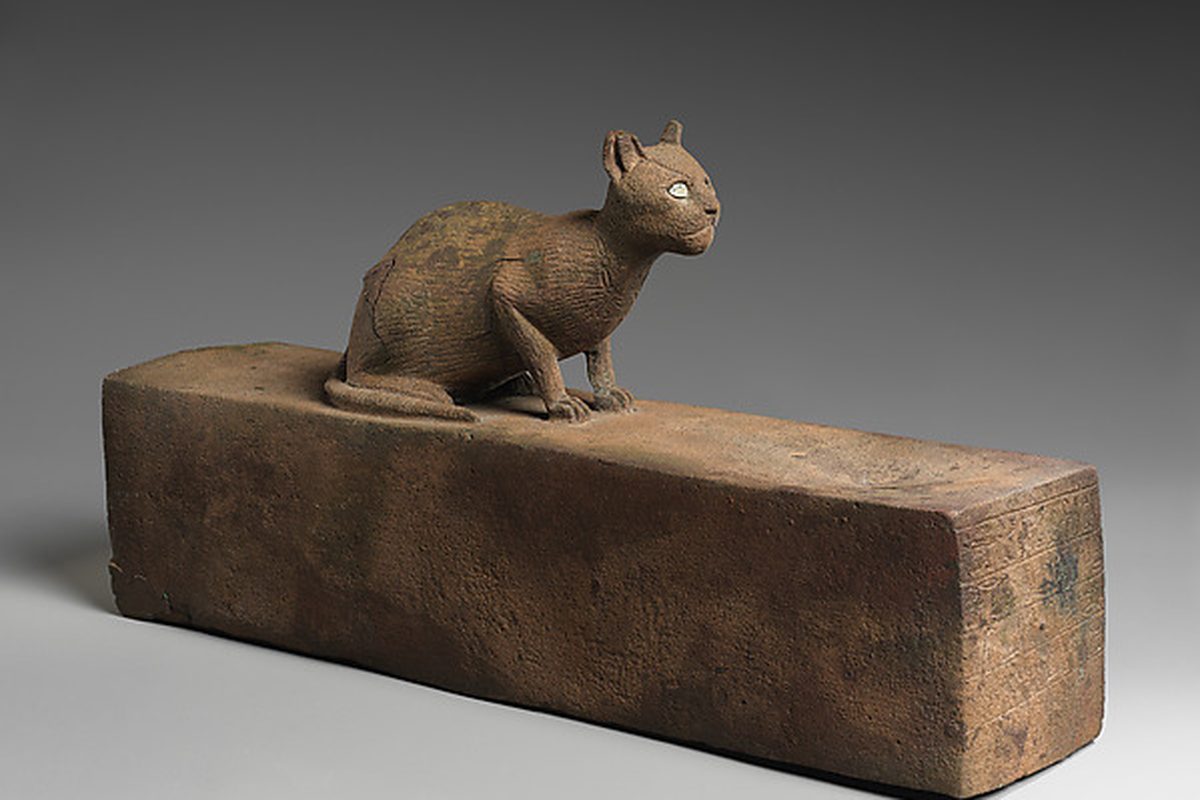
More than half of 131 cat skulls from mummies at Beni Hassan, an ancient Egyptian cat cemetery, show dental disease, healed fractures, puncture marks or deformities. All but one of the wild jungle cats among them were affected too. The authors, led by Wim Van Neer, read that as a sign that all the cats were kept together in captivity before mummification.1
The study at a glance
| Detail | What the paper reports |
|---|---|
| Journal | Journal of Archaeological Science, volume 196, article 106733 |
| Published | Online in late October 2026, in the December 2026 issue |
| Authors | Wim Van Neer, Bea De Cupere and Claudio Ottoni |
| Animals | 131 skulls of small cats from mummies, 7 of them jungle cats (per news coverage) |
| Location | Mummies from Beni Hassan (Speos Artemidos, also called Stabl Antar), Egypt; skulls held at the Natural History Museum in Vienna, Austria |
| Open access | Yes, free to read under a CC BY 4.0 license |
| DOI | 10.1016/j.jas.2026.106733 |
Where the skulls came from
Beni Hassan was among the largest of the roughly 20 cat cemeteries known in Egypt, and its cats were votive offerings, gifts deposited for a god.2 Temple visitors bought such mummies and, it has been suggested, offered them to the gods there.5 How so many animals were obtained, raised and housed is still poorly understood.2
After the cemetery was dug up for profit, about 180,000 of its mummified cats, some 19.5 tons, were shipped from Alexandria to Liverpool in February 1890 and auctioned off as fertilizer.3 A smaller set of skulls reached the Natural History Museum in Vienna in the 1880s. The authors traced its path there through the museum's archived letters.1
What the researchers did
The team studied 131 well-preserved skulls from the Vienna collection.1 They:
- measured skulls and teeth to sort the animals by species;
- estimated age at death from the teeth;
- recorded disease and injury on the bone;
- radiocarbon dated nine animals (four jungle cats, five others);
- measured carbon and nitrogen isotopes, traces of diet and surroundings, in four jungle cats and twelve probable domestic cats.12
What they found
Mostly domestic cats, plus seven jungle cats. Seven skulls were confidently identified as jungle cats (Felis chaus), a wild species larger than the domestic cat.2 The rest vary widely in size. Most are probably domestic cats, but the authors suggest African wildcats (Felis lybica) and possibly hybrids are among them.1 Ancient DNA shows that African wildcats from both the Near East and Egypt contributed to the domestic cat's ancestry.7
More than half had disease or injury. Most of these pathologies, signs of disease or injury on the bone, were dental. Others were healed fractures, puncture marks and deformities that may be linked to infection or metabolic disorders.1 News coverage puts the count at 81 of 131, about 62%, and names gum disease and missing teeth.2
Fourteen skulls show trauma. Some punctures look like bites from other cats; cuts and fractures point to humans. Some wounds had healed. In several cases, the researchers think, a deliberate blow killed the cat.2
The jungle cats were affected too. Six of the seven showed pathologies.12 From this, the authors suggest that all the cats were housed together under similar captive conditions.1
Bone chemistry points to wild capture. Their bones carry a different carbon signature from the presumed domestic cats. That fits an earlier life in wetlands or along rivers.2 The authors suggest the jungle cats likely did not breed in captivity.1 They were likely caught wild and held too briefly for their bones to lose the chemical mark of their earlier diet.2
Most date to about 380 to 40 BC. Eight of the nine dated animals come from the end of the Late Period and the start of the Ptolemaic era. One cat is several centuries older, from the Third Intermediate Period.12
How it fits earlier research
Jungle cats were kept in Egypt much earlier. At Hierakonpolis, an elite cemetery in Upper Egypt, a young adult jungle cat from about 3700 BC has a healed fracture in a thigh bone and an upper arm bone. Van Neer and colleagues wrote in 2014 that it had been tended to for several weeks before it was sacrificed.4 The Beni Hassan skulls suggest wild-caught jungle cats were still being kept more than three thousand years later.
One scanned mummy held a kitten. A 2020 study used high-resolution 3D X-rays on it. The cat was under five months old, and its top two neck bones were separated. The authors raised strangulation or neck breaking but could not tell whether that caused death. They note that keepers bred some animals for offerings, while others were imported or gathered from the wild.5
DNA points to domestic cats. A 2012 genetic study of three cat mummies found mitochondrial DNA types that still exist in cats today, and no wild-cat markers in the two it could fully check. It was a small sample.6 The skull measurements agree that most were probably domestic, and add jungle cats and possible wildcats and hybrids.1
What the study cannot tell us
The Vienna skulls may not match the cemetery. Adults make up 86% of them, while X-ray studies of wrapped cat mummies have found younger age profiles.12 The researchers suspect 19th-century collectors preferred larger, intact adult skulls.2
Only skulls survive. Some diseases cannot be diagnosed with confidence from a skull, bone alone could not settle every species identification, and the evidence cannot show exactly how the cats were housed.2
Some results rest on small subsamples. The dates come from nine animals and the diet results from sixteen. Shared housing is an inference from the pattern of disease and injury, not something the bones record directly.1
How organized such facilities were, and how common they were across Egypt, remain open questions.2
Quick quiz: how well do you know cat history?
What ultimately forced Pat Sullivan to abandon silent Felix cartoons for sound production in 1929?
Answer: Rival studios' sound cartoons proving the format could succeed. Sullivan resisted sound after 1927's The Jazz Singer, but once Fleischer, Van Beuren, and Disney's Steamboat Willie proved sound cartoons could succeed, he switched; the sound Felix shorts flopped anyway and ended by 1932. Source
What was Tom the cat's original name in his very first cartoon, before a studio naming contest renamed him?
Answer: Jasper. In the 1940 debut short 'Puss Gets the Boot,' Tom was called Jasper; an MGM staff naming contest later chose Tom and Jerry for the pair. Source
What was the real name of the famous internet cat known as 'Grumpy Cat'?
Answer: Tardar Sauce. Grumpy Cat's real name was Tardar Sauce. She became an internet sensation due to her naturally grumpy facial expression caused by feline dwarfism and an underbite, despite being a friendly and affectionate cat. Source
Frequently asked questions
Why did ancient Egyptians mummify cats?
Many were votive offerings. Particular animals were linked to particular gods, and a mummified animal could be given to that god at a temple.5 Beni Hassan was part of a large system that supplied temples with them.2
Where did the rest of the Beni Hassan cat mummies go?
Many were sold. Besides the 1890 fertilizer shipment to Liverpool, Egyptian mummies of the period ended up as tourist souvenirs, in private collections or in public museums.3
Up next
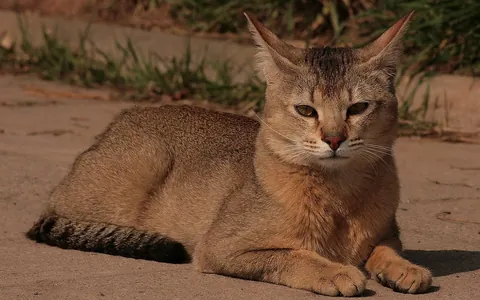 Cat BreedsChausieA modern breed with jungle cat ancestry.
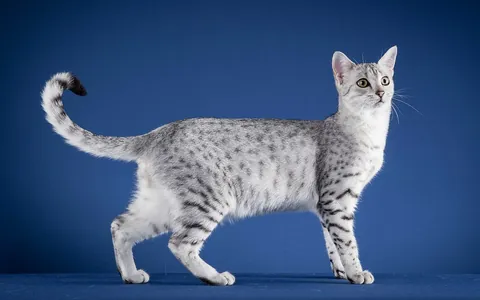 Cat BreedsEgyptian MauSpotted cats in Egyptian art, and why looks are not ancestry.
Breed photos: mostly Wikimedia Commons contributors under free licenses, cropped. Every photographer and license is on the photo credits page.

Christopher writes and runs Cat Trivia Games. The sources for this article are listed below, and how the site is made and corrected is on the editorial policy page. More about the author.
References
- Van Neer, De Cupere and Ottoni, Journal of Archaeological Science, volume 196, article 106733, 2026 (open access). Keeping cats for mummification in ancient Egypt: osteological evidence from Beni Hassan. back
- Daily News Egypt, October 27, 2026. Ancient Egyptian cat skulls reveal injuries, disease before mummification. back
- Elliott, The Journal of Egyptian Archaeology, 2023. Cats, commerce, and cemeteries: the mummified felines of Beni Hasan. back
- Van Neer, Linseele, Friedman and De Cupere, Journal of Archaeological Science, volume 45, 2014 (open access). More evidence for cat taming at the Predynastic elite cemetery of Hierakonpolis (Upper Egypt). back
- Johnston, Thomas, Jones, Graves-Brown, Goodridge and North, Scientific Reports, 2020 (PubMed Central). Evidence of diet, deification, and death within ancient Egyptian mummified animals. back
- Kurushima, Ikram, Knudsen, Bleiberg, Grahn and Lyons, Journal of Archaeological Science, 2012 (PubMed Central). Cats of the Pharaohs: genetic comparison of Egyptian cat mummies to their feline contemporaries. back
- Ottoni, Van Neer, De Cupere and colleagues, Nature Ecology and Evolution, 2017. The palaeogenetics of cat dispersal in the ancient world. back
Written by Christopher Fox under our editorial policy.