 Cat Trivia Games
iOS App
Busok Cat DNA: Two Common Maternal Lines, No Island Lineage
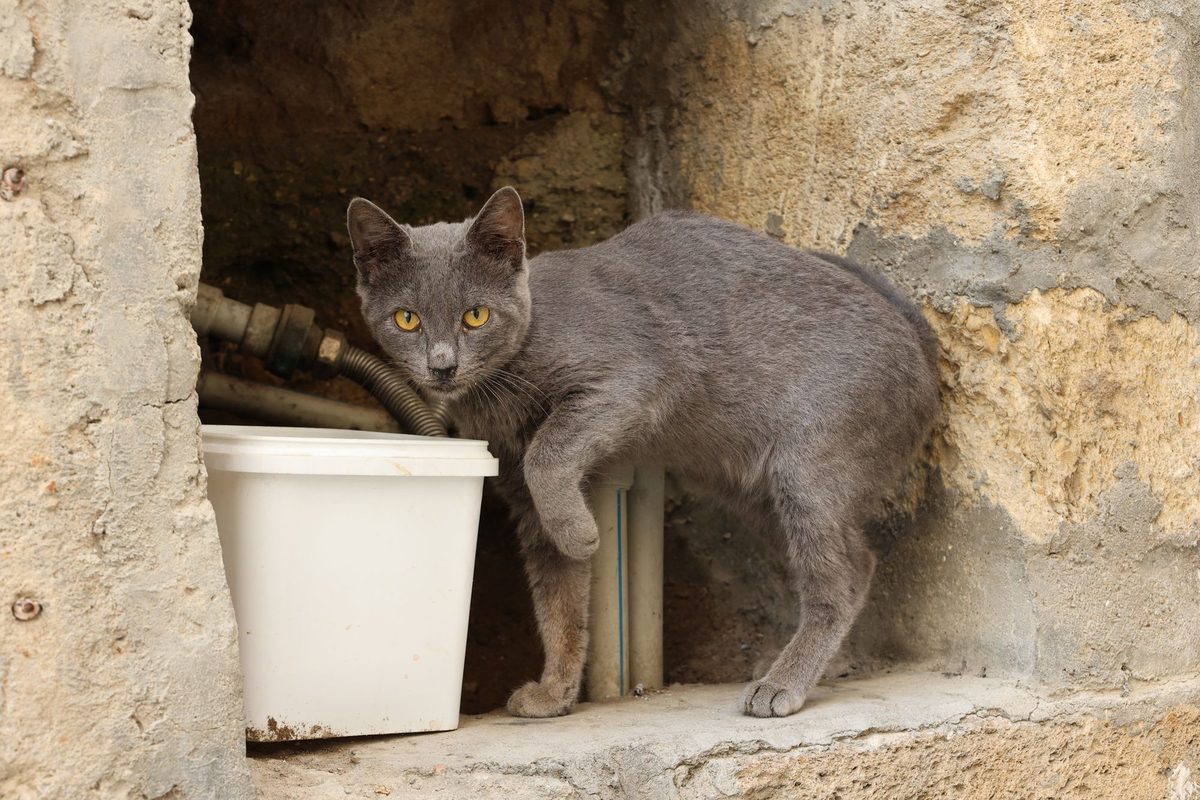
The first maternal DNA from the Busok, a blue-gray, short-tailed cat from Ra'as Island in Indonesia, shows two lineages common worldwide, mitotypes A and B. None of the three cats had a lineage unique to the island. The authors see this as a sign that people brought the founders from a global gene pool, though three cats is a small sample.1
The study at a glance
| Detail | What the paper reports |
|---|---|
| Journal | Discover Genetics and Evolution, volume 72, issue 1, article 6 |
| Published | November 4, 2026 (received August 2, accepted October 18, 2026) |
| Authors | Widya Pintaka Bayu Putra et al. (13 authors) |
| Sample | 3 Busok cats and 1 blue-gray non-Busok cat from West Java, compared with 66 reference sequences from six countries |
| Method | A 349 base-pair stretch of the mitochondrial control region, sequenced on both strands |
| Location | Busok cats from Ra'as Island, Indonesia; most authors at Indonesia's National Research and Innovation Agency (BRIN), others at Surabaya State University, Animalium in Cibinong and Kyoto University, Japan |
| Open access | Yes, under a CC BY 4.0 license |
| DOI | 10.1007/s00294-026-01340-5 |
What the researchers did
No genetic data on the Busok existed before this paper. The breed was recognized in 2022 with a standard based on appearance, and fewer than 100 cats meeting it are known, though it is now traded off the island.1
The team sequenced part of the mitochondrial control region, DNA passed from mother to kitten. They compared the four cats with 66 reference sequences from six countries, the A to L mitotype panel and two wild felid outgroups.1
What they found
Two maternal lines in three cats. The Busok cats carried mitotypes A and B, both common in domestic cats worldwide.1
At least two founding mothers. Two lineages among three cats point to at least two founding dams. The authors say the sample is too small to assess haplotype diversity accurately.1
A match on Java. The West Javan cat had mitotype B and matched one Busok cat exactly over the sequenced stretch.1
No island signature. Both lineages fell within broad cosmopolitan clusters. The authors conclude that the Busok has no unique maternal lineage, consistent with human-assisted dispersal from a global gene pool.1
What the study cannot tell us
- Anything about the fathers. Mitochondrial DNA follows only the maternal line. The authors suggest nuclear and phenotypic markers to clarify the breed's origin.1
- How varied the breed is. Three cats cannot show how many maternal lines the island population holds.1
- Where the short tail comes from. The study did not test tail genes, and short tails in Asian cats do not all trace to one known gene (see below).
- When cats reached Ra'as. A shared mitotype shows relatedness, not an arrival date. This summary draws on the abstract and journal record, so details in the full text are not covered.
How it fits earlier research
A 2007 study of 979 wild and domestic cats placed cat domestication in the Near East, from at least five founders, with people later carrying cats around the world.2 Ancient DNA published in 2017 added Egypt as a source, and the spread it traced suggests cats traveled along sea and land trade routes.3
A few maternal types cover most cats. In a 2011 database of 1,394 cats from 25 populations and 26 breeds, 83% belonged to 12 major mitotypes.4 Types A and B place the Busok among the bulk of the world's cats.
A 2016 study linked short tails in Chinese feral cats and the Japanese Bobtail to a change in the HES7 gene, checked in 245 unrelated cats. Some kinked-tail cats carried neither that change nor the Manx variant, and the authors concluded short tails arose at least three separate times.5
Quick quiz: how well do you know cat breeds?
What is the only officially recognized coat color for the Singapura breed?
Answer: Sepia agouti. Singapura standards accept a single color-sepia agouti-dark-brown ticking over a warm old-ivory ground, giving each hair alternating light and dark bands. Source
What is the primary coat color of the Khao Manee cat?
Answer: Pure white. The Khao Manee's CFA and TICA breed standards call for an even, pure white coat only - no other body colors are accepted for registration. Source
What is the term for the color pattern seen in Siamese cats?
Answer: Point coloration. Siamese show 'point coloration' (colorpoint): the ears, face, paws, and tail are darker than the body. It comes from a temperature-sensitive form of the pigment enzyme that only works in the cooler extremities. Source
Frequently asked questions
Is the Busok the same as the Raas cat?
Yes. Busok is another name for the Raas cat, the blue-gray, short-tailed landrace of Ra'as Island covered in the Raas cat guide.1
What is a mitotype?
A type of mitochondrial DNA sequence. Cats with the same mitotype share a maternal line somewhere in the past.4
Does this mean the Busok is not a real breed?
No. The study shows only that its maternal lines are widespread. The breed standard rests on appearance, and the authors suggest nuclear markers to learn more about its origin.1
Up next
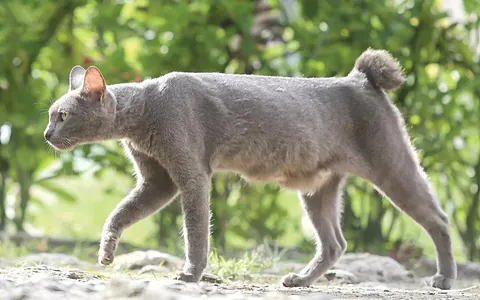 Cat BreedsRaas CatThe island, the blue-gray coat and the short tail.
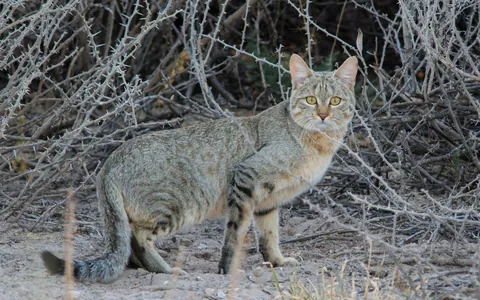 Cat FactsWhen Were Cats Domesticated? What Bones and Ancient DNA ShowWhat bones and ancient DNA show about the first house cats.
Breed photos: mostly Wikimedia Commons contributors under free licenses, cropped. Every photographer and license is on the photo credits page.
Christopher writes and runs Cat Trivia Games. The sources for this article are listed below, and how the site is made and corrected is on the editorial policy page. More about the author.
References
- Putra, Sutikno, Khaerunnisa et al., Discover Genetics and Evolution, volume 72, article 6, 2026 (open access). Mitochondrial DNA control region of the endangered Busok cat (Felis catus) from Ra'as Island, Indonesia. back
- Driscoll, Menotti-Raymond, Roca et al., Science, 2007 (PubMed Central). The Near Eastern origin of cat domestication. back
- Ottoni et al. (last author Geigl), Nature Ecology and Evolution, 2017. The palaeogenetics of cat dispersal in the ancient world. back
- Grahn, Kurushima, Billings et al., Forensic Science International: Genetics, 2011 (PubMed Central). Feline non-repetitive mitochondrial DNA control region database for forensic evidence. back
- Xu, Sun, Hu et al., Scientific Reports, 2016 (PubMed Central). Whole genome sequencing identifies a missense mutation in HES7 associated with short tails in Asian domestic cats. back
Written by Christopher Fox under our editorial policy.