 Cat Trivia Games
iOS App
Egyptian Mau Cat Breed
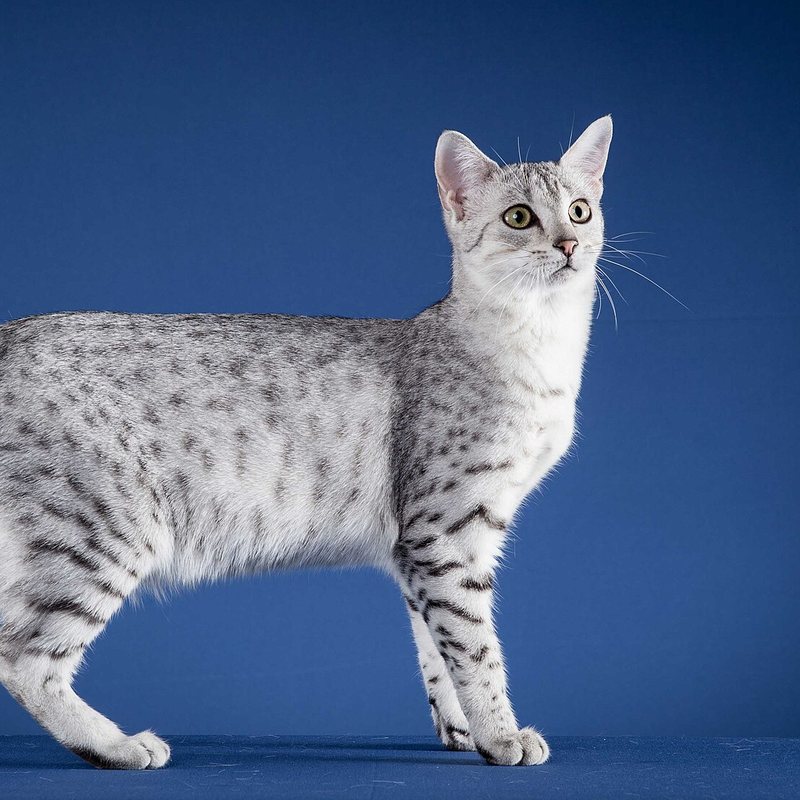

The Egyptian Mau is known for a spotted coat, green eyes, and an athletic build. Many are affectionate with familiar people and more reserved around strangers. The breed's documented history begins in the 1950s, and that history is separate from its resemblance to spotted cats in ancient Egyptian art.
Quick facts
- Weight: about 8 to 14 pounds (PetMD)
- Life expectancy: estimates differ, from 10 to 15 or more years (TICA) to 9 to 20 (PetMD)
- Coat: randomly spotted, shown in silver, bronze and smoke
- Eyes: green, with full color by about a year and a half
- Health conditions to ask about: pyruvate kinase deficiency, leukodystrophy and bladder stones
Temperament and daily life
Maus tend to be devoted to their own people and cautious with everyone else. The Cat Fanciers' Association describes them as affectionate, loyal and outgoing with their families but reserved with strangers, with low, melodious voices that may chirp or chatter in greeting. Many are sensitive to sudden loud noises, so calm, gradual introductions to new people, pets and places help.
They are athletic cats, capable of great bursts of speed, and many love to climb. Tall cat trees, daily play and food puzzles give that energy an outlet, and the ASPCA's enrichment guide has simple ideas. Some like to play with water, and some will fetch. Use a secure environment for outdoor access, such as an enclosed catio. Introductions and the individual cat's temperament matter with children and other pets.
Grooming and care
Maus shed only a little. Weekly combing keeps shedding and hairballs under control, and regular bathing is not needed. Nails, teeth and ears need the same routine care as any cat's.
Health considerations
TICA names three conditions as the breed's predispositions: urolithiasis, pyruvate kinase deficiency and leukodystrophy. Care needs and lifespan vary between individuals, so ask a breeder what the parents were tested for and go over the results with your veterinarian.
- Pyruvate kinase (PK) deficiency is an inherited red blood cell enzyme defect that can cause anemia. The variant behind it occurs at a significant frequency in Egyptian Maus, and a DNA test identifies it. A clear result covers only that variant.
- Leukodystrophy is a degeneration of the brain's white matter. Signs may appear in kittens as early as seven weeks, and the published veterinary reports describe it in two Egyptian Mau kittens, so little is known about how common it is.
- Bladder stones are a higher risk in the breed, especially in males under six years old, according to PetMD. A cat straining in the litter box or unable to pass urine needs a veterinarian right away. The Cornell Feline Health Center calls urethral obstruction a true medical emergency and notes that males are at greater risk.
History
Egyptian papyri and frescoes from as far back as 1550 BC show spotted cats that resemble today's Maus. Resemblance in artwork is not demonstrated ancestry, though, and the modern breed's documented history starts in the 1950s. Nathalie Troubetskoy, a Russian princess living in Rome, emigrated to the United States in 1956, and three Maus traveled with her: two silver females, Baba and Liza, and a bronze male, JoJo. The Cat Fanciers' Association accepted the breed for registration in 1970 and for championship competition in 1977, and TICA recognized it in 1979. The early gene pool was very limited, and later imports have broadened it.
Appearance
The Mau is a medium-sized, muscular cat. Its hind legs are proportionately longer than the front, which makes it look as if it is standing on tiptoe, and a loose flap of skin extends from the flank to the hind leg. The spots are scattered at random and vary in size and shape. The forehead carries an "M", often called the mark of the scarab, and "mascara" lines run back from the eyes along the cheeks. The CFA standard calls for green eyes, with some green by eight months of age and full color by about a year and a half, so amber-eyed kittens are normal.
Maus are shown in silver, bronze and smoke. The silver and bronze coats are dense and resilient, and the smoke coat is silky and fine. Solid black and dilute colors also occur and can be registered, but not shown.
Before choosing an Egyptian Mau
An Egyptian Mau may suit a calm household with time for daily play and room to climb, and it may take time to trust new people. Ask a breeder about PK deficiency testing in the parents, and expect to wait, since there are not always enough breeders to meet demand. Meeting the individual cat tells you more about its temperament than the breed description.
Egyptian Mau FAQ
What does "Mau" mean? It is the Egyptian word for cat, as TICA's breed profile points out.
Can Egyptian Maus walk on a harness? Many can learn. CFA's breed profile says many enjoy walks on a harness and leash, which, along with an enclosed catio, is one way to give a Mau safe time outdoors.
Sources
- Cat Fanciers' Association: Egyptian Mau and the Egyptian Mau standard
- The International Cat Association: Egyptian Mau
- PetMD: Egyptian Mau
- UC Davis Veterinary Genetics Laboratory: pyruvate kinase deficiency test
- Salvadori C. et al., Spongiform neurodegenerative disease in a Persian kitten, Journal of Feline Medicine and Surgery (its review of earlier reports includes the Egyptian Mau kittens)
- Cornell Feline Health Center: feline lower urinary tract disease
- ASPCA: DIY enrichment for cats
Quick quiz: 2 questions about the Egyptian Mau cat
Long before the modern Egyptian Mau breed existed, what roles did cats play in ancient Egyptian homes?
Answer: Hunting rodents and honoring Bastet. JSTOR Daily says cats were valued for keeping fields and granaries free of rodents, and over time became sacred animals linked to the goddess Bastet. The modern Mau breed was developed much later. Source
Which of the following best describes the body type of the Egyptian Mau?
Answer: Medium-sized, muscular, and athletic. Vetstreet describes the Mau as 'a muscular, medium-size cat' built for speed - distinct from the compact 'cobby' build of breeds like the Persian or the elongated 'oriental' build of breeds like the Siamese. Source