 Cat Trivia Games
iOS App
The 10 Most Cited Cat Studies
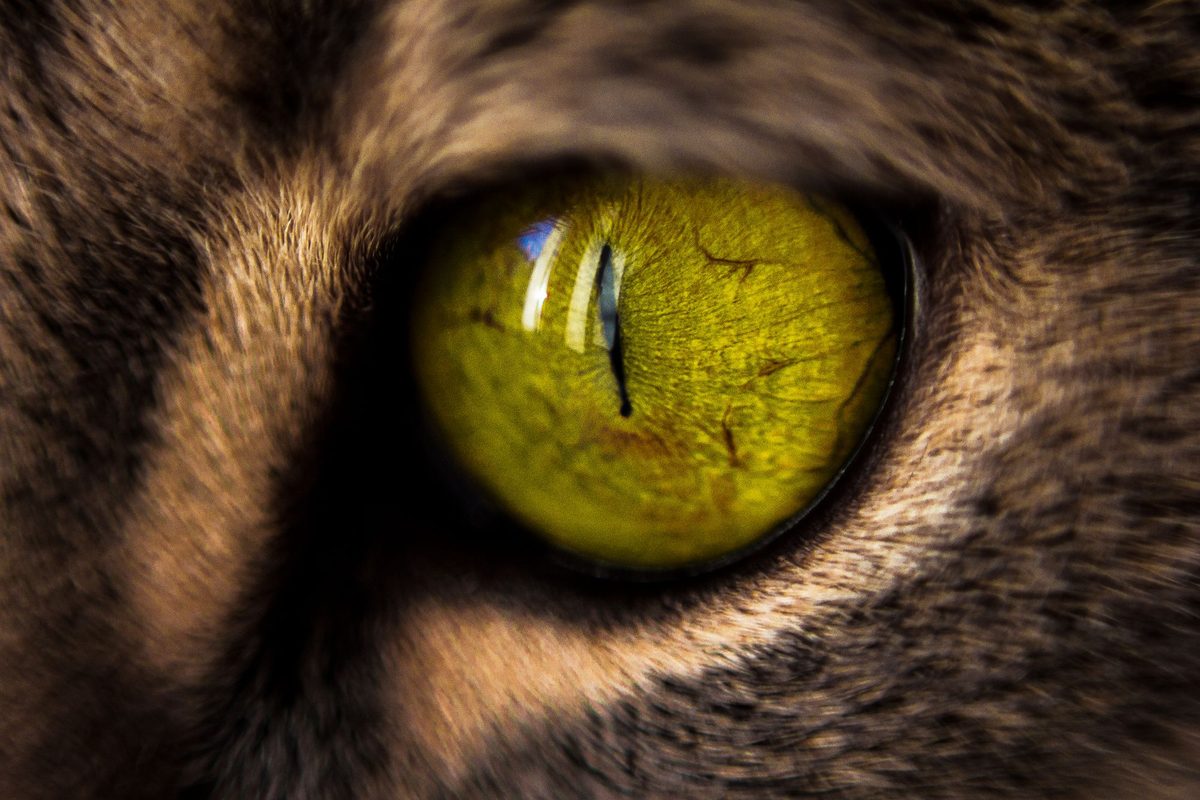
The most cited cat study is David Hubel and Torsten Wiesel's 1962 paper on how nerve cells in a cat's visual cortex respond to what the eyes see, with 13,680 citations in OpenAlex as of October 31, 2026.1 Five of the top 10 are their papers, and the pair shared in the 1981 Nobel Prize in Physiology or Medicine.2
The top 10 cat studies by citations
I searched OpenAlex, a free index of research papers, for journal articles with cat, cats, feline or kitten in the title and ranked them by citations, the number of later papers that list a study in their references.1 The title search also matches unrelated words such as cation, so I kept only titles with the cat words themselves. Studies that used cats without saying so in the title are missing.
I also left out one-page listings for two veterinary textbooks, Infectious Diseases of the Dog and Cat (2,544 citations) and Canine and Feline Endocrinology and Reproduction (1,380), and moved papers where "cat" means something else to their own section.1
| Rank | Year | Study | What it found | Citations |
|---|---|---|---|---|
| 1 | 1962 | Receptive fields, binocular interaction and functional architecture in the cat's visual cortex (Hubel and Wiesel) | Sorted visual cortex cells into "simple" and "complex" types by how they respond to lines. Many cells take input from both eyes.34 | 13,680 |
| 2 | 1959 | Receptive fields of single neurones in the cat's striate cortex (Hubel and Wiesel) | Single cells in the main visual area fire most to a line or edge at one particular angle.54 | 4,653 |
| 3 | 1989 | Oscillatory responses in cat visual cortex exhibit inter-columnar synchronization (Gray, König, Engel and Singer) | Rhythmic firing at 40 to 60 times a second can fall into step across separate columns, shaped by the whole picture shown. The authors suggested this could help the brain link features across the view.6 | 4,185 |
| 4 | 1970 | The period of susceptibility to the physiological effects of unilateral eye closure in kittens (Hubel and Wiesel) | Closing one eye affected kittens from about week four to the end of the third month. In weeks four and five, 3 to 4 days of closure sharply cut the number of cells both eyes could drive. In an adult cat, more than a year of closure had no detectable effect.7 | 3,027 |
| 5 | 1963 | Single-cell responses in striate cortex of kittens deprived of vision in one eye (Wiesel and Hubel) | Kittens with one eye kept closed through their first three months were blind in that eye, and most cortex cells responded only to the open eye.89 | 2,628 |
| 6 | 1966 | The contrast sensitivity of retinal ganglion cells of the cat (Enroth-Cugell and Robson) | X cells, one kind of retinal output cell, add up light across their patch of view roughly linearly. Y cells, a second kind, add it up very nonlinearly and fire much faster on average when stripes drift across them.10 | 2,625 |
| 7 | 1965 | Receptive fields and functional architecture in two nonstriate visual areas (18 and 19) of the cat (Hubel and Wiesel) | In two visual areas next to the main one, they first saw "hypercomplex" cells, which respond best to a line of limited length.114 | 2,605 |
| 8 | 1977 | The formalin test (Dubuisson and Dennis) | Scored how rats and cats behaved after a dilute formalin injection under the skin of a front paw, to measure pain and the relief from morphine, meperidine and electrical stimulation of a brainstem area.12 | 2,530 |
| 9 | 1989 | Stimulus-specific neuronal oscillations in orientation columns of cat visual cortex (Gray and Singer) | Groups of cells fire in a rhythm near 40 times a second, strongest when a bar of light matches their preferred angle and direction. The relay station between eye and cortex showed no such rhythm.13 | 2,463 |
| 10 | 1957 | Modality and topographic properties of single neurons of cat's somatic sensory cortex (Mountcastle) | Mapped which kind of sensation and which body part each cell in the body-sensing cortex responds to. Hubel's Nobel lecture credits him with discovering columns there.144 | 2,402 |
How Hubel and Wiesel's cats led to a Nobel Prize
In 1958, in a basement lab at Johns Hopkins, Hubel and Wiesel spent about a month shining spots of light into an anesthetized cat's eye while the cells ignored them. Then one cell "went off like a machine gun" as they slid a glass slide into the instrument. The slide's edge cast a faint shadow line, and the cell fired only when that line sat in one narrow range of angles.4
Their 1959 and 1962 papers showed that signals from the two eyes first meet in single cells in this area,534 and that cells with similar preferences sit together in columns running down through the cortex.42
From 1962 they also studied how this wiring develops.4 Wiesel said children born with cataracts, who often have lasting vision problems after surgery, shaped that work.9 In kittens with one eye closed from birth for 3 months, the share of cortex cells that eye could drive fell from about 85% to about 7%, and up to five years with the eye open brought only very limited recovery.7 The pair called this sensitive window the "critical period".9
In 1981 Hubel and Wiesel jointly received half of the Nobel Prize "for their discoveries concerning information processing in the visual system", and Roger Sperry the other half for work on how the brain's two hemispheres specialize. The announcement noted that closing one eye for only a few days early in life permanently changes the visual cortex.2
These were invasive experiments on cats and kittens
Every study in the top 10 involved invasive procedures on living animals. In the classic vision work, cats were anesthetized and paralyzed so their eyes stayed still while electrodes recorded single brain cells for hours. Each experiment ended with a procedure the cat does not survive: saline and then formalin pumped through its blood vessels to preserve the brain for tracing the electrode tracks.4 In the kitten studies, one eyelid was sewn shut for days to months.97 The formalin test causes pain on purpose so that pain relief can be measured.12
Standards for animal research have changed since. Russell and Burch set out the 3Rs more than 50 years ago: replace animals where possible, use fewer, and refine methods to minimize pain and distress. They are now written into national and international rules.15 The US Animal Welfare Act, which regulates the treatment of animals in research, became law on August 24, 1966, and has been amended many times, including the 1985 Improved Standards for Laboratory Animals Act.16
Hearing and a coronavirus, further down the list
Nelson Kiang and colleagues' 1965 monograph (1,535 citations) recorded how single hearing-nerve fibers in healthy adult cats fire in response to controlled sounds, to learn how the nerve encodes sound.17
M. Charles Liberman's 1978 paper (1,202 citations) recorded from four littermates born and raised in a soundproofed chamber, to see whether long-term noise shapes the hearing-nerve responses of ordinary lab cats. In the quiet-raised cats, fibers with high background activity responded to exceptionally quiet sounds. The data suggested that ordinary lab cats carry "normal pathology", damage that passes for normal, in their high-frequency fibers.18
The newest cat study in the top 40 is a 2020 Science paper on SARS-CoV-2, the virus that causes COVID-19 (1,911 citations).1 Jianzhong Shi and colleagues put the virus into the noses of seven cats aged 6 to 9 months, and it multiplied in their noses and throats. In a test of airborne spread, three uninfected cats were each caged next to an infected one, and one of the three became infected. Younger cats, 70 to 100 days old, were more vulnerable.19
It was a small lab study with a measured dose that tested spread only between cats, so it cannot say how often pet cats catch the virus at home or whether they pass it to people.19
Top papers where "cat" means something else
A title search for "cat" also catches papers about other things, and five of them made the top 40.1
- CAT, the antioxidant enzyme (2018, 3,965 citations). Osasenaga Ighodaro and Oluseyi Akinloye's review groups catalase (CAT) with superoxide dismutase and glutathione peroxidase as the body's first line of antioxidant defense against free radicals.20
- Arnold's cat map (2004, 2,092 citations). Guanrong Chen, Yaobin Mao and Charles Chui used a three-dimensional version of this chaotic map to scramble images for encryption.21 Vladimir Arnold demonstrated the map in the 1960s on a picture of a cat. Repeated on a digital image, it smears the picture into apparent noise, yet after enough steps the original returns.22
- CAT, the gene tool (1987, 1,701 citations). Chloramphenicol acetyltransferase is a bacterial enzyme that biologists use as a reporter: link its gene to a stretch of DNA, measure the enzyme, and see how strongly that DNA switches genes on.23 Bruno Luckow and Günther Schütz described ready-made DNA constructs for this test.24
- A Schrödinger cat state of an atom (1996, 1,313 citations). Christopher Monroe, David Wineland and colleagues put a single trapped beryllium ion into two separated positions at once.25 Erwin Schrödinger's 1935 thought experiment imagined a cat in a box that is both dead and alive. Wineland later shared the 2012 Nobel Prize in Physics for methods of measuring and controlling individual quantum particles.26
- CAT, the brain-scan toolbox (2024, 1,303 citations). The Computational Anatomy Toolbox measures brain structure in MRI scans. Christian Gaser and colleagues describe the paper as a citable standard, so studies that use the software have one paper to cite.27
Quick quiz: how well do you know cat biology?
After a spay incision on a female cat's abdomen, roughly how long should activity be restricted while it heals?
Answer: About two weeks. Because the spay incision goes through the abdominal wall, vets recommend keeping female cats calm and restricting activity for roughly two weeks to let the incision heal properly. Source
Along with arthritis, what other common condition can leave a senior cat unable to reach parts of its body to groom?
Answer: Excess body weight. Extra weight can make it hard for a cat to curl and twist enough to reach its back, belly, and hindquarters. Senior cats are especially prone to weight gain, which, like arthritis, often leads to matting in those hard-to-reach spots. Source
Approximately what percentage of cats older than nine years of age are estimated to have hypertrophic cardiomyopathy?
Answer: 20 to 30 percent of cats. Research shows that hypertrophic cardiomyopathy affects roughly 25 to 29 percent of cats over nine years old, making it increasingly common as cats age. This high prevalence in senior cats underscores the importance of regular heart screening for older felines. Source
Frequently asked questions
Did Hubel and Wiesel only study cats?
No. Wiesel's Nobel lecture says the pair soon moved from cats to rhesus macaque monkeys, whose visual cortex cells also responded to lines at particular angles and often to both eyes. Early eye closure affected monkeys too.9
How long is the critical period in people?
Wiesel's 1981 lecture puts it at 3 to 4 months in cats and, from clinical observations, possibly 5 to 10 years in humans, with the strongest effects in the first year.9
Does a high citation count mean a study was right?
No. It counts how often later papers cite a study, including papers that disagree with it. Older papers have had longer to collect citations, and studies cite the methods and software papers they use.27
Up next
Christopher writes and runs Cat Trivia Games. The sources for this article are listed below, and how the site is made and corrected is on the editorial policy page. More about the author.
References
- OpenAlex. Journal articles with cat, cats, feline or kitten in the title, sorted by citation count. Queried October 31, 2026. back
- Nobel Assembly at Karolinska Institutet. The Nobel Prize in Physiology or Medicine 1981: press release. October 9, 1981. back
- Hubel DH, Wiesel TN. Receptive fields, binocular interaction and functional architecture in the cat's visual cortex. The Journal of Physiology 160:106-154, 1962. back
- Hubel DH. Evolution of ideas on the primary visual cortex, 1955-1978: a biased historical account. Nobel lecture, December 8, 1981. back
- Hubel DH, Wiesel TN. Receptive fields of single neurones in the cat's striate cortex. The Journal of Physiology 148:574-591, 1959. back
- Gray CM, König P, Engel AK, Singer W. Oscillatory responses in cat visual cortex exhibit inter-columnar synchronization which reflects global stimulus properties. Nature 338:334-337, 1989. back
- Hubel DH, Wiesel TN. The period of susceptibility to the physiological effects of unilateral eye closure in kittens. The Journal of Physiology 206:419-436, 1970. back
- Wiesel TN, Hubel DH. Single-cell responses in striate cortex of kittens deprived of vision in one eye. Journal of Neurophysiology 26:1003-1017, 1963. back
- Wiesel TN. The postnatal development of the visual cortex and the influence of environment. Nobel lecture, December 8, 1981. back
- Enroth-Cugell C, Robson JG. The contrast sensitivity of retinal ganglion cells of the cat. The Journal of Physiology 187:517-552, 1966. back
- Hubel DH, Wiesel TN. Receptive fields and functional architecture in two nonstriate visual areas (18 and 19) of the cat. Journal of Neurophysiology 28:229-289, 1965. back
- Dubuisson D, Dennis SG. The formalin test: a quantitative study of the analgesic effects of morphine, meperidine, and brain stem stimulation in rats and cats. Pain 4:161-174, 1977. back
- Gray CM, Singer W. Stimulus-specific neuronal oscillations in orientation columns of cat visual cortex. Proceedings of the National Academy of Sciences 86:1698-1702, 1989. back
- Mountcastle VB. Modality and topographic properties of single neurons of cat's somatic sensory cortex. Journal of Neurophysiology 20:408-434, 1957. back
- NC3Rs (National Centre for the Replacement, Refinement and Reduction of Animals in Research). The 3Rs. back
- USDA National Agricultural Library. Animal Welfare Act. back
- Kiang NYS, Watanabe T, Thomas EC, Clark LF. Discharge Patterns of Single Fibers in the Cat's Auditory Nerve. MIT Press, 1965. OpenAlex record with abstract and citation count (indexed as a 1966 technical report). back
- Liberman MC. Auditory-nerve response from cats raised in a low-noise chamber. The Journal of the Acoustical Society of America 63:442-455, 1978. back
- Shi J, Wen Z, Zhong G, et al. Susceptibility of ferrets, cats, dogs, and other domesticated animals to SARS-coronavirus 2. Science 368:1016-1020, 2020. back
- Ighodaro OM, Akinloye OA. First line defence antioxidants-superoxide dismutase (SOD), catalase (CAT) and glutathione peroxidase (GPX): their fundamental role in the entire antioxidant defence grid. Alexandria Journal of Medicine 54:287-293, 2018. back
- Chen G, Mao Y, Chui CK. A symmetric image encryption scheme based on 3D chaotic cat maps. Chaos, Solitons and Fractals 21:749-761, 2004. back
- Wikipedia. Arnold's cat map. back
- Wikipedia. Chloramphenicol acetyltransferase (use as a reporter). back
- Luckow B, Schütz G. CAT constructions with multiple unique restriction sites for the functional analysis of eukaryotic promoters and regulatory elements. Nucleic Acids Research 15:5490, 1987. back
- Monroe C, Meekhof DM, King BE, Wineland DJ. A "Schrödinger cat" superposition state of an atom. Science 272:1131-1136, 1996. back
- Royal Swedish Academy of Sciences. Particle control in a quantum world. Information for the public, Nobel Prize in Physics 2012. back
- Gaser C, Dahnke R, Thompson PM, Kurth F, Luders E, et al. CAT: a computational anatomy toolbox for the analysis of structural MRI data. GigaScience 13:giae049, 2024. back
This is general information, not veterinary advice. Written by Christopher Fox under our editorial policy.