 Cat Trivia Games
iOS App
Aegean Cat Breed
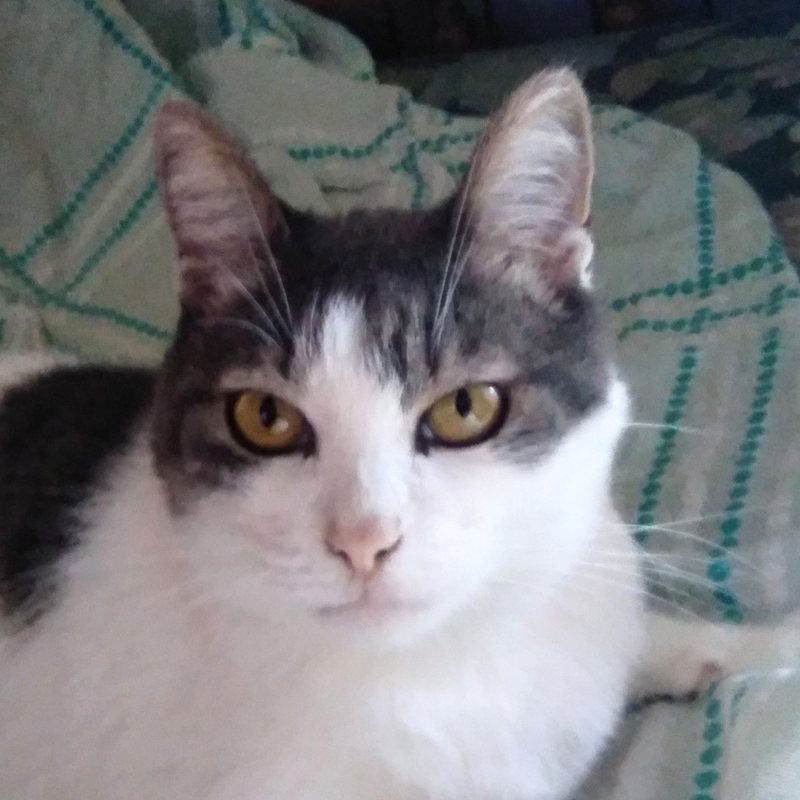

Aegean cats are associated with the Greek islands, where local cats have lived around homes and fishing ports for generations. They are often described as sociable and active. Because there is no single widely recognized breed standard, their appearance and temperament can vary.
Quick facts
- Origin: believed to have originated in the Cycladic Islands of Greece
- Recognition: not listed by CFA or TICA as of 2026, with no universal written standard
- Coat: semi-long, usually bicolor or tricolor with white as the main color
- Weight: about 7 to 10 pounds in published breed profiles
- Eyes: usually green, sometimes toward yellow or blue
Temperament and daily life
Aegeans are often described as affectionate, social, playful and intelligent, and as notably chatty, with a habit of answering in chirps and meows. In Greece they are known around fishing ports and homes, where people have long fed them scraps. Some accounts describe an interest in water, but it isn't something to expect from every cat.
Because this is a local population rather than a closed pedigree, individual cats vary more than in most breeds, and the cat in front of you is the best guide. A sociable, curious cat needs company and things to do: climbing space, a window perch, food puzzles and regular play.
Grooming and care
The semi-long coat needs regular brushing to cut down on shedding and hairballs. How often depends on the individual coat; longer coats do well with grooming sessions every few days to remove dead hair and prevent tangles.
Island cats in Greece often live outdoors, but the usual advice for a pet cat is to keep it indoors, because outdoor cats do not live as long. A secure window perch or an enclosed outdoor space gives an indoor cat more to watch.
Health considerations
Published breed-specific health data are limited. That does not establish that Aegean cats are free of inherited disease. A veterinarian can advise on the needs of the individual cat.
The everyday problems that affect most cats still apply. Cornell's Feline Health Center reports that between 50 and 90 percent of cats older than four have some form of dental disease, so regular checkups and a dental routine your cat accepts are worth planning for.
History
The Aegean is a local population shaped over generations by its environment. Cats are believed to have lived in the Cycladic Islands for thousands of years, valued for catching rodents, and the Aegean has been described as a distinct breed only since the 1990s. Neither CFA nor TICA lists it as a breed, and there is no universal standard, so a cat sold as an Aegean outside Greece cannot be checked against one. Appearance alone does not establish that a cat belongs to this population.
Appearance
Aegeans are medium-sized cats with a semi-long coat. Descriptions give a bicolor or tricolor pattern with white as the prominent color, and eyes in various shades of green that may verge toward yellow or blue. With no written standard, colors and build vary from cat to cat.
Before choosing an Aegean
Because no registry standard exists, meet the individual cat and judge it on its own temperament and health rather than on the name. A sociable, active cat needs company, play and climbing space, and a veterinarian can advise on its routine care.
Aegean cat FAQ
How can I tell whether a cat is an Aegean? There is no formal way to confirm it. Without a recognized standard or registry, a white-and-colored, semi-longhaired cat may fit the general description, but appearance alone does not establish a breed.
Are Aegean cats hypoallergenic? No breed can be assumed safe for someone with a cat allergy. Spending time with the individual cat before committing tells you more than a breed name.
Sources
- Cats.com: Aegean cat
- ASPCA Pet Health Insurance: Aegean
- ASPCA: cat grooming tips
- ASPCA: general cat care
- Cornell Feline Health Center: feline dental disease
Try a mixed breed question
Which of these breeds is most visually similar to the Mekong Bobtail?
Answer: Siamese. Mekong Bobtails descend partly from Siamese stock, which is why they share the same pointed coat pattern, blue eyes, and vocal personality. The kinked tail is the main giveaway that tells them apart. Source