 Cat Trivia Games
iOS App
American Curl Cat Breed
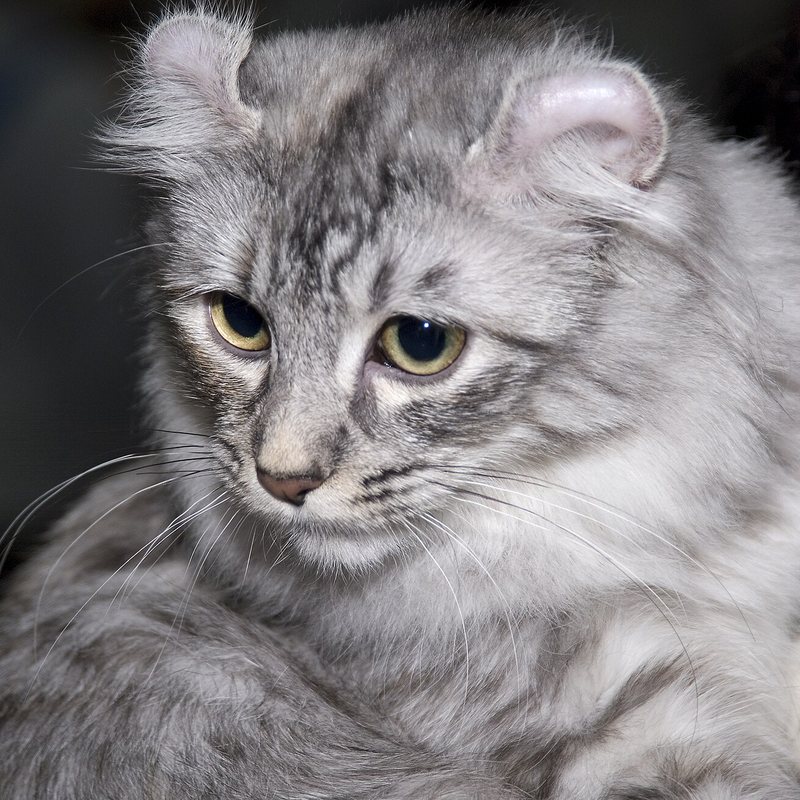

American Curls are known for ears that curve backward and a playful, people-oriented temperament. The breed comes in both shorthaired and longhaired varieties. Many enjoy following their people around the house and joining in with everyday activity.
Quick facts
- Weight: females 5 to 8 pounds, males 7 to 10 pounds, per the CFA standard
- Coat: silky and flat-lying with minimal undercoat, in longhair and shorthair
- Ears: straight at birth, curling within three to five days and set at around 16 weeks
- Life expectancy: 12 to 16 years in PetMD's profile; TICA gives 10 to 20
- Grooming: combing or brushing two or three times a month, plus gentle ear care
Temperament and daily life
The Cat Fanciers' Association calls the American Curl exceptionally people-oriented, describing a cat torn between helping with dinner, sorting the mail and chasing your shoelaces. Many Curls stay affectionate and kitten-like, keeping that playful energy well into adulthood, so plan on play long after the kitten months.
Many Curls follow their people from room to room and settle wherever the activity is, on the desk or the arm of the chair rather than always on a lap. A Curl often enjoys company. Handling and introductions, whether to children, visitors or other pets, should follow the cat's comfort level.
Grooming and care
With minimal undercoat, the coat is relatively easy to keep: combing or brushing two or three times a month keeps shedding down, and the usual advice is to trim the nails every two to three weeks.
The ears need the most thought. Handle them with extreme care, without pulling on the delicate cartilage, and ask your veterinarian for an ear-cleaning demonstration. Never try to straighten a curled ear, and teach children to leave the ears alone. Contact your veterinarian if you notice ear discharge, odor, redness, or discomfort.
Health considerations
Curls are prone to more ear infections than other cats, because the ear shape tends to trap more wax, and like all cats they are at risk of dental disease. CFA notes that outcrossing to domestic random-bred cats was allowed until 2015 and that no breed-linked health issues have come to light so far. That is a registry's summary rather than a health study, so routine veterinary care matters as much here as for any cat.
The backward curl is the breed's normal ear shape, not an injury. An individual cat can still develop an ear problem, and head shaking, scratching at the ears, discharge, odor or pain when the ear is touched are reasons to have it checked.
History
The breed's foundation cat was a black longhaired stray named Shulamith, first noted in Southern California in 1981, and all American Curls trace back to her. Her offspring showed that the curled ear is an autosomal dominant trait, meaning one copy of the gene produces the shape. Joe and Grace Ruga, the original breeders, worked with CFA judges on a standard, curl-eared cats were crossed to domestic shorthairs and longhairs, and selective breeding began in 1983.
Appearance
Apart from the ears, the Curl is a moderate cat: a medium-sized rectangular body, walnut-shaped eyes, a modified wedge head and a long tail roughly equal to the body length. Kittens are born with straight ears that begin to curl within three to five days, then unfurl gradually until the shape sets at around 16 weeks. The CFA standard calls for an arc of at least 90 degrees and no more than 180, with firm cartilage from the base of the ear to at least a third of its height. Pet-quality cats can have ears that are almost straight.
Before choosing an American Curl
An American Curl may suit a household where someone is around to share the day and to play. It is a harder fit if you're frequently away and cannot arrange reliable care and interaction. If you are choosing a kitten, the final ear shape may not be clear until the kitten is around four months old, and gentle ear handling is part of daily life with any Curl.
American Curl FAQ
Are curled ears painful for the cat? The curl itself is the breed's normal ear shape, present from the first days of life. Like any cat, a Curl can still get an ear infection or injury, so discharge, odor, redness or a cat that resents having its ears touched should be seen by a veterinarian.
Do American Curls get along with children and other pets? CFA describes Curls as compatible with dogs and other cats, and many enjoy company. Individual temperament still matters, so introduce new animals gradually and teach children never to bend or pull the ears.
Sources
- Cat Fanciers' Association: American Curl (breed profile and standard)
- The International Cat Association: American Curl
- PetMD: American Curl
- ASPCA: general cat care
Quick quiz: 3 questions about the American Curl cat
Why does a single copy of the American Curl's ear-cartilage gene not cause the joint and bone problems seen in Scottish Folds?
Answer: It changes cartilage only in the outer ear. Geneticists studying the American Curl found the mutation is localized to auricle (outer ear) cartilage development, unlike the Scottish Fold's TRPV4 mutation, which acts on cartilage and bone throughout the skeleton. Source
Which feature disqualifies an American Curl from cat show competitions?
Answer: Ear tips curled tightly enough to touch the head. CFA disqualifies American Curls whose curl is so tight that the ear tips touch the head; coat color and pattern, ear furnishings, and body weight are not judged as ear-curl faults. Source
How does the CFA describe the American Curl's attitude toward people?
Answer: Exceptionally people-oriented. The CFA calls the breed exceptionally people-oriented, affectionate and easygoing, and says Curls typically do well with children. Individual cats vary, so introductions and the cat's own temperament matter. Source