 Cat Trivia Games
iOS App
HOME / BREEDS / AMERICAN BOBTAIL
American Bobtail Cat Breed
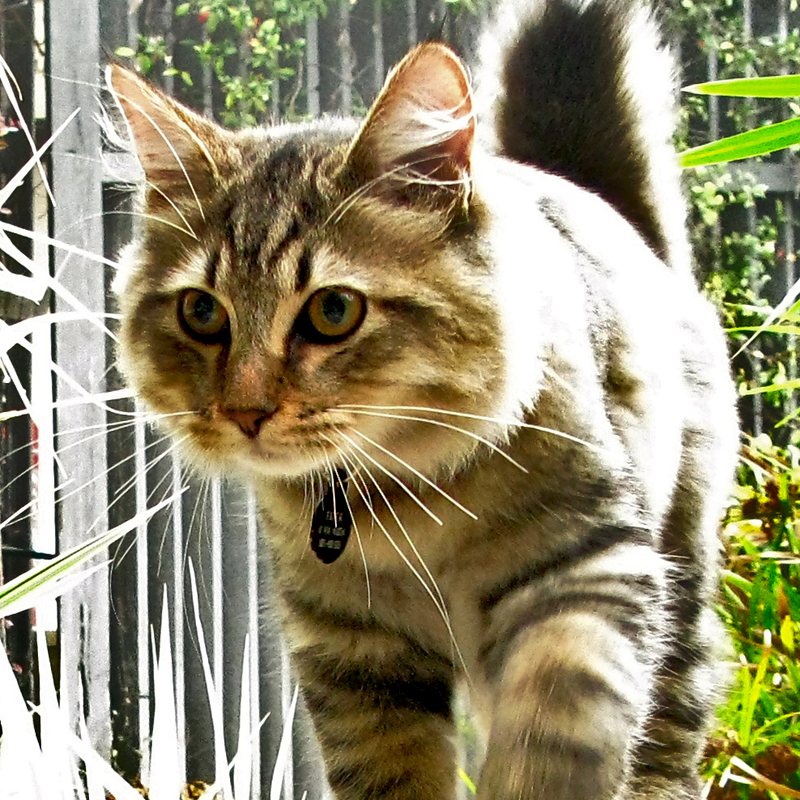

The American Bobtail has a naturally short tail, a sturdy build, and a shaggy coat. Its appearance can suggest a wild cat, but this is a domestic breed. Many are described as affectionate and playful, with a strong interest in spending time with their people.
Quick facts
- Weight: about 7 to 11 pounds for females and 12 to 16 for males, per TICA
- Life expectancy: 11 to 15 years or more, per TICA
- Tail: about half the length of a typical tail, with no one length preferred
- Coat: shorthair and longhair, non-matting and resilient, in any color
- Maturity: develops slowly, taking up to about three years to reach full size
Temperament and daily life
American Bobtails are often described as loving and intelligent, and many develop their own interactive games, most of which revolve around hunting. Some enjoy retrieving toys, and Bobtails can be taught to walk on a leash.
Many are relatively quiet, using trills, chirps and clicking sounds rather than loud meowing. Like any active, social cat, a Bobtail does best with company and regular play, and introductions to children or other pets should go at the cat's pace.
Grooming and care
The coat is easier than the shaggy look suggests: even the longhaired version is easily maintained with weekly brushing or combing, and an occasional bath helps with shedding but is not essential. General care advice applies too: trim the nails every two to three weeks and book a veterinary exam at least once a year.
Give a playful, hunting-minded cat outlets: climbing spaces, food puzzles and interactive play. The ASPCA's enrichment guide has practical ideas, and some Bobtails take well to a harness.
Health considerations
Published breed-specific health information is limited. Feral ancestry alone is not proof of freedom from inherited disease, so ask a breeder what health screening the parents had, and keep up routine veterinary care.
American Bobtails are born with their short tails; they are not docked. Tail length alone doesn't tell you whether an individual cat has pain or a spinal problem, so mention stiffness, reluctance to jump or changes in movement to your veterinarian. Ask your veterinarian about a dental-care routine your cat can tolerate, and keep an eye on body condition in a large-framed cat.
History
The breed's story starts in the late 1960s with Yodie, a short-tailed brown tabby found in Arizona. The registries tell the next step slightly differently: CFA says he was bred to a seal point Siamese, while TICA describes the female as a non-pedigreed color point. Either way, kittens inherited the short tail, which pointed to a dominant gene. Breeders then worked with feral bobtailed cats from across the United States and Canada, although most breeders no longer use feral cats today. TICA recognized the American Bobtail as a naturally occurring breed in 1989.
Appearance
CFA's standard describes a tail about half the length of a typical tail, broad at the base, flexible but never fragile, clearly visible above the back when the cat is alert and not extending past the hind hock. The head is a broad modified wedge with a prominent, fleshy brow, which gives the breed its wild look. The body is substantial, with hips almost as wide as the chest and set slightly higher than the shoulders. The coat is described as a rain-resistant, all-weather double coat.
Before choosing an American Bobtail
An American Bobtail may suit a home with time for daily play and company, and patience for a cat that keeps maturing for its first few years. Tail length varies from cat to cat, so if appearance matters to you, meet the kitten or adult first. Ask a breeder about the health screening behind the line.
American Bobtail FAQ
Are American Bobtails related to bobcats? No. The breed was developed from domestic bobtailed cats, including feral ones, and its wild look comes from selection for traits such as the brow and the short tail.
Do American Bobtails shed a lot? The coat sheds, like any cat's, but CFA describes it as non-matting, and weekly brushing or combing keeps both the shorthair and the longhair manageable.
Sources
- Cat Fanciers' Association: American Bobtail (breed profile and standard)
- The International Cat Association: American Bobtail
- PetMD: American Bobtail
- ASPCA: general cat care
- ASPCA: feline DIY enrichment
Quick quiz: 2 questions about the American Bobtail cat
The American Bobtail breed traces back to a bobtailed brown tabby stray named Yodie, discovered in which U.S. state?
Answer: Arizona. CFA history credits Yodie, a bobtailed brown tabby stray found in Arizona in the late 1960s, as the foundation cat breeders used to develop the American Bobtail. Source
How does CFA describe the proportions of an American Bobtail's tail compared to a full-length cat tail?
Answer: About half the length, broad at the base. CFA's standard describes the American Bobtail's tail as approximately half the length of a normal tail and broad at the base, giving it a distinctive flexible, expressive look. Source