 Cat Trivia Games
iOS App
How Many Toes Do Cats Have?
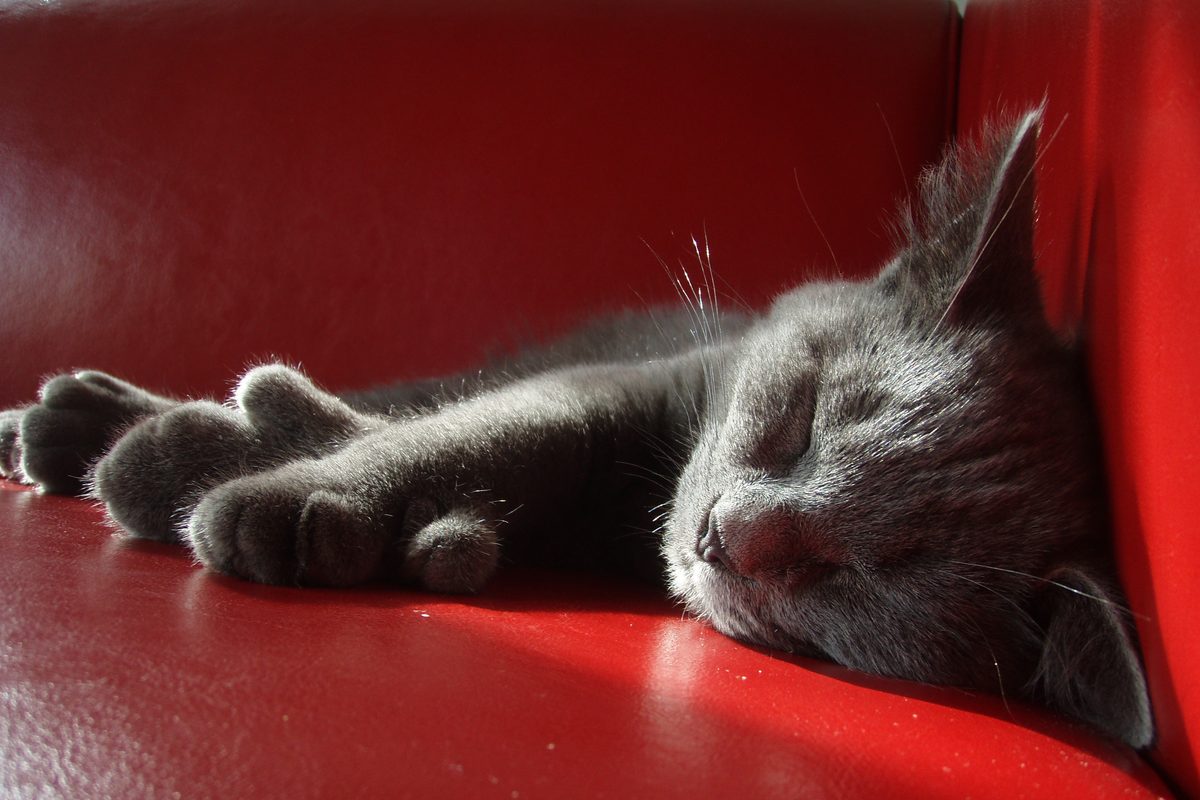

Cats usually have 18 toes: five on each front paw, counting the dewclaw, and four on each back paw. Polydactyl cats are born with more, usually one or two extras, most often on the front paws. The trait is dominant, and the known causes are single-letter changes in a DNA switch for limb development. The Guinness record is 29, set in 2026 by Erebus, a Maine Coon kitten in Wisconsin.
Where the usual 18 toes are
Each front paw has five toes, one of them the dewclaw, and each back paw has four,1 normally with no dewclaw.2 A dewclaw may not touch the ground or scratching surfaces, so its claw wears down less, and dewclaws and extra toes are the claws to check at trimming time.3
Polydactyly means more than 18 toes at birth, on any paw, and a single extra toe or dewclaw counts.4 Extras usually form on the inner, thumb side of the paw, less often on the outer side or in the middle, and they do not always come in pairs, so a cat's paws can differ.2 Hind-foot extras are rare unless the front paws have them too, and some are mild enough to show only on X-rays.5
Toe counts, from typical to record
Most polydactyl cats have one or two extra toes.2
| Cat | Front paws | Back paws | Total |
|---|---|---|---|
| A typical cat1 | 5 and 5, dewclaws included2 | 4 and 4 | 18 |
| Connie, Lansing, Michigan | Two extra between them | Usual count | 206 |
| Erebus's father | 6 and 6 | 6 and 6 | 247 |
| A cat with two copies of UK1, 2022 study | 7 and 7 | 6 and 6 | 26, per its owner8 |
| Jake, Canada, 20026 | 7 and 7 | 7 and 7 | 282 |
| Toby, Lansing, Michigan | Not published | Not published | 28; his owner says he has 30 claws6 |
| Erebus, Kaukauna, Wisconsin, 2026 | 8 on one paw, 7 on each of the other three7 | 299 | |
The record changed hands in 2026. Jake set it at 28 in 2002, and Toby, a 10-month-old rescue kitten, tied it; Guinness announced his title in June 2026.6 Erebus, born in March 2026, passed both: Guinness lists 29 toes, measured on May 13.97 PetMD's 2023 guide gives 28 as the record, shared by Jake and a Minnesota cat called Paws.2 Guinness's story on Toby names only Jake.6
What gives a cat extra toes
The three known cat variants are single-letter changes in the ZRS, a DNA switch for the signaling gene Sonic hedgehog (SHH). SHH is normally active only along the back edge of the developing limb bud, and the ZRS sits inside another gene, LMBR1, about a million DNA letters away.4 Lettice and colleagues found these changes in polydactyl cats in 2008. In mouse tests, they turned SHH on at an extra site in the embryo by varying amounts, which the authors linked to how much the extra toes vary.10 Changes in this switch also cause extra digits in people and mice.4
| Variant | First found in | DNA change, chromosome A2 (Fca126 assembly) | Carriers among 11,036 cats tested in 2022 |
|---|---|---|---|
| Hw (Hemingway) | Polydactyl cats from North America1 | T to C at position 167,522,3244 | 262: 232 with one copy, 30 with two8 |
| UK1 | Outbred polydactyl cats in the UK1 | C to G at position 167,522,5464 | 3: 2 with one copy, 1 with two8 |
| UK2 | Outbred polydactyl cats in the UK1 | T to A at position 167,522,3224 | None found8 |
The 2022 study ran a commercial DNA panel on mostly pedigreed cats (10,419 of 11,036), so its counts describe that group. Photos and owner reports showed Hw cats with four to seven toes per paw, some with extras on all four feet, a pattern earlier work had tied only to UK1 and UK2.8
The three variants do not explain every extra-toed cat. In a 2020 study of 75 Maine Coons from Europe, Canada and the USA, only some polydactyl cats had Hw, and sequencing two limb-development regions found no other variant in the rest. The authors describe the trait as dominant, though carriers differ in how many extra toes they get, and some have none.11 Two cats in that study with one copy of Hw had normal paws on X-rays yet had polydactyl kittens.1 A group of Canadian-origin Maine Coons had extra toes but none of the three variants, so a test for those three does not rule out every cause.1
OMIA's reference list for extra-toed cats goes back to 1873:4
- 1873. A note in Nature describes a polydactylous cat from Cookham-Dean.
- 1902. H. B. Torrey writes on "prepotency" in polydactylous cats in Science.
- 1947. C. H. Danforth covers the foot anatomy and inheritance of polydactyl cats.
- 1976. N. B. and L. M. Todd report mutant allele frequencies in Atlantic Canada and the French colony of Saint Pierre.
- 2014. Lange, Nemeschkal and Müller's "Hemingway model for digit novelty" finds a non-continuous pattern in extra-toe counts.
Quick quiz: how well do you know cat biology?
A senior cat has suddenly lost the ability to groom its hindquarters and tail despite normal grooming drive, and exhibits confusion and reversed sleep patterns. What age-related neurological condition is this clinical picture most consistent with?
Answer: Feline cognitive dysfunction syndrome affecting brain coordination. Feline cognitive dysfunction syndrome (CDS) results from age-related brain changes that disrupt a cat's sense of time, place, and coordination. While confusion and reversed sleep-wake cycle are hallmark signs, some affected cats also lose the ability to coordinate their hindquarters effectively, making grooming of the rear body difficult. This constellation of symptoms strongly suggests CDS rather than a localized spinal or metabolic problem. Source
About how many scent receptors are packed inside a cat's nose?
Answer: 200 million. A cat's nose holds roughly 200 million scent receptors, compared to only about 5 million in a human nose, giving cats a vastly more powerful sense of smell. Source
After a spay incision on a female cat's abdomen, roughly how long should activity be restricted while it heals?
Answer: About two weeks. Because the spay incision goes through the abdominal wall, vets recommend keeping female cats calm and restricting activity for roughly two weeks to let the incision heal properly. Source
The Hemingway cats of Key West
In the 1930s,4 a ship's captain gave Ernest Hemingway a white six-toed cat named Snow White, and some cats at the Ernest Hemingway Home and Museum in Key West descend from her.12 The museum counts nearly 60 polydactyl cats, about half with visible extra toes, and still names them after famous people, as Hemingway did.12 Every polydactyl Hemingway cat that Lettice's team examined had the same point mutation, now listed as Hw.4
The museum says all of its cats carry the polydactyl gene, so its four- and five-toed cats can still have six-toed kittens.12 A cat with one copy of Hw is likely to have extra toes, though, so a normal-pawed cat may not carry it.1 A DNA test for Hw shows which ones do.1
Boston cats and Maine Coons
In eastern Massachusetts, extra-toed cats are often called Boston cats. Large polydactyl populations also live in Halifax and Yarmouth, Nova Scotia, towns settled and supplied from the Boston area in the mid-1700s. Population geneticists believe some of the first cats to reach Boston were polydactyl, a founder effect that gave the trait a head start. Folk tales call these cats better mousers, and some sailors may have picked them for voyages.5
PetMD names the Maine Coon and Pixiebob as the breeds most likely to have extra toes.2 CatWatch, a newsletter produced with Cornell's Feline Health Center, puts polydactyls at 40 percent of the original, unregistered Maine Coon population but cites no count or study for it.5 A 2017 study X-rayed 70 Maine Coons from four breeding lines in Europe, Canada and the USA, 48 of them polydactyl, and found wide variation in toe number and shape, plus differences in the wrist and ankle bones.13
Do extra toes cause problems?
CatWatch says extra-toed cats are as healthy as other cats, apart from the occasional ingrown nail.5 The 2017 Maine Coon study found no apparent harm to welfare, and the radius, a forearm bone, was the same size in polydactyl and normal-pawed 3-month-old kittens and adult females.13
A claw that does not touch the ground can grow long enough to curve into the pad. Signs include limping, frequent paw licking or a nail visibly embedded in the pad, and a paw that bleeds or looks infected needs a veterinary exam.3 Toby's owner told Guinness his extra toes cause no health problems beyond a thorough nail trim.6
Frequently asked questions
Will a polydactyl cat have polydactyl kittens?
Each kitten of a polydactyl cat and a normal-pawed cat has a 50 percent chance of inheriting the gene.2 Langford reports no evidence that two copies of a variant cause a more severe form,1 though in the 2022 DNA study the trait showed up more reliably in cats with two copies of Hw.8
Is polydactyl a breed?
No. The Hemingway museum's polydactyl cats are not a particular breed and come in many coat colors and patterns, including calico, tabby, tortoiseshell, white and black.12 Neither is "American Polydactyl," a name for descendants of the Key West cats.2 The 2022 DNA study did list "Maine Coon Polydactyl," a Maine Coon variety, as a breed type, from registry details owners reported.8
Up next
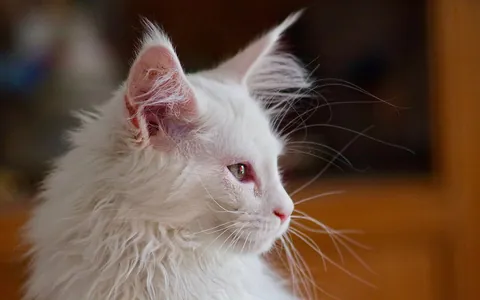 Cat BreedsMaine CoonThe New England breed where extra toes run in some lines.
 Cat FactsCat Facts: 101 Facts About Cats, Each With a SourceBones, purrs, records and more, each one sourced.
Breed photos: mostly Wikimedia Commons contributors under free licenses, cropped. Every photographer and license is on the photo credits page.

Christopher writes and runs Cat Trivia Games. The sources for this article are listed below, and how the site is made and corrected is on the editorial policy page. More about the author.
References
- Langford Vets. Polydactyly (extra toes) genetic test, with breed notes on the Maine Coon. back
- PetMD, by Janelle Leeson (updated July 20, 2023). Polydactyl cats: what to know about cats with thumbs. back
- CatWatch newsletter, with the Cornell Feline Health Center (October 20, 2021). Ingrown claws: ouch! back
- OMIA, Online Mendelian Inheritance in Animals. Polydactyly in Felis catus (OMIA 000810-9685): variants, history and references. back
- CatWatch newsletter, with the Cornell Feline Health Center (2003, updated 2019). Polydactyl cats: something is definitely afoot! back
- Guinness World Records, Katherine Gross (June 26, 2026). Nine lives, 10 extra toes: Michigan kitty ties record for the most toes on a cat. back
- Global News, Rachel Goodman (August 25, 2026). Meet the Wisconsin Maine Coon kitten with world record-breaking 29 toes. back
- Anderson H, Davison S, Lytle KM, et al. PLOS Genetics, 2022. Genetic epidemiology of blood type, disease and trait variants, and genome-wide genetic diversity in over 11,000 domestic cats. back
- Guinness World Records. Most toes on a cat. back
- Lettice LA, Hill AE, Devenney PS, Hill RE. Human Molecular Genetics, 2008. Point mutations in a distant sonic hedgehog cis-regulator generate a variable regulatory output responsible for preaxial polydactyly. back
- Hamelin A, Conchou F, Fusellier M, et al. Journal of Feline Medicine and Surgery, 2020. Genetic heterogeneity of polydactyly in Maine Coon cats. back
- The Ernest Hemingway Home and Museum. Our cats. back
- Hamelin A, Begon D, Conchou F, Fusellier M, Abitbol M. Journal of Feline Medicine and Surgery, 2017. Clinical characterisation of polydactyly in Maine Coon cats. back
- Feline Veterinary Medical Association (FelineVMA). 2017 Declawing position statement. back
- Humane World for Animals. Why declawing is bad for your cat. back
This is general information, not veterinary advice. Written by Christopher Fox under our editorial policy.