 Cat Trivia Games
iOS App
Tiger Cats Split Into Five Species, One New From Bolivia
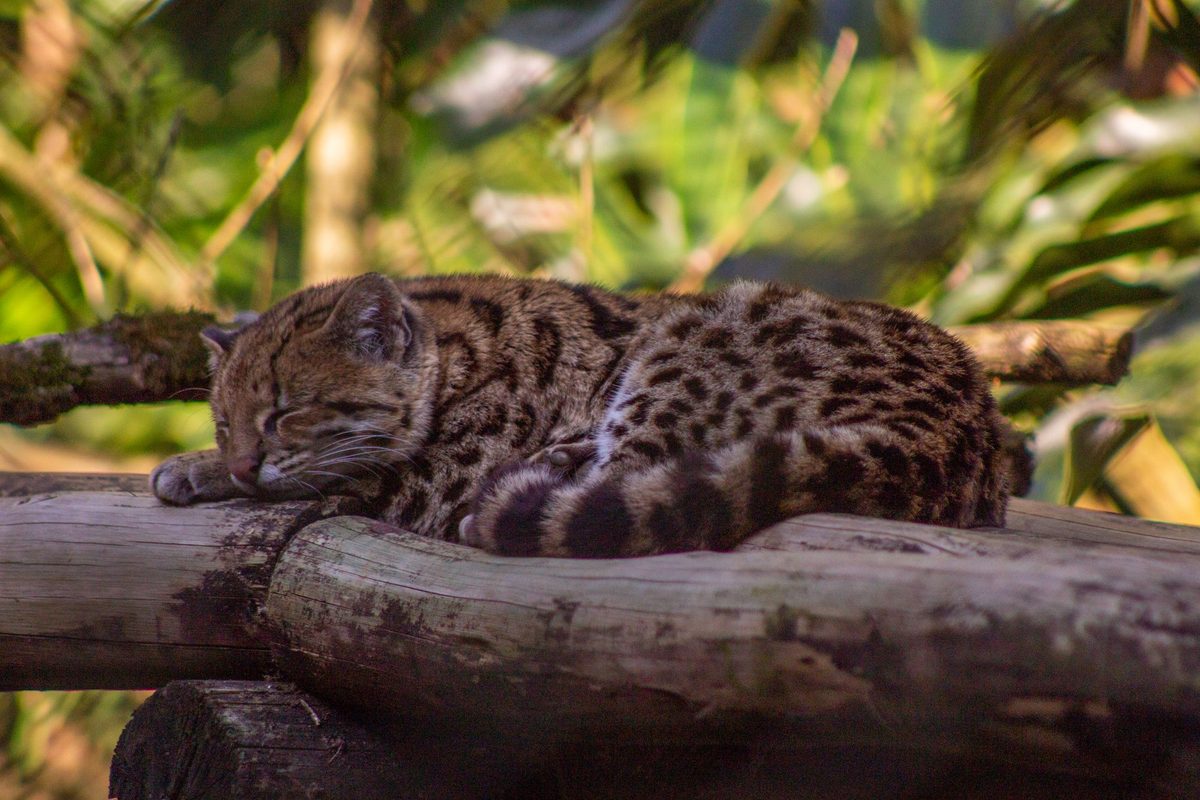
Tiger cats, the small spotted wild cats of South America, are five species, according to complete genomes from 38 Leopardus cats, eight of them museum specimens. One is new: Leopardus tilcayo, from the Yungas cloud forests of Bolivia.1 Reuters reported it as the first living cat species formally named and described in more than a century.2
The study at a glance
| Detail | What the paper reports |
|---|---|
| Journal | Current Biology, volume 36, issue 19, pages 5027 to 5041 |
| Published | Online September 17, 2026, in the October 2026 issue |
| Authors | Jonas Lescroart et al. (13 authors), with Eduardo Eizirik as senior author |
| Sample | Complete genomes from 38 Leopardus cats: 26 from the tiger cat group, 8 from museum specimens |
| Method | Phylogenomics (family trees from whole genomes) and museomics (DNA from old museum specimens) |
| Location | Units include the Bolivian and Peruvian Yungas and Guiana Shield museum specimens; authors based in Belgium, Brazil, Bolivia, Peru, Colombia, the US and the UK |
| Open access | No, subscription only |
| DOI | 10.1016/j.cub.2026.08.059 |
What the researchers did
The team sequenced complete genomes from 38 Leopardus cats, 26 from populations of the tiger cat group. Eight came from museum specimens, the first genetic look at the type locality of L. tigrinus, in the Guiana Shield.1 They included skull fragments from Guyana.3
From the genomes, the team worked out how the populations are related and traced their geography, past interbreeding between species, population history and genetic diversity over time.1
What they found
Five separate lineages. The group sorts into five species: Leopardus tigrinus, L. guttulus, L. emiliae, L. pardinoides and the new L. tilcayo.4 A Peruvian Yungas population became a new subspecies, L. tigrinus antisuyo, named after Antisuyu, a region of the Inca Empire.2
An old split. The tilcayo lineage separated from the L. tigrinus and L. pardinoides lineage nearly 1.4 million years ago, in the Early Pleistocene, when strongly fluctuating climate broke up mountain forests and likely isolated populations.3
Long declines. The genomes show long-term decline in nearly all tiger cat populations through the Pleistocene and Holocene, of 60% or more in some lineages, including tilcayo.3
| Trait | Reported |
|---|---|
| Head and body length | 42.5 to 50.5 cm3 |
| Tail length | 25 to 26.5 cm3 |
| Weight | About 1.4 kg, smaller than an average domestic cat2 |
| Coat | Light brown, with large, irregular dark brown to black rosettes, mostly open or partly closed3 |
| Diet and activity | Rodent remains in scat; camera traps suggest it may be more active at night2 |
What the study cannot tell us
- How many tilcayos there are. Co-lead author Jonas Lescroart told Reuters the findings rest on two live animals and a small number of camera-trap records.2 The species' numbers, breeding and behavior are largely unknown.4
- Its conservation status. The IUCN Red List currently lists tiger cats as two vulnerable species. The researchers shared their results with the IUCN, and Lescroart said tilcayo alone could be rated endangered.2
- The finer details. The paper is paywalled. This summary draws on the abstract and reporting of the authors' statements, so results on interbreeding are not covered.1
How it fits earlier research
The tiger cat has been split before. A 2013 Current Biology study by Tatiane Trigo, Eduardo Eizirik and colleagues found no current gene flow between two Brazilian populations whose ranges look continuous, and proposed two species: L. tigrinus in the northeast and L. guttulus in the south. It also found ancient interbreeding with the pampas cat in the northeast and ongoing interbreeding with Geoffroy's cat in the south.5
Later work kept redrawing the map, Pesquisa FAPESP reported in 2024. A 2017 review based mainly on museum skins and skulls revived the name L. emiliae for northeast Brazil and Amapa, a split one researcher disputed. A 2023 genome study by Lescroart and coauthors found the Andean population closely related to the Central American one, and the Andean clouded tiger cat, L. pardinoides, came to be treated as its own species. Andean animals have two teats; other L. tigrinus subspecies have four.6
The new study joins those names with whole genomes and adds a fifth species no one had proposed. "We never expected this Bolivian tiger cat to be a separate species," Lescroart told Reuters.4
Quick quiz: how well do you know cat behavior?
According to a 2018 PNAS study of cat tongues, what shape are the papillae that let them wick saliva into fur?
Answer: Hollow, scoop-shaped structures. Researchers Alexis Noel and David Hu found the papillae are hollow, scoop-shaped spines that use surface tension to draw up and hold saliva, unlike the solid spines long assumed. Source
According to cat behaviorist Jackson Galaxy, what is the main goal of 'Urban Planning' for a home with cats?
Answer: To arrange the living space so cats and humans move without unnecessary conflict. Jackson Galaxy's 'Urban Planning' concept focuses on arranging your home's layout and resources to minimize conflict between cats and between cats and humans, allowing smooth movement and territorial distribution throughout shared spaces. Source
According to research by Karen McComb and colleagues, what makes a cat's 'solicitation purr' especially effective at getting a human's attention?
Answer: It embeds a high-pitched, cry-like sound similar to an infant's cry within the purr. The 2009 Current Biology study found solicitation purrs contain an embedded high-frequency, cry-like component that people rate as more urgent, likely exploiting mammalian sensitivity to infant distress cues. Source
Frequently asked questions
How big is a tiger cat?
The new species is about 46 cm long and weighs about 1.4 kg, smaller than an average domestic cat.2
Where does the name tilcayo come from?
The researchers kept the cat's local name in Bolivia.2
How did scientists notice it?
A local family kept a male for about a year, thinking it was a domestic cat, then gave it to La Senda Verde, a wildlife refuge. Biologist Paola Nogales-Ascarrunz noticed it looked different and later co-authored the study.4
Up next
 Cat Science NewsEgyptian cat mummy skullsAnother study built on old museum specimens.
 Cat BreedsToygerA domestic breed with a tiger name of its own.
Breed photos: mostly Wikimedia Commons contributors under free licenses, cropped. Every photographer and license is on the photo credits page.

Christopher writes and runs Cat Trivia Games. The sources for this article are listed below, and how the site is made and corrected is on the editorial policy page. More about the author.
References
- Lescroart, Nogales-Ascarrunz, Cassatt-Johnstone and others, Current Biology, volume 36, issue 19, pages 5027 to 5041, 2026. Phylogenomics and museomics reveal five distinct species of tiger cats in South America. back
- Reuters, via Khaleej Times, September 22, 2026. New cat species identified for first time in over a century in Bolivia. back
- Anderson, Sci.News, September 18, 2026. New species of tiger cat identified in Bolivia. back
- Ortiz, EarthSky, September 19, 2026. Scientists discover a new tiger cat hiding in plain sight. back
- Trigo, Schneider, de Oliveira, Lehugeur, Silveira, Freitas and Eizirik, Current Biology, volume 23, pages 2528 to 2533, 2013. Molecular data reveal complex hybridization and a cryptic species of Neotropical wild cat. back
- Guimaraes, Pesquisa FAPESP, issue 337, March 2024. Wildcats from the Andes and Central America differ to those found in Brazil. back
Written by Christopher Fox under our editorial policy.