 Cat Trivia Games
iOS App
Burmese Cat Breed
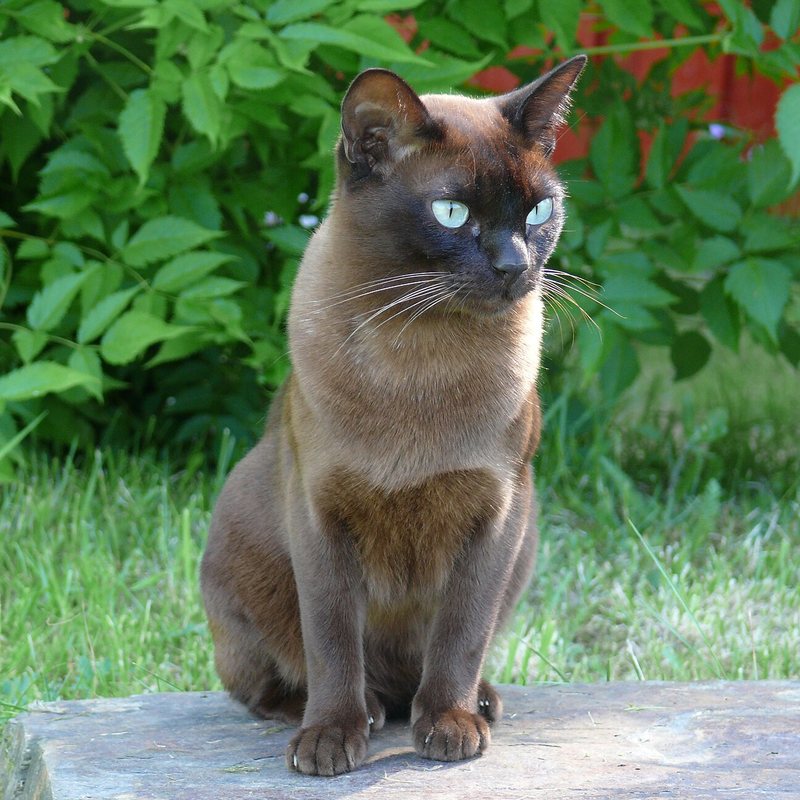

Burmese cats have a compact, muscular build and a short, satin-like coat. Many are affectionate and playful, with a strong interest in being close to their people. They may suit someone who enjoys a very involved companion.
Quick facts
- Size: CFA says a mature male may reach or exceed 12 pounds; females are usually smaller
- Life expectancy: 12 or more years per TICA; PetMD gives 10 to 17
- Coat: very short, fine and glossy with a satin-like finish, in sable and dilute colors
- Growth: considered fully grown at about 18 months, per CFA
- Voice: generally soft-spoken, per CFA
Temperament and daily life
Burmese are often described as extremely people oriented: many follow their people from room to room, seek out warm laps, and may focus on one special person while being affectionate with everyone. They tend to be spirited as kittens, mellow in adulthood and playful well into old age. Expect frequent contact: a cat on the sofa beside you, on the desk while you work, and joining in when there is something to investigate.
Burmese are generally soft-spoken, but have no trouble letting you know when something is amiss. Some benefit from compatible animal company, but another pet is not an automatic solution to distress, so think about how you will provide company, play and reliable care during the day.
Grooming and care
Grooming is low-maintenance: the fine coat sheds minimally and a weekly brush with a rubber brush removes dead hair and keeps it glossy. Most of the daily effort goes into interaction, with regular play, food puzzles and climbing space. The ASPCA's enrichment guide has practical ideas.
Weight matters more than usual in this breed, for the reasons in the health section below. Feed measured meals, and ask your veterinarian to track body condition at checkups.
Health considerations
Cornell's Feline Health Center notes that in some countries, Burmese cats appear to have a higher risk of developing diabetes than other breeds, but that this may not be true in the United States. The evidence comes from studies of cats in Australia, England and Sweden. Obese cats are up to four times more likely to develop diabetes than cats at an ideal weight, and the most common signs owners notice are weight loss despite a good appetite and increased thirst and urination. Mention either to your veterinarian.
Hypokalaemia is an inherited condition of Burmese and related breeds in which low blood potassium causes episodes of muscle weakness, often first seen in young kittens. The gene involved, WNK4, has been identified, a gene test can determine a cat's genetic status, and International Cat Care advises testing cats before breeding. Ask whether the parents were tested. Treatment is directed by a veterinarian.
In the Contemporary Burmese lineage, a 2016 study linked a variant of the ALX1 gene to a severe craniofacial defect: kittens that inherit two copies have a head defect that is incompatible with life. If you are looking at contemporary-type lines, ask the breeder how they screen for it.
History
Burmese occur naturally on the Malay Peninsula, but most of today's Burmese trace back to one cat, Wong Mau, a small walnut-brown female brought to America in 1930. In 1932 she was bred to Tai Mau, a seal point Siamese, as part of a program to isolate her traits. Her solid brown descendants bred true, CFA began registering Burmese in 1936, and the breed achieved championship status in 1959. CFA now recognizes the European Burmese as a separate breed.
Appearance
TICA's standard describes the Burmese as a cat of medium size with substantial bone structure and good muscular development, adding "think 'a brick wrapped in silk'", with large golden eyes. The coat is very short, fine and glossy, with a satin-like finish. Sable, a rich dark brown, is the original color, and dilute colors were later accepted.
Before choosing a Burmese
A Burmese may suit someone who is home often and enjoys a cat that wants to be involved in the day. Plan for play, measured meals and regular weight checks. Ask a breeder about hypokalaemia testing and, for contemporary-type lines, screening for the head defect.
Burmese FAQ
What is the difference between the Burmese and the European Burmese? CFA recognizes them as separate breeds. It describes the European Burmese as a moderate type with gently rounded contours.
Are Burmese cats hypoallergenic? No breed can be assumed safe for someone with a cat allergy, and a short coat that sheds little does not change that. Spend time with the individual cat before committing.
Sources
- Cat Fanciers' Association: Burmese and European Burmese
- The International Cat Association: Burmese and its Burmese/Bombay standard
- PetMD: Burmese
- Cornell Feline Health Center: feline diabetes
- Diabetes studies: Australian Veterinary Journal (1997), Journal of Veterinary Internal Medicine (2016, England) and Journal of Veterinary Internal Medicine (2015, Sweden)
- International Cat Care: hypokalaemia in cats
- Developmental Biology (2016): ALX1 variant and craniofacial defect in Burmese cats
- ASPCA: feline DIY enrichment
Quick quiz: 3 questions about the Burmese cat
Which eye color is most commonly associated with the Burmese?
Answer: Gold. The Burmese's signature eye color is a warm gold, ranging toward yellow; green or blue eyes are not the breed's characteristic look. Source
Which cat is regarded as the foundation of the modern Burmese breed?
Answer: Wong Mau. Nearly all of today's Burmese trace back to Wong Mau, a small brown female brought from Burma to the United States in 1930 and used to establish the breed. Source
Which two cat breeds does VCA Animal Hospitals link to an inherited or congenital form of vestibular disease, often paired with deafness?
Answer: Siamese and Burmese. VCA notes that Siamese and Burmese cats are associated with an inherited or congenital form of vestibular disease, and many affected cats are also deaf. Source