 Cat Trivia Games
iOS App
Ocicat Cat Breed
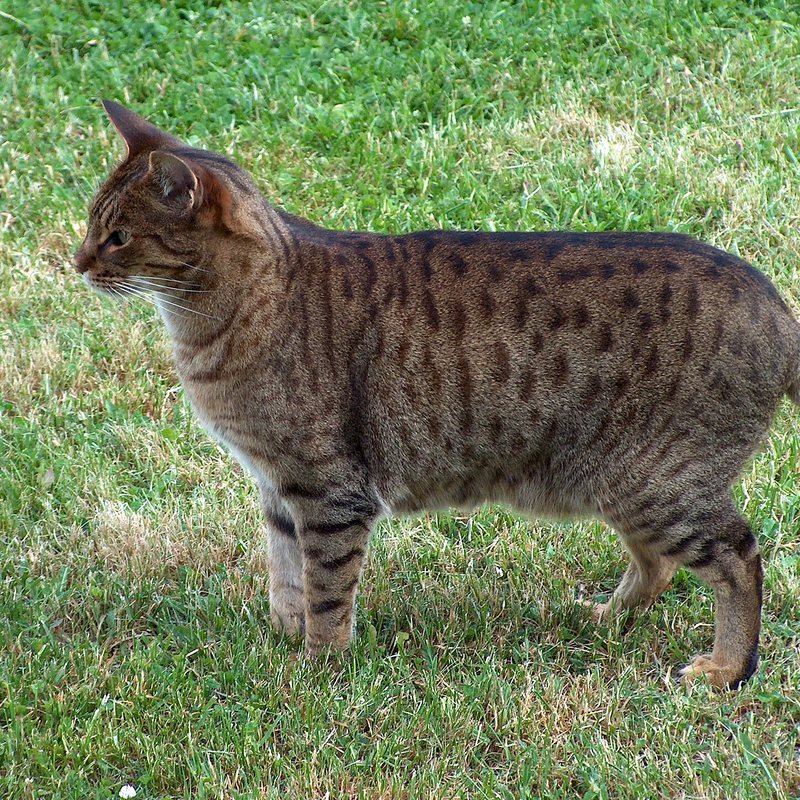

The Ocicat is a spotted domestic breed with an athletic build. Its development involved Siamese, Abyssinian and American Shorthair cats. Many are described as active and sociable, so daily play and interaction are important considerations.
Quick facts
- Ancestry: Abyssinian, Siamese and American Shorthair cats; no wild cats
- Weight: males 10 to 12 pounds and females 8 to 10 (TICA); PetMD gives 6 to 15
- Life expectancy: 12 to 18 years (PetMD)
- Coat: short, smooth and satiny, with large thumbprint-shaped spots, in 12 colors (CFA)
- Recognition: TICA championship since August 1986 and CFA championship since 1987
Temperament and daily life
CFA describes Ocicats as natural extroverts that welcome strangers and as neither clingy nor demanding. Many play fetch and can learn tricks. They are energetic but not overly active, with a lower base activity level than an Abyssinian or a Siamese. A cat without enough stimulation may develop unwanted behaviors, so provide suitable play, climbing space and opportunities to explore; the ASPCA has practical ideas for enrichment at home. Introductions and the individual cat's temperament matter with children and other pets.
Grooming and care
The short coat usually needs less grooming than a long coat, but check it regularly. It is short, smooth and satiny, Ocicats are not heavy shedders, and an occasional pass with a rubber brush, or a wipe with a chamois for light shedders, removes loose hair. Keep the nails trimmed and provide sturdy scratching posts and climbing places.
Health considerations
The Ocicat is generally described as healthy, which reflects limited breed-specific evidence rather than a guarantee. Health issues found in the parent breeds, such as hypertrophic cardiomyopathy, amyloidosis and progressive retinal atrophy (PRA), may still occur. Of these, PRA has the most direct link to the breed: the rdAc form has been seen in some Ocicats, and the DNA test for it covers only that one variant. Amyloidosis can be inherited through the Abyssinian and Siamese ancestors. These are concerns reported mainly from related breeds rather than measured Ocicat rates, so ask a breeder which tests and examinations the parents have had.
History
The first Ocicat was an accident. In Michigan in 1964, Virginia Daly was trying to breed a Siamese with points the color of an Abyssinian. She mated a ruddy Abyssinian male with a seal point Siamese female, kept a daughter from the litter, and bred her to a chocolate point Siamese. A repeat of that mating produced an ivory kitten with golden spots named Tonga, who, Daly's daughter said, looked just like an ocelot (TICA). Breeders later added the American Shorthair. CFA accepted the breed for registration in 1966 and advanced it to championship status in 1987, and TICA granted championship status in August 1986.
Appearance
Ocicats are strong, medium to large cats, so muscular that they feel heavy for their size, even the females. The spots are large and thumbprint-shaped, contrasting with the lighter background coat, and show cats have a bull's-eye pattern on each side, with one spot circled by others, plus large spots on the shoulders, hindquarters and legs. The pattern occurs in 12 colors, and all eye colors except blue are allowed.
Before choosing an Ocicat
An Ocicat suits a household with time for daily play and interaction, climbing space and new things to explore. These cats are not happy being left to themselves for long periods. Meeting the individual cat tells you more about its energy and sociability than the breed description.
Ocicat FAQ
Is the Ocicat part wild cat? No. Despite its ocelot-like spots, the breed was developed entirely from domestic cats and is not related to ocelots.
Can an Ocicat be left alone during the workday? How well a cat copes depends on the individual, the length of the absence and the environment. A second pet is not a guaranteed solution.
Are Ocicats hypoallergenic? No breed can be assumed safe for someone with a cat allergy. Spend time with the individual cat before committing.
Sources
- Cat Fanciers' Association: Ocicat and What you don't know about Ocicats
- The International Cat Association: Ocicat
- PetMD: Ocicat
- UC Davis Veterinary Genetics Laboratory: PRA (rdAc)
- ASPCA: feline DIY enrichment
Quick quiz: 3 questions about the Ocicat
Which body type best describes the Ocicat according to breed standards?
Answer: Athletic and lithe. Official standards call for a 'moderate type' body - well-muscled and solid yet graceful and lithe - giving Ocicats an athletic build rather than the cobby, slender, or stocky frames of other breeds. Source
Which eye color is NOT permitted under the Ocicat breed standard?
Answer: Blue. Although the Ocicat descends partly from the blue-eyed Siamese, breed standards disqualify blue eyes and allow every other eye color, with no required correlation to coat color. Source
Which inherited eye disease, shared with its Abyssinian ancestry, can affect the Ocicat?
Answer: Progressive retinal atrophy. Progressive retinal atrophy, a late-onset inherited retinal degeneration found in Abyssinians, can also occur in the Ocicat. Source