 Cat Trivia Games
iOS App
Arabian Mau Cat Breed
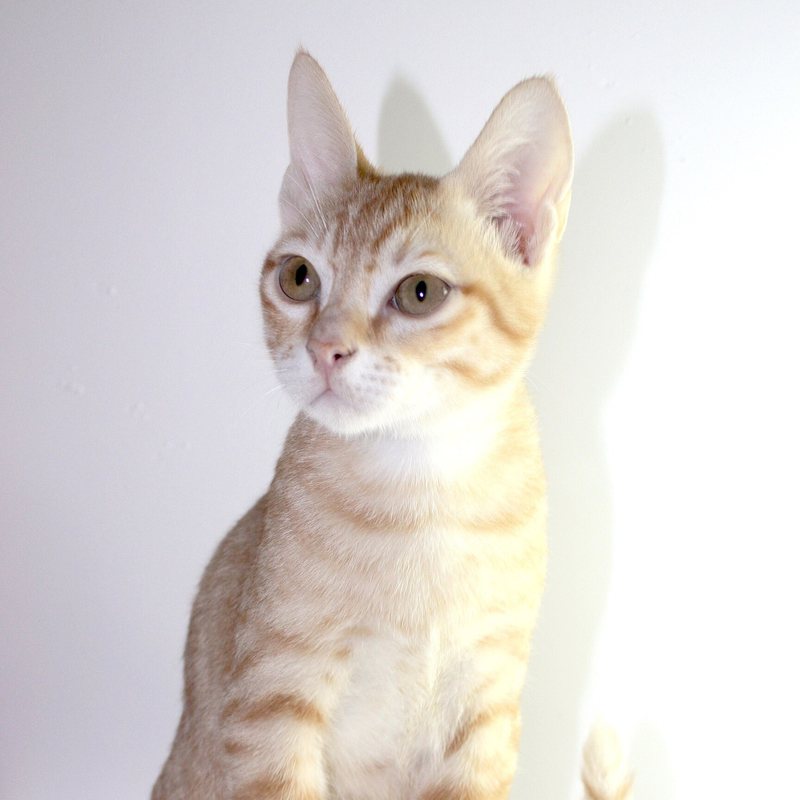

The Arabian Mau developed from local cats of the Arabian Peninsula. It is usually described as an active, shorthaired cat with long legs and large ears. Its modern breed history is relatively recent, so this guide separates documented registry information from broader stories about desert cats.
Quick facts
- Origin: developed from local cats of the Arabian Peninsula
- Recognition: recognized by the World Cat Federation (WCF); not on CFA's or TICA's breed lists as of 2026
- Build: medium-sized, muscular and high on the legs, with large ears
- Coat: short and close-lying without undercoat, firm rather than silky to the touch
- Colors (WCF): white, black, black and white, brown tabby, grey and white tabby, red, red and white
Temperament and daily life
Breed descriptions usually call the Arabian Mau active and alert, but there is little published, breed-specific information about temperament, so individual cats vary. An active cat needs opportunities to play, climb, and explore: tall cat trees, window perches, food puzzles and play sessions that let it stalk and chase.
As with any cat, introductions to other cats, dogs and children should be gradual, with places the cat can retreat to while it settles in.
Grooming and care
The short coat without undercoat is simple to look after: one or two brushings per week keep a coat in good condition, and general care advice covers nail trims every two to three weeks, a sturdy scratching post at least three feet high and keeping cats indoors. For a cat this athletic, add height: shelves, a tall tree and a perch with a view.
Health considerations
Published breed-specific health information is limited. Limited disease reporting is not a forecast of low veterinary costs, and it does not establish that the breed is free of inherited disease. A veterinarian can advise on the needs of the individual cat.
The everyday problems most cats face still apply: between 50 and 90 percent of cats older than four have some form of dental disease, and a Cornell veterinarian names free feeding as a major factor in feline obesity, so regular checkups and measured meals are worth planning for.
History
The Arabian Mau developed from local cats of the Arabian Peninsula, and its history as a named breed is recent. The World Cat Federation lists the Arabian Mau among its shorthair breeds, with a breed standard dated January 2010. The Cat Fanciers' Association and The International Cat Association do not list the breed (checked October 2026). Broader stories about how desert life shaped these cats are widely repeated, but they are not documented in the registry sources.
Appearance
The breed standard describes a medium-sized cat with a strong body structure, not too slender, very muscular and high on the legs, with long legs and oval paws. The profile is slightly curved with a prominent chin, the ears are large and set slightly to the sides, and the eyes are oval, with an eye color that corresponds to the coat color. The coat has no undercoat, lies close to the body and should feel firm rather than silky.
Before choosing an Arabian Mau
Registration depends on the registry, so ask which one a cat or breeder uses; WCF publishes a standard for the breed. An active cat needs daily play and climbing space, and meeting the individual cat tells you more about its temperament than the breed name.
Arabian Mau FAQ
Is the Arabian Mau related to the Egyptian Mau? They are separate breeds with separate registry histories. CFA traces the Egyptian Mau in the United States to three cats that arrived with Nathalie Troubetskoy in 1956, and notes that "mau" meant cat or sun in ancient Egyptian. The Arabian Mau was developed from local cats of the Arabian Peninsula and is recognized by WCF. A shared word in the name does not show how closely the two are related.
Are Arabian Maus hypoallergenic? No breed can be assumed safe for someone with a cat allergy, and a coat without undercoat does not change that. Spend time with the individual cat before committing.
Sources
- World Cat Federation: shorthair breeds and the Arabian Mau standard
- Cat Fanciers' Association: Egyptian Mau
- ASPCA: cat grooming tips and general cat care
- Cornell Feline Health Center: feline dental disease and obesity
Try a mixed breed question
What is one reason people are drawn to Ocicats as pets?
Answer: Their wild-spotted coat and playful, trainable nature. Ocicats combine the exotic, wild-cat-spotted look inherited from their Abyssinian ancestry with the outgoing, trainable temperament of their Siamese and American Shorthair lines - a striking-looks-plus-easygoing-personality pairing that draws many owners in. Source