 Cat Trivia Games
iOS App
Chartreux Cat Breed
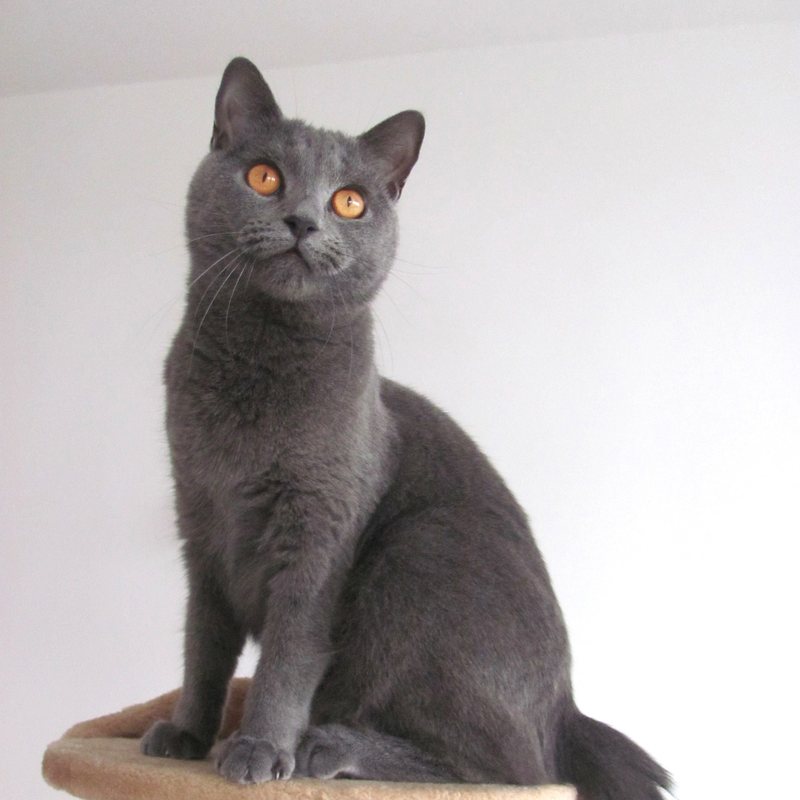

The Chartreux is a French breed with a blue-gray coat, gold-to-copper eyes, and a sturdy body. It is often described as quiet and attentive. Its woolly coat and tapered muzzle help distinguish it from a blue British Shorthair.
Quick facts
- Size: CFA says males may weigh as much as 14 pounds; females may be significantly smaller
- Maturity: three to five years, per CFA
- Life expectancy: 12 to 15 years in PetMD's profile; TICA gives 8 to 13 or more
- Coat: blue-gray only, from ash to slate; woolly, with a water-repellent topcoat and a dense undercoat
- Eyes: gold to copper
Temperament and daily life
The story of monastery cats taking a vow of silence is a charming myth, but Chartreux are often described as quieter than most breeds, with a calm, cheerful dignity, and some vocalize very little. Many like to keep their feet firmly on the ground: playful and intelligent, but not ones for leaping through the air.
Many Chartreux enjoy play that lets them stalk and pounce, though how much each cat wants varies. Regular play, a sturdy scratching post and a place to watch the room from suit most of them, and introductions to children and other pets should go at the cat's pace.
Grooming and care
The Chartreux is a seasonal shedder that needs more frequent grooming in fall and spring, when shedding is heaviest. Occasional combing with a wide-spaced metal comb helps stop mats before they form, prevents hairballs and reduces loose hair around the house, and most Chartreux do not require regular bathing.
Weight gain can be a problem for some mature Chartreux, and a dense coat makes extra weight easy to miss. Measured meals and regular play help, and your veterinarian can check body condition at routine visits.
Health considerations
Cornell's Feline Health Center lists the Chartreux among the breeds in which hypertrophic cardiomyopathy (HCM) is more prevalent, and says HCM is diagnosed by echocardiography. Ask a breeder how the parents' hearts were checked.
CFA says patellar luxation, a heritable kneecap condition that can affect mobility, has been seen in some Chartreux, and that cats with mild patellar luxation are unlikely to develop mobility problems but should not be used for breeding. Kittens and cats can be screened by a veterinarian. Mention any skipping or change in gait to your veterinarian.
History
References to the blue cats of France appear in literature as early as the 16th century. The name was once thought to come from the Carthusian monks, but it may instead come from a type of Spanish wool that traders knew and that resembled the cat's woolly coat; the monastery story is best treated as tradition rather than documented history. Selective breeding began in France in the 1920s, drawing on natural colonies of French blue cats. After the Second World War, blue British Shorthairs and Persians were used to help preserve the breed, and the first Chartreux were imported to North America in 1970.
Appearance
The body is broad-shouldered and powerful, on relatively fine-boned legs, a contrast TICA sums up with the familiar description "a potato on toothpicks". The broad, rounded head tapers to a narrow muzzle, with whisker pads that give a hint of a smile. The ears are medium-sized and set high, and the rounded eyes range from gold to copper. The coat is medium-length with a woolly texture, a hard, water-repellent topcoat and a soft, dense undercoat, in any shade of blue-gray, sometimes lightly brushed with silver. Males are much larger than females and slower to mature.
Before choosing a Chartreux
A Chartreux may suit a calm home that enjoys a quiet, attentive cat. Plan for extra combing during the spring and fall sheds and for measured meals. Ask a breeder about heart checks and patellar luxation screening, and give a slow-maturing cat time to settle.
Chartreux FAQ
What is the difference between a Chartreux and a British Shorthair? The Chartreux comes only in blue-gray, has a woolly coat, and pairs a broad head with a narrow, tapered muzzle and relatively fine-boned legs. CFA describes the British Shorthair's head as rounded, and that breed comes in many colors.
Are Chartreux cats quiet? CFA says they are quieter than most breeds, and some vocalize very little. A new change or loss of voice in any cat is worth a veterinary check rather than something to put down to the breed.
Are Chartreux cats hypoallergenic? No. CFA says that because of the abundance of woolly undercoat hairs, Chartreux are not recommended for allergy sufferers, and no breed can be assumed safe for someone with a cat allergy.
Sources
- Cat Fanciers' Association: Chartreux
- The International Cat Association: Chartreux
- PetMD: Chartreux
- Cornell Feline Health Center: hypertrophic cardiomyopathy
- Cat Fanciers' Association: British Shorthair
One question about the Chartreux cat
According to the CFA, how are the Chartreux's erect, medium-sized ears set on its head?
Answer: High on the head. The CFA describes erect, medium-sized ears set high on a broad, rounded head that tapers to a narrow muzzle. The whisker pads give the face a hint of a smile. Source