 Cat Trivia Games
iOS App
Highlander Cats: Traits and Naming
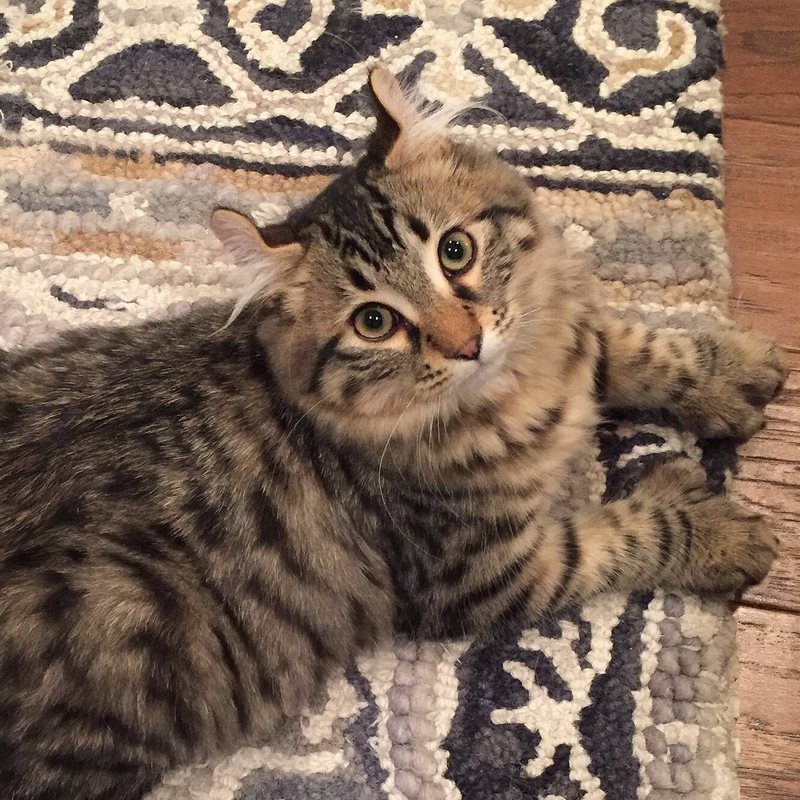

Highlanders have curled ears, short tails, and a substantial build. Similar names are used by different breeding programs, so this guide describes the Highlander as The International Cat Association (TICA) defines it, in its breed standard and current breed page. Appearance alone does not establish ancestry, registration, or legal status.
Quick facts
- Registry: TICA, shown as an Advanced New Breed (checked October 2026); not listed by CFA
- Origin: developed from domestic cats, starting in 2004
- Coat: short or long, in all colors and in solid, tortie, tabby, silver and smoke divisions
- Ears and tail: a loose backward curl to the ear tips; a shortened, thick tail at least two inches long
- Also sold as: Highlander Lynx and similar names, which may follow other standards
Temperament and daily life
TICA describes Highlanders as playful, people-loving cats that like to chase, greet you at the door and show off to visitors. They are relatively quiet but physically energetic, and much of that energy goes into chase games. Daily play with wand toys, tall and sturdy cat trees and puzzle feeders give an athletic cat somewhere to put it. Introductions and the individual cat's temperament matter with children and other pets.
Grooming and care
The shorthair coat is dense and lies loosely against the body. The longhair coat grows up to about two and a half inches, with longer, shaggy fur on the belly, so longhairs need more frequent combing, especially underneath. Check the curled ears as part of routine care and ask your veterinarian before cleaning them. A large, sturdy scratching post suits a cat this size. Assess body condition with your veterinarian rather than using weight alone, since a big frame can hide extra weight.
Health considerations
Published breed-specific health information is limited, and the breed is young. That does not establish that Highlanders are free of inherited disease. Ask a breeder which health checks the parents have had, and rely on your veterinarian's advice for the individual cat.
History
Development began in 2004, with the aim of creating a domestic cat with a powerful "big cat" look, and breeders settled on the name Highlander in 2005. The cats used were chosen from the domestic gene pool rather than from any recognized breed, and the current standard still allows outcrosses only to domestic longhairs and shorthairs that do not belong to a recognized breed. TICA accepted the Highlander into its Preliminary New Breed class on May 1, 2008. Its breed page still lists it as an Advanced New Breed, a stage before championship status (checked October 2026). The Cat Fanciers' Association does not list the breed.
Cats are also sold under similar names, including Highlander Lynx, the name in this page's address. Programs using those names do not necessarily register with TICA or follow its standard, so ask a breeder which registry and standard their cats are bred to.
Appearance
The 2024 TICA standard describes medium to large, muscular, athletic cats with a straight to slightly convex forehead, a wide nose and a blunt profile. The head is a wide, inverted pear shape with a full, squared muzzle. The ears are small to medium, wide at the base and as erect as possible, with flexible tips that curl back in a loose, relaxed curl. Kittens may have a tighter curl that loosens as they mature. The body is rectangular, with the hips higher than the shoulders, and the feet are large with prominent knuckles.
The tail is shortened and thick, with at least two inches of bone in an adult, and should not reach past the hock. Kinks and curls in the tail are allowed with no point difference. Highlanders come in all colors, and tabby patterns are allowed. The standard disqualifies cats with ears that are not erect, with no tail or a full-length tail, and with extra toes.
Before choosing a Highlander
A Highlander may suit a home with time for daily play and space for a large, athletic cat to climb. Because similar names are used by different programs, ask a breeder which registry and standard the cats are bred to and what health checks the parents have had. Meeting the individual cat tells you more about its temperament than the breed name.
Highlander FAQ
Is the Highlander part bobcat or wild cat? No. TICA says the cats used to develop the breed came from the domestic gene pool, and the "big cat" look comes from selective breeding. Legal requirements still depend on where you live and how the authority classifies the animal, so check current local rules, especially if a seller claims wild ancestry.
Can a Highlander have extra toes? Not as a show cat. TICA's 2024 standard lists polydactyly, extra toes, among its disqualifications for the breed.
Is a Highlander the same as a Highlander Lynx? Sometimes. Highlander is the name TICA uses for the breed it recognizes. Cats sold as Highlander Lynx or under similar names may come from programs with different standards, so the registry and pedigree tell you more than the name.
Sources
- The International Cat Association: Highlander and the Highlander breed group standard (revised February 26, 2024)
- Cat Fanciers' Association: breeds (checked October 2026)
Try a mixed breed question
How would you best describe a Himalayan cat's coat?
Answer: Long and silky. Inherited from its Persian ancestry, the Himalayan's coat is long, fine and silky rather than short, curly or sparse - which is exactly why it needs daily grooming. Source