 Cat Trivia Games
iOS App
Havana Brown Cat Breed
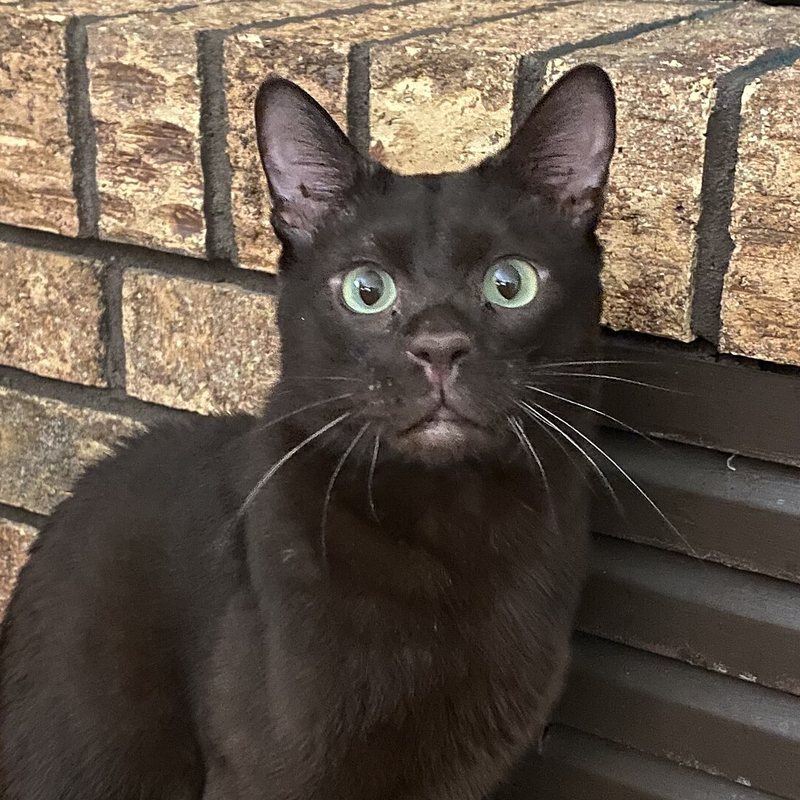

Havana Browns are known for warm brown coats, green eyes, and a distinctive muzzle. Many are described as curious and affectionate, sometimes investigating objects with a paw. The breed is uncommon, though no current, reliable count of its population is published.
Quick facts
- Weight: 8 to 10 pounds for males and 6 to 8 for females (TICA)
- Life expectancy: 8 to 13 or more years (TICA)
- Color: CFA accepts brown only; TICA, which calls the breed the Havana, accepts brown and lilac
- Eyes: any vivid shade of green
- Grooming: light, with a soft brush and an occasional rubdown
Temperament and daily life
Havana Browns are usually curious without being pushy. The Cat Fanciers' Association expects intelligence and inquisitiveness "but not so much as to be intrusive": a Havana is more likely to wait for you to open a cupboard than to find its own way in. Many reach out with a paw to touch their people or to investigate something new. Personalities vary. Some are shy and devoted mainly to one person, while others are outgoing with everyone.
They are moderately active and playful, and many enjoy the company of other pets, so introductions and the individual cat's temperament matter. A Havana Brown may need more interaction than an empty-home schedule provides, so plan for daily play and company.
Grooming and care
The short, silky coat sheds little. Regular brushing with a soft brush keeps it tidy, and an occasional rubdown with a rubber brush, finished with a chamois cloth, adds shine. Regular bathing is not usually needed unless the cat is being shown. Nails, teeth and ears need the same routine care as any cat's.
Health considerations
Published breed-specific health information is limited. The breed is generally described as relatively healthy, and PetMD's breed profile mentions only general concerns such as dental disease and obesity. That does not establish that the breed is free of inherited disease. Because the gene pool is small, ask a breeder how closely related the parents are and whether recent outcrosses appear in the pedigree.
History
Solid brown cats of Siamese type are known from Britain and Europe in the late 1800s, but they fell out of favor as the pointed, blue-eyed Siamese rose to prominence. After the Second World War, English breeders began crossing chocolate point and seal point Siamese with solid black domestic shorthairs, and TICA's history adds "a dash of Russian Blue", although CFA's 1998 breed history says the early parentage contained almost no Russian Blues. Early crosses went to the United States, and CFA accepted the Havana Brown for registration in 1959 and for championship competition in 1964. The name may come from a rabbit breed of the same color or from Havana cigars; both stories are told.
CFA's registration rules record that the breed's earlier outcrosses, to Burmese, Siamese, Russian Blue and Lilac Foreign Shorthair, were dropped on January 1, 1974. By 1998 the breed's own history in CFA was blunt: "There are too few cats and they are too closely bred." Since 2019, a regulated CFA outcrossing program has allowed Havanas to be bred to certain colors of Oriental Shorthair, to seal point or chocolate point Siamese, or to unregistered black or blue domestic shorthairs. When kittens from those crosses are bred back to Havanas, offspring that meet the standard can be registered as Havanas.
The registries now differ. In 1983 TICA accepted the lilac Havana for championship competition and changed the breed's name from Havana Brown to Havana. In Britain, a shorthaired cat called the Havana is a brown variety of the Oriental Shorthair, with a different body and head type.
Appearance
Havana Browns are medium-sized, firm and muscular. The head is slightly longer than it is wide and narrows to a rounded muzzle, with a definite break on either side of very prominent whisker pads, a shape often described as "a corncob stuck into an orange". The ears are large, round-tipped and tilted forward, which gives an alert look, and the eyes are oval and green, the deeper the better.
The CFA standard calls for any even shade of rich, warm brown, with no preference for lighter or darker shades, a rosy-toned nose and paw pads, and brown whiskers, and it makes allowance for faint "ghost" tabby markings. TICA also accepts a pinkish-gray lilac.
Before choosing a Havana Brown
A Havana Brown may suit a home where someone is around for company and play. The breed is uncommon, so ask a breeder about the parents' relatedness, any outcrosses in the pedigree and the parents' health. Meeting the individual cat tells you whether it leans shy or outgoing.
Havana Brown FAQ
Is a Havana Brown the same as a Havana? In North America, yes. TICA renamed its Havana Brown the Havana in 1983 when it accepted lilac, while CFA kept the name Havana Brown and brown as the only color. In Britain, "Havana" means a brown Oriental Shorthair, a different type of cat.
Why do breeders call Havana Browns "Brownies"? It is the breeders' nickname for these solid brown cats, and CFA uses it in its breed profile.
Sources
- Cat Fanciers' Association: Havana Brown, the Havana Brown standard, the Havana Brown registration rules and the 1998 breed article
- The International Cat Association: Havana
- PetMD: Havana Brown
Quick quiz: 2 questions about the Havana Brown cat
What is the most likely origin of the name 'Havana Brown'?
Answer: It resembles the color of Havana cigars. Most fanciers trace the name to the coat's resemblance to a Havana cigar's rich brown; a minority credit the similarly colored Havana rabbit instead. Either way, the breed itself was developed in England, not Cuba. Source
Which two cat breeds were primarily crossed to develop the Havana Brown?
Answer: Siamese and black domestic cats. Breeders paired chocolate-carrying Siamese with black domestic shorthairs to fix the breed's even, self-brown coat and foreign body type. Source