 Cat Trivia Games
iOS App
LaPerm Cat Breed
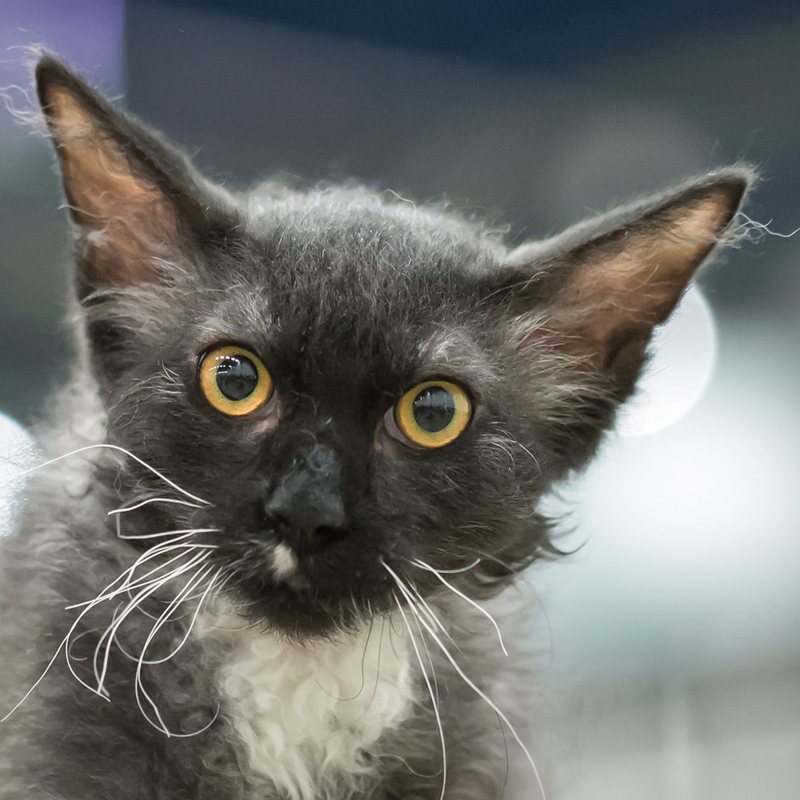

LaPerms have curly or wavy coats that can vary between individuals and through life. The breed developed from a curly-coated cat in Oregon and includes shorthaired and longhaired varieties. Many are described as affectionate and interested in what their people are doing.
Quick facts
- Origin: a kitten born bald on a cherry farm in The Dalles, Oregon, in 1982
- Weight: 8 to 10 pounds for males and 6 to 8 for females (TICA); PetMD gives 6 to 12
- Life expectancy: 12 to 15 years, with some living to 20 (TICA)
- Coat: shorthair or longhair, from soft waves to tight ringlets
- Recognition: TICA championship since 2003, CFA since 2008 and GCCF since 2012
Temperament and daily life
CFA describes LaPerms as inquisitive, affectionate and people-oriented, but not demanding, and as easy to train. Many are curly-coated cuddlers with plenty of curiosity and independence, and they are generally not vocal. Like any active, curious cat, a LaPerm does best with company, play and places to climb and explore, and introductions and the individual cat's temperament matter with children and other pets.
Grooming and care
Coat care depends on the individual cat and its coat. Shedding is minimal and LaPerms usually do not mat; regular combing with a comb that has rolling teeth is recommended. Longhaired LaPerms take the longest to reach their adult coat and may not have it in full until about three years old, so a kitten's coat is not a reliable guide to the adult's.
Health considerations
No specific health problems have yet been noted in the breed, and no breed-specific diseases are associated with the LaPerm. That reflects the limited published information on a small breed rather than proof of good health, so ask a breeder about the parents' health and rely on your veterinarian for the individual cat.
History
On March 1, 1982, a brown tabby barn cat named Speedy had a litter of six kittens on Linda Koehl's cherry orchard in The Dalles, Oregon. One kitten was born completely bald and, at about six weeks, grew a sparse curly coat; Koehl named her Curly. The curly-coat trait arose as a mutation and was developed through a breeding program. It soon became obvious that the gene for the curly coat was dominant.
TICA granted the breed new breed status in 1995 and championship status in February 2003. CFA accepted it for registration in 2000 and for championship in 2008, and GCCF granted championship recognition in 2012. CFA has allowed domestic longhairs and shorthairs as outcrosses, but under its current rules kittens born from January 2025 may have only LaPerm parents.
Appearance
The coat ranges from soft, undulating waves to tight ringlets or corkscrews, with the tightest curls usually on the throat, the underside and the base of the ears. The standard calls for full, rounded whisker pads with long, flexible whiskers, which TICA contrasts with the brittle whiskers that often break off short in the Devon Rex, Cornish Rex and Selkirk Rex. The breed takes two to three years to mature.
Before choosing a LaPerm
Plan for daily company and play, light but regular combing and routine veterinary care, and ask a breeder about the parents' health. A kitten's coat can change a great deal, so meeting the individual cat, and the adult cats in its family if you can, tells you more than a photo or a description.
LaPerm FAQ
Do LaPerm kittens go bald? Some do. The first LaPerm was born bald, and kittens are occasionally born bald before growing a curly coat. Coat changes can occur in kittens, but unexpected hair loss or skin changes should be assessed by a veterinarian.
Are LaPerms hypoallergenic? No breed can be assumed safe for someone with a cat allergy, and a curly, low-shedding coat does not change that. Spend time with the individual cat before committing.
Sources
- Cat Fanciers' Association: LaPerm
- The International Cat Association: LaPerm and its 2019 breed profile (archived copy)
- Governing Council of the Cat Fancy: LaPerm
- PetMD: LaPerm
One question about the LaPerm cat
What kind of ears does the LaPerm typically have?
Answer: Medium-large with lynx-like tufts. LaPerm ears are set wide on a wedge-shaped head and are typically medium to large, often finished with lynx-like tufts at the tips - unlike the folded ears of a Scottish Fold or the backward curl of an American Curl. Source