 Cat Trivia Games
iOS App
HOME / BREEDS / MINUET (FORMERLY NAPOLEON)
Minuet Cat Breed, Formerly Called Napoleon
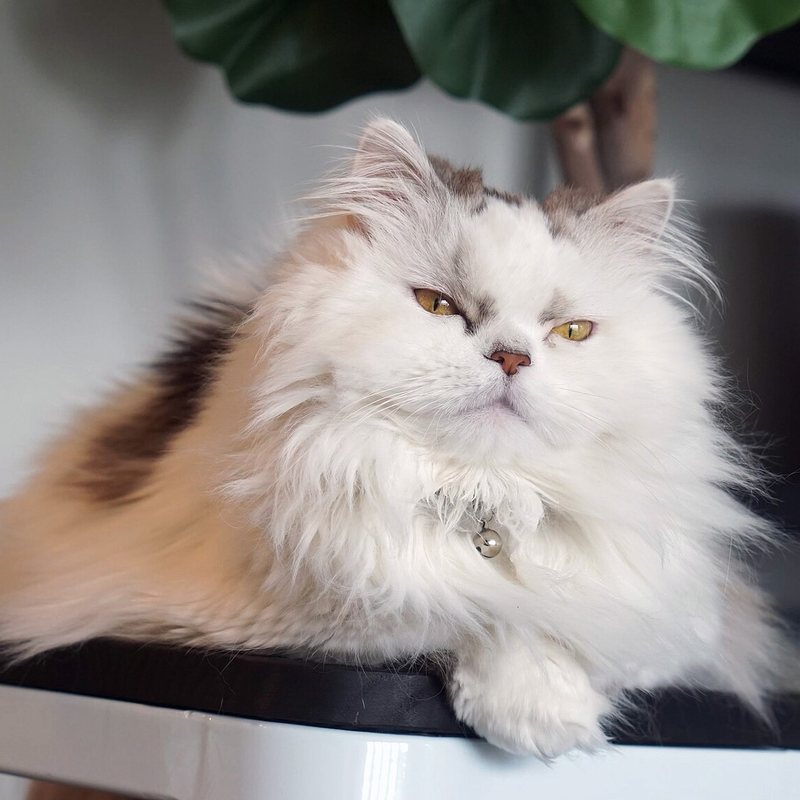

The Minuet, formerly called the Napoleon, was developed from Munchkin and Persian-family lines. It comes in different coat lengths and includes cats with different leg lengths. Grooming, mobility, facial structure, and inherited health concerns all need consideration.
Quick facts
- Names: Minuet since TICA renamed the breed in 2015; originally the Napoleon
- Parent breeds: the Munchkin and the Persian group (Persian, Exotic and Himalayan)
- Weight: adults average 7 to 8 pounds (TICA)
- Life expectancy: 15 years or more, depending on factors such as environment and nutrition (TICA)
- Recognition: TICA championship breed since 2016; not recognized by CFA (checked October 2026)
Health and welfare considerations
Short-legged Minuets carry the Munchkin's short-leg mutation, so the same concerns apply. Veterinarian Paula Simons, writing in PetMD's Munchkin profile, links the mutation to a defect in cartilage formation and a predisposition to osteoarthritis and mobility problems. She also describes two conditions present from birth that Munchkins are prone to: lordosis, an inward curve of the lower spine, and pectus excavatum, a sunken chest. UFAW recommends that cats with the Munchkin limb abnormality should not be used for breeding, and International Cat Care lists short-legged cats among the traits that should not be continued through further breeding.
The face comes from Persian-group ancestry. TICA's standard asks for a very open, round face with large eyes that do not tear, and the breed's founder used a doll-faced Persian, which has a longer nose than the current show Persian. Even so, a flat face can deform the tear ducts, misalign the teeth and narrow the nostrils and airways, which can cause breathing problems, and a less extreme face does not guarantee normal breathing. A cat breathing rapidly, with effort or with an open mouth needs a veterinarian right away.
Polycystic kidney disease, an inherited condition in which cysts form in the kidneys, occurs most often in Persian cats. Ask whether a kitten's parents were tested, bearing in mind that a genetic test does not show how seriously a cat is affected; ultrasound is needed for a definitive diagnosis. Beyond what is known for the parent breeds, published health information specific to the Minuet is limited, which does not establish that Minuets are free of other inherited problems.
Temperament and daily life
TICA describes the Minuet as extremely affectionate and people-oriented, an active yet laid-back cat with a playful attitude. Many enjoy chasing a ball or swatting at a wand toy as well as warming a lap. Short-legged cats reach high places in stages, so ramps, steps and low resting places help. Introductions and the individual cat's temperament matter with children and other pets.
Grooming and care
Both coat lengths are dense, and daily combing keeps the coat free of tangles. Check the eyes and face as you groom: some cats need tear staining gently wiped away, especially those with flatter faces, and skin that stays wet or sore needs a veterinarian. Short legs can make it harder for a cat to groom itself, so look for places it misses, including under the tail.
History
The breed's founder, Joe Smith, had bred Basset Hounds for many years. His interest began with a Wall Street Journal article about the Munchkin on June 12, 1995, and he set out to combine the short-legged Munchkin with the Persian group, using doll-faced Persians. The breed was first called the Napoleon, after the emperor's reputation for short stature, but that name never won full acceptance, and TICA voted in 2015 to rename it the Minuet. In January 2016, TICA's board voted to advance the Minuet to championship status.
Appearance
The Minuet is a round cat: a round head, big round eyes, smallish ears with rounded tips, and a short muzzle and nose that blend into the forehead with a gentle slope in profile. The body is medium-sized and sturdy, with significant bone. The coat is abundant and dense in both shorthaired and longhaired cats, and every color and pattern is allowed. Litters can include both short-legged and long-legged kittens.
Before choosing a Minuet
The welfare organizations cited above advise against breeding cats for short legs or for severely flat faces. If you are adopting a Minuet or already share your home with one, plan for daily combing, face and eye checks, easy access at ground level and regular veterinary checks of the joints, breathing and kidneys. Meeting the individual cat tells you more about its temperament than its parent breeds do.
Minuet FAQ
Is the Napoleon the same cat as the Minuet? Yes. The breed was developed as the Napoleon and renamed the Minuet by TICA in 2015, so older articles and photos may use either name.
What is a Minuet Tall? A long-legged Minuet. Short-legged cats were originally called standards and long-legged cats nonstandards, and many breeders now say "Shorts" and "Talls". Long-legged cats do not carry the short-leg gene, and they are an important part of breeding programs. TICA's breed list now includes separate Minuet Talls entries (checked October 2026), although its breed pages still say that only standard, short-legged Minuets are eligible to be shown.
Sources
- The International Cat Association: Minuet, Minuet Talls and browse all breeds (checked October 2026)
- PetMD: Munchkin
- UFAW: Munchkin limb deformity
- International Cat Care: inherited disorders in cats and Persian cats and brachycephaly
- Cornell Feline Health Center: polycystic kidney disease and breathing difficulty
- Cat Fanciers' Association: breeds (checked October 2026)
Try a mixed breed question
Long before the modern Egyptian Mau breed existed, what roles did cats play in ancient Egyptian homes?
Answer: Hunting rodents and honoring Bastet. JSTOR Daily says cats were valued for keeping fields and granaries free of rodents, and over time became sacred animals linked to the goddess Bastet. The modern Mau breed was developed much later. Source