 Cat Trivia Games
iOS App
Persian Cat Breed
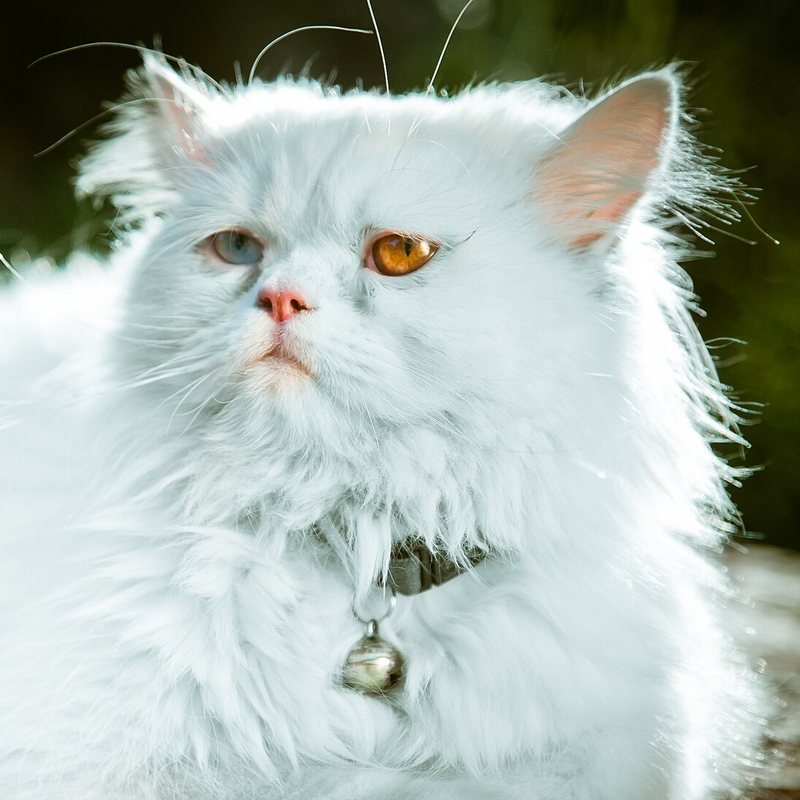

The Persian is known for its long coat, rounded features and often quiet temperament. Grooming is a substantial part of its care, and facial structure can raise important health and welfare concerns. Look beyond appearance when learning about this breed.
Quick facts
- Weight: 7 to 13 pounds (PetMD); males are larger than females
- Life expectancy: estimates differ, from 8 to 11 years (TICA) to 10 to 13 (PetMD)
- Coat: long and thick, standing off from the body, fine in texture and glossy (CFA standard)
- Face: ranges from moderate to extremely flat; the flatter the face, the more eye, dental and breathing problems it can cause
- Grooming: daily combing with a metal comb, plus regular cleaning around the eyes
Health and welfare considerations
An extremely flat face, called brachycephaly, affects the whole head. The eyes become large and prominent, and eyelids that cannot close fully leave the surface of the eye exposed, which contributes to conditions such as keratitis and corneal sequestrum. Deformed tear ducts cannot drain tears, so they run onto the face, staining the fur and sometimes causing sores. Misaligned jaws and teeth make biting and chewing harder and add to dental disease, and small nostrils with an overlong soft palate cause brachycephalic obstructive airway syndrome, a breathing disorder that is common in these cats and sometimes severe. Folds of skin on the face can also become infected (International Cat Care). A more moderate face lowers these risks without guaranteeing normal breathing, and International Cat Care's position is that severe brachycephaly should not be continued through breeding.
Snoring, noisy breathing, constant tearing or sore skin on the face are reasons for a veterinary visit. A cat breathing rapidly, with effort or with an open mouth needs a veterinarian right away.
Polycystic kidney disease (PKD), in which fluid-filled cysts form in the kidneys, occurs most often in Persian cats. International Cat Care notes that more than a third of the Persian and Exotic cats screened in the 1990s, when tests first became available, had the disease, and that breeders have used screening since then to work against it. In a 2022 survey of more than 11,000 cats, none of the Persian samples carried the PKD1 variant that the DNA test detects (Anderson and colleagues, 2022). A genetic test does not show how seriously a cat is affected, and ultrasound is needed for a definitive diagnosis.
Persians are also among the breeds in which hypertrophic cardiomyopathy is more common. Progressive retinal atrophy, an inherited loss of vision, occurs in the breed, and hip dysplasia is seen more often in Persians than in many other breeds. Kittens with extreme brachycephaly can also be affected by hydrocephalus. Regular veterinary checks, at least once a year, are recommended.
Temperament and daily life
CFA describes Persians as sweet, affectionate and quiet, playful yet placid, and many prefer to keep their feet on the ground rather than leap onto counters or bookcases. That is a tendency rather than a reason to skip enrichment: offer play and climbing options the individual cat can use comfortably, such as sturdy cat trees with low, wide steps and perches at different heights. Introductions and the individual cat's temperament matter with children and other pets.
Grooming and care
Expect frequent combing and check the coat for tangles. The time involved depends on the individual coat and the cat's tolerance, but Persian coats are generally combed daily with a wide-toothed metal comb, and many Persians cannot keep their coat free of mats on their own. The large eyes can stain and need gentle cleaning with a soft, damp cloth, the sides of the nose often need cleaning too, and the fur under the tail can become soiled. Regular grooming also removes loose fur the cat would otherwise swallow.
Significant matting is a job for a veterinarian or qualified groomer. Many owners use professional groomers, but a periodic groom does not replace care between visits, and whether a shorter trim suits a particular cat is a question for the groomer or your veterinarian. Good care helps, although some medical problems persist despite it.
History
Exactly how longhaired cats reached western Europe is not known. One early record dates to 1626, when the Italian traveler Pietro della Valle returned from Persia with a heavily coated longhaired cat. Persians appeared at the first cat shows in Britain, became the dominant breed as showing grew, and were one of the six foundation breeds when CFA began registering cats in 1906; the first imports to the United States arrived in the late 1880s. Persians placed third on CFA's 2026 list of its most registered breeds.
Registries differ on the pointed Persian. CFA has shown the Himalayan as a color division of the Persian since 1984, while TICA lists the Himalayan as its own breed within the Persian Breed Group.
Appearance
The breed standard describes a cobby cat, low on the legs and broad through the chest, with a round, massive head, small round-tipped ears set far apart and low, large round eyes and a short, snub, broad nose; it also asks for nostrils open enough for the cat to breathe without restriction. The coat is long and thick and stands off from the body, and the colors are so varied that CFA divides the breed into seven color divisions for showing, one of them the pointed Himalayan. Faces vary a great deal between lines, from moderate to very flat, and that difference matters for the cat's health.
Before choosing a Persian
A Persian needs daily attention to its coat and eyes, and its health depends partly on how flat its face is. Ask a breeder about the parents' PKD results and heart screening, look at the kitten's face and listen to its breathing at rest, and plan for regular veterinary checks. Meeting the individual cat tells you more about its temperament and its face than photos do.
Persian FAQ
Do all Persians have breathing problems? No, but the risk rises as the face gets flatter, and breathing problems are common in very flat-faced Persians. A more moderate face lowers the risk without guaranteeing normal breathing.
What does a negative PKD DNA test mean? It means the cat does not carry the PKD1 variant, the inherited form the test detects, and cannot pass that variant on. It does not rule out kidney cysts from other causes, which UC Davis notes can occur sporadically in any population of cats, and ultrasound is needed to diagnose the disease itself.
Are Persians hypoallergenic? No breed can be assumed safe for someone with a cat allergy. Spend time with the individual cat before committing.
Sources
- International Cat Care: Persian cats and brachycephaly and inherited disorders in cats
- Cornell Feline Health Center: polycystic kidney disease, hypertrophic cardiomyopathy and breathing difficulty
- UC Davis Veterinary Genetics Laboratory: PKD1
- Anderson H. et al. (2022), Genetic epidemiology of blood type, disease and trait variants, and genome-wide genetic diversity in over 11,000 domestic cats. PLOS Genetics
- Cat Fanciers' Association: Persian, fluffy coats and how to care for them and most popular breeds for 2026
- The International Cat Association: Persian
- PetMD: Persian
Quick quiz: 3 questions about the Persian cat
Which phrase does CFA use to sum up the Persian's overall personality?
Answer: Sweet, affectionate, quiet. CFA sums up the Persian's personality as sweet, affectionate, and quiet, matching its reputation as a calm, low-key companion. Source
Persian cats bred for extremely flat faces often develop dental problems because their shortened jaws compress the teeth. What is the most common result of this compression?
Answer: Crowded and misaligned teeth. The selective breeding for very short, flat skulls in Persians results in overcrowding and misalignment of teeth because there is insufficient space in the compressed jaw. Source
Which James Bond film FIRST featured Ernst Stavro Blofeld stroking his iconic white Persian cat?
Answer: You Only Live Twice (1967). Blofeld first appeared without his cat in 'From Russia with Love' (1963). The famous image of Blofeld with his white Persian cat debuted in 'You Only Live Twice' (1967), establishing this iconic visual. Source