 Cat Trivia Games
iOS App
Nebelung Cat Breed
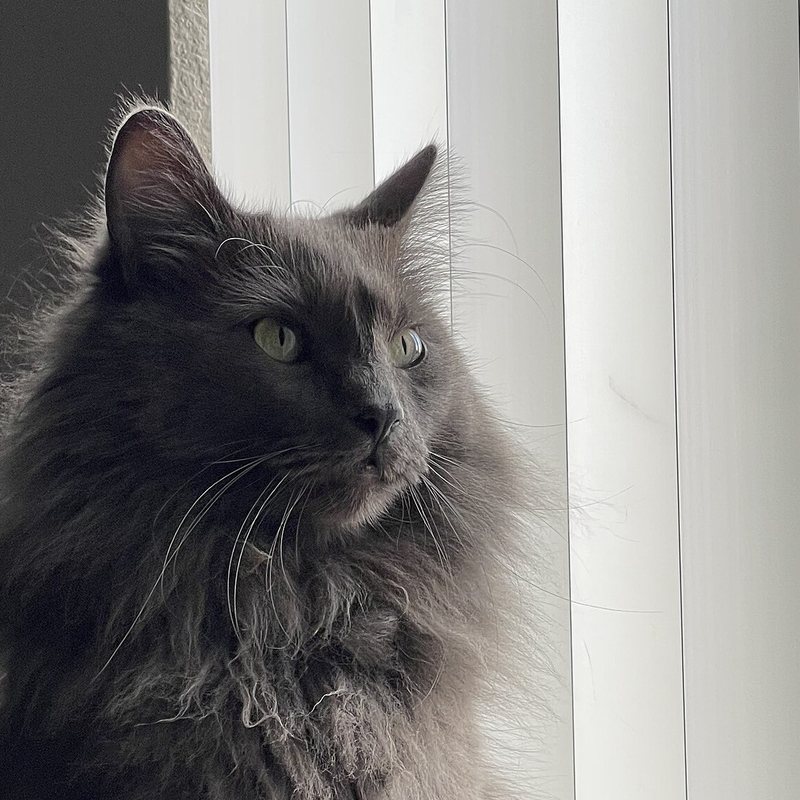

The Nebelung has a semi-long blue coat with silver tipping. Many are described as quiet companions who take time to settle around unfamiliar people. They may enjoy a predictable routine, with time for play and regular grooming.
Quick facts
- Coat: silky, medium-length and blue, shimmering with silver at the tips (TICA)
- Eyes: yellowish green to green in adults (TICA)
- Weight: 7 to 15 pounds (PetMD); TICA gives no figures
- Life expectancy: estimates differ, from 11 to 16 or more years (TICA) to 11 to 18 (PetMD)
- Recognition: TICA championship breed since 1997; not on CFA's breed list (checked October 2026)
Temperament and daily life
TICA describes Nebelungs as often shy with strangers and young children, and says they do not like change and do best in a quiet, stable environment. A Nebelung may need a quiet retreat and time to adjust to visitors. Watch for changes in behavior when routines change, such as a move or a new pet, and give the cat time to settle. Regular play suits them, and introductions and the individual cat's temperament matter with children and other pets.
Grooming and care
Brush the coat regularly: about once a week suits many cats, although longhaired indoor cats can need sessions every few days to prevent tangles. Introduce grooming gradually, using short sessions your cat can tolerate, and trim the nails every couple of weeks.
Health considerations
As a relatively new breed, developed in the 1980s, the Nebelung does not have much of a track record for long-term health, although it is generally considered healthy. Published breed-specific health information is limited, which does not establish that Nebelungs are free of inherited disease. Ask a breeder about the parents' health. Regular veterinary visits can help identify changes, but new symptoms should be checked between visits.
History
Cora Cobb developed the breed, starting with a male named Siegfried, born in 1984, and a female named Brunhilde, born in 1985. Siegfried's mother was a black domestic shorthair named Elsa and his father a longhaired cat resembling a black Angora. The name comes from the German word Nebel, meaning mist or fog, and from the medieval Germanic saga the Nibelungenlied. The Russian Blue was designated as an outcross for the new breed, and it remains the only permissible outcross in TICA's breed standard. Cobb applied to TICA for new breed status in 1987, and TICA recognized the Nebelung for championship competition in 1997.
Appearance
The Nebelung's coat is silky, medium in length and blue, with silver tips that give it a shimmering look. Eye color changes as kittens grow: the eyes turn from yellow to green, with a green halo around the pupil expected by about eight months and the full adult color sometimes taking two years or more.
Before choosing a Nebelung
A Nebelung may suit a calm household with a steady routine and time for regular play and brushing. PetMD's 2024 profile noted that there were no TICA-registered Nebelung breeders in the United States, so finding one can take time. Meeting the individual cat tells you more about how it handles visitors and change than the breed description.
Nebelung FAQ
Is a Nebelung a longhaired Russian Blue? The two are closely linked: the Russian Blue is the Nebelung's only permitted outcross in TICA, and the World Cat Federation lists the breed as "Nebelung (Russian Blue Longhair)". Both registries treat the Nebelung as a breed of its own, while FIFe does not recognize it.
Are Nebelungs hypoallergenic? No breed can be assumed safe for someone with a cat allergy. Spend time with the individual cat before committing.
Sources
- The International Cat Association: Nebelung and the Nebelung breed standard
- PetMD: Nebelung
- ASPCA: cat grooming tips
- World Cat Federation: EMS code and championship status, FIFe: EMS system and Cat Fanciers' Association: breeds (checked October 2026)
One question about the Nebelung cat
Which breed is most closely related to the Nebelung?
Answer: Russian Blue. The Nebelung was developed as a longhaired counterpart to the Russian Blue, and the Russian Blue was used as an approved outcross while the Nebelung's own standard was being established. Source