 Cat Trivia Games
iOS App
Domestic Long Hair Cat: What 13,998 DLH Shelter Cats Show
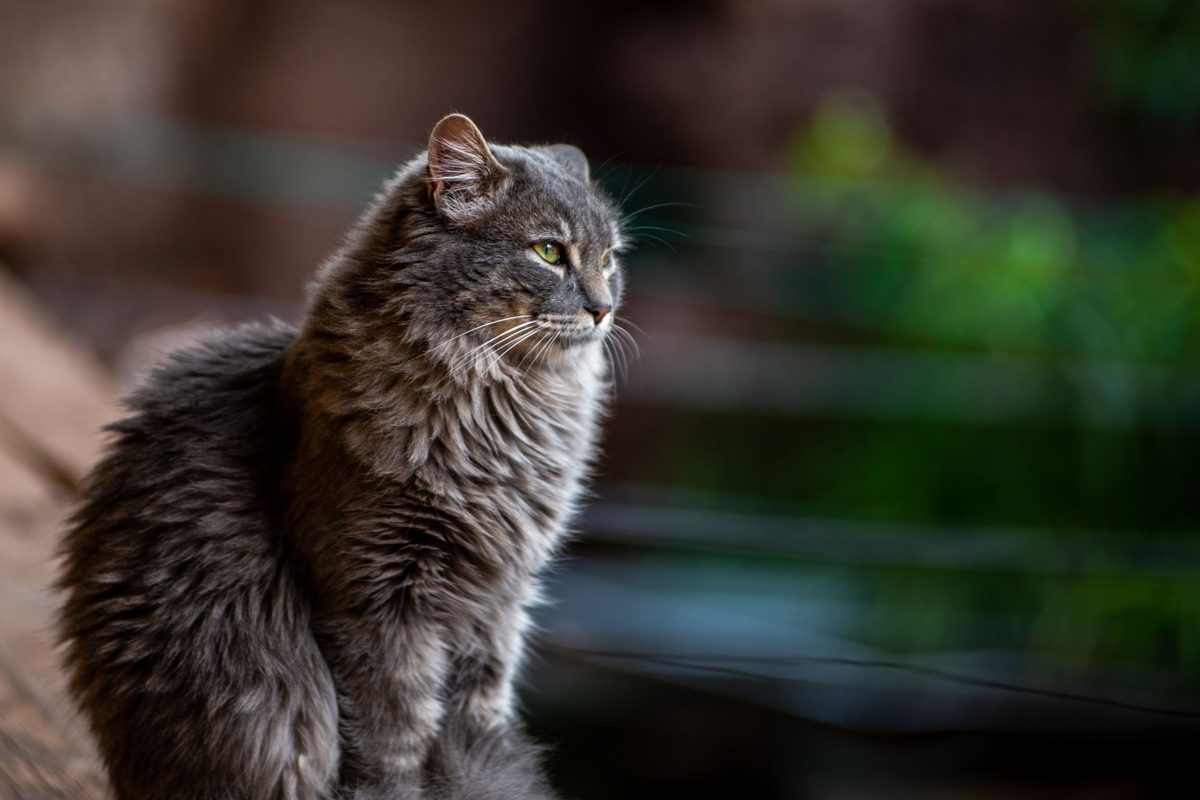
A domestic long hair cat, often shortened to DLH,1 is a long-coated cat with no known breed. The Cat Fanciers' Association (CFA) gives domestic longhair as another name for a mixed breed kitten.2 I read the breed line on 429,649 shelter cats and found 13,998 domestic longhairs, about 1 in 31, plus 34,832 domestic medium hairs. Long-haired cats were adopted more often than short-haired cats at the same shelters, and sooner.
Jump to: how common, medium hair, age, colors and sex, adoption, the gene, hairballs, counting rules.
How common is a domestic long hair cat?
About 1 in 31 shelter cats is one. Thirteen public shelter datasets put a breed label on every cat: Austin, Texas, in two record systems,34 Bloomington,5 Dallas,6 Edmonton,7 Los Angeles County,8 Louisville,9 Midland,10 Montgomery County,11 Norfolk,12 Riverside County,13 Sacramento14 and Sonoma County.15 Counting each cat once, 3.26% were domestic longhairs, 8.11% domestic medium hairs and 84.35% domestic shorthairs. Only 4.12% carried the name of a breed, most often Siamese.
| Shelter | Cats | Long hair | Medium hair | Medium per long |
|---|---|---|---|---|
| Sonoma County | 11,472 | 6.84% | 9.93% | 1.5 |
| Midland | 3,073 | 6.83% | 13.02% | 1.9 |
| Bloomington | 16,248 | 5.54% | 8.32% | 1.5 |
| Edmonton | 34,252 | 5.08% | 17.32% | 3.4 |
| Norfolk | 19,773 | 4.27% | 7.22% | 1.7 |
| Los Angeles County | 57,546 | 3.56% | 7.15% | 2.0 |
| Austin, 2013 to 2025 | 66,077 | 3.55% | 7.84% | 2.2 |
| Louisville | 20,640 | 3.45% | 6.58% | 1.9 |
| Riverside County | 9,484 | 3.16% | 6.23% | 2.0 |
| Montgomery County | 18,489 | 3.10% | 7.91% | 2.5 |
| Sacramento | 14,539 | 2.89% | 8.75% | 3.0 |
| Austin, 2025 to 2026 | 11,416 | 1.99% | 6.27% | 3.2 |
| Dallas | 146,640 | 1.97% | 6.74% | 3.4 |
| All 13 datasets | 429,649 | 3.26% | 8.11% | 2.5 |
The share of long-haired cats runs from 1.97% in Dallas to 6.84% in Sonoma County, more than three times as high. Some of that gap may come from the people filling in the form. A breed label is a staff member's guess from the cat's looks, not a pedigree or a gene test, and the count can move inside one shelter: Austin's older records call 3.55% of cats long-haired, and the newer system that took over in May 2025, 1.99%.
The spelling moves too. Seven of the 13 datasets write the short code DOMESTIC LH, and the rest spell out Domestic Longhair or Domestic Long Hair, often with Mix on the end. I counted every one of these forms. Another 84 cats had a long-hair label paired with a breed name, such as Domestic Longhair / Maine Coon, and I kept them out of the long-hair group.
Domestic medium hair: the label in the middle
Domestic medium hair, DMH,1 was used by all 13 datasets, and every one of them recorded more medium-hair cats than long-hair cats. Across them all it came to 2.5 medium-hair cats for each long-hair one. How far a shelter leans on the middle label varies a lot. Edmonton put 17.32% of its cats there, nearly three times Riverside County's 6.23%.
The genetics study in the gene section below sorts cats into short and long only, with no medium group. On a shelter card, medium is a judgment made at the intake desk, and one shelter's medium hair can be another's long hair. If you adopted a DMH cat, the coat you see at home tells you more than the three letters.
Long coats are rare in kittens and common in seniors
In the ten datasets that record ages, the long-hair label gets more common with every age group.
About 1 in 35 kittens was called long-haired, against 1 in 17 adults and 1 in 9 seniors. The medium label rises less, from 8.99% of kittens to 10.67% of adults and 11.64% of seniors. The long-hair rise from kittens to adults shows up in all ten datasets, and the rise from adults to seniors in all seven that list more than 100 seniors. Put the other way, 38.4% of the long-haired cats were kittens when they arrived, against 58.7% of the short-haired cats.
The records cannot say why. One possible part is that a kitten's coat has not finished growing: CFA warns that a kitten taken home as a shorthair "may actually grow up to be a cat with a medium length coat".2 If you hope to adopt a long-haired cat, look past the kittens: in these records, adults and seniors were far more often long-haired.
Colors and sex of long-haired shelter cats
Long hair comes in the same colors as short hair, in nearly the same mix, in the ten datasets that record a coat color.
| Color | Long hair | Medium hair | Short hair |
|---|---|---|---|
| Grey | 20.73% | 19.52% | 18.22% |
| Brown tabby | 18.83% | 19.73% | 22.97% |
| Black | 17.22% | 16.98% | 16.91% |
| Orange or cream | 14.37% | 14.31% | 14.67% |
| Black and white | 12.26% | 12.98% | 10.95% |
| Tortoiseshell | 5.79% | 5.69% | 5.39% |
| Calico | 4.32% | 3.91% | 4.32% |
| White | 2.32% | 2.00% | 1.74% |
| Torbie | 1.98% | 2.76% | 2.80% |
| Other, such as points | 2.18% | 2.13% | 2.02% |
| Cats with a color | 8,755 | 20,229 | 177,761 |
Two differences hold up shelter by shelter. Long-haired cats were more often grey, in nine of the ten datasets, and less often brown tabby, in eight of them. Grey was the most common color among long-haired cats, with 1,815 of them. My grey tabby cat page counts grey stripes on every coat length. White shows up somewhere on 39.6% of long-haired cats in the eight datasets that record a second color, against 37.0% of short-haired cats.
Boys and girls come out close to even. Of the 8,584 long-haired cats with a recorded sex, 51.5% were male (95% range 50.4% to 52.6%). Medium-haired cats were 50.1% male and short-haired cats 50.1%. The male share of long-haired cats swings from shelter to shelter, from 41.9% in Austin's newer records to 58.2% in Edmonton, with no steady lean either way. Orange cats are a different story, told on the orange cat facts page.
Are long-haired cats adopted faster?
In these records, yes. Ten of the datasets say how each stay ended. I used the same rules as my black cat adoption count, which leave out cats returned to their owners and cats still waiting.
| Shelter | Long hair | Medium hair | Short hair | All cats |
|---|---|---|---|---|
| Dallas (2,610) | 31.5% | 31.4% | 26.7% | 26.6% |
| Austin, 2013 to 2025 (2,236) | 58.9% | 57.1% | 53.3% | 54.0% |
| Los Angeles County (1,952) | 42.0% | 41.8% | 32.5% | 34.0% |
| Norfolk (801) | 61.3% | 63.4% | 59.5% | 60.2% |
| Sonoma County (644) | 43.2% | 50.2% | 46.7% | 47.3% |
| Montgomery County (438) | 68.0% | 70.5% | 74.3% | 73.6% |
| Louisville (312) | 62.5% | 63.9% | 62.6% | 62.8% |
| Sacramento (306) | 49.3% | 61.9% | 56.9% | 56.9% |
| Riverside County (176) | 54.5% | 54.9% | 46.5% | 47.6% |
| Austin, 2025 to 2026 (111) | 72.1% | 68.6% | 56.1% | 57.7% |
Across the ten datasets, 47.4% of 9,586 long-hair stays ended in adoption. If each of those cats had been adopted at the rate of all cats at its own shelter, the figure would have been 43.7%. For medium-haired cats it was 46.0% against 41.6%. Matched on shelter and age group, long-haired cats had about 30% higher odds of adoption than short-haired cats (odds ratio 1.30, 95% range 1.24 to 1.36), and medium-haired cats about 26% higher (1.26, 1.22 to 1.29).
The lead is not everywhere. Long-haired cats came out ahead in six datasets, level in Louisville and behind in Montgomery County, Sacramento and Sonoma County. They also arrived differently: 27.6% of long-hair stays began with an owner handing the cat in, against 21.4% for short-haired cats. With that matched as well, the odds were still about 22% higher (1.22, 1.16 to 1.27).
Adopted long-haired cats also went home sooner. Their median wait from arrival to adoption was shorter at eight of the ten, for example 21 days against 50 for short-haired cats in Sacramento and 22 against 35 in Louisville. It was the same in Dallas, 12 days, and one day longer in Montgomery County. Matched on shelter and age group, their stays were about 14% shorter (95% range 11% to 16%). Medium-haired cats' stays were about 5% shorter (3% to 7%).
That runs against an older finding. A 2020 paper on a Kentucky shelter sums up earlier studies as finding that long- and medium-haired domestic cats "had longer lengths of stay at shelters than short-haired counterparts".16 A study of cats adopted from a Sydney shelter, which counted medium hair with long, found no significant preference for short or long coats.17 In these ten US datasets, the long coats came out ahead.
The long hair gene in cats with no breed
A long coat comes mainly from one gene, FGF5. A 2007 study in the Journal of Heredity calls it "the major genetic determinant of hair length in the domestic cat", and found that long hair follows it "in an autosomal recessive manner". A cat needs two disrupted copies, one from each parent, to grow long hair.18
The study went beyond pedigree cats. It also sequenced two research colonies of non-breed cats, one of them started from random-bred short- and long-haired cats bought from commercial vendors. All 23 long-haired cats in the two colonies carried two disrupted copies of FGF5, as the long-haired pedigree cats did.18 So the long coats of these non-breed cats came from the same gene as the pedigree longhairs' coats. The breeds have their own page: long haired cat breeds.
The study had no medium group. Owners of the pedigree cats reported them as short- or long-haired, and the colony cats differed enough to be sorted by eye. The authors add that "other independent loci may modify the major influence of FGF5 on hair length".18 Loci here means places in the DNA, so other genes may fine-tune the length.
Long fur and hairballs, in Cornell's words
The Cornell Feline Health Center explains that a cat swallows loose hair as it grooms, and that hair is made of keratin, which it cannot digest, so some can gather in the stomach as a hairball. Cornell says long-haired breeds such as Persians and Maine Coons may be at greater risk, and the page quotes a veterinarian, Dr. Goldstein, who recommends brushing and combing a cat's coat daily.19 The page names breeds, not domestic longhairs, and gives no figures. Questions about your own cat's coat or health are for your veterinarian.
My counting rules for this page
- Labels. A cat counts as long hair when its whole breed label is a domestic longhair form: Domestic Longhair, Domestic Long Hair, DOMESTIC LH or a truncated DOMESTIC LONGHA, with or without Mix. Medium and short work the same way. A label that pairs a domestic coat with a breed name (611 cats, 84 of them long-haired) or with a second coat length (78 cats) stays out of all three groups but counts among the cats with a label. Every form I counted is listed in the download.
- Each cat once. Shares, colors, sex and ages use each animal ID once, with its first stay. Edmonton's file has no IDs, so its repeat visitors count again. Intake records for cats that were not alive on arrival are left out.
- Which datasets. All 13 for the label counts; ten for color, since Dallas, Los Angeles County and Riverside County record none; eleven for sex, since Dallas and Los Angeles County record none; ten for age, since Dallas, Los Angeles County and Sacramento give no usable ages. Corona, California, lists adoptions only, and Long Beach and Broward County record no breed, so none of the three is used.
- Adoption. Ten datasets with outcomes. Comparisons use each shelter's own rates. The odds use a Mantel-Haenszel odds ratio across shelter and age groups, and the stay lengths a ratio of typical stays inside the same groups.
- Limits. A breed label is a staff member's guess from looks, and an age is often a guess too. Small differences between shelters may come from their own habits. Shelter cats are not a sample of all cats.
- Credit. The Edmonton rows fall under the City of Edmonton's Open Data Terms of Use, the Louisville rows under Louisville Metro's open data terms. Everything else comes from the City of Austin, Texas; the City of Bloomington; the City of Dallas; the County of Los Angeles; the City of Midland; Montgomery County, MD; the City of Norfolk; the County of Riverside; the City of Sacramento; and the County of Sonoma. No shelter, city or county reviewed or endorsed this page.
The full list of datasets, the dates they cover and the rules shared with my other shelter counts are under how the orange count was made.
Use this data. Quote it, chart it or teach with it; a link back to this page is all I ask. Every shelter's counts, the age, color, sex and adoption figures, and each label form I counted are in domestic-long-hair-cat-2026.csv. More files sit on the open data page.
Frequently asked questions
Is my long-haired cat a Maine Coon?
Going by shelter labels, probably not. In the 13 datasets, 580 cats were labeled Maine Coon or Maine Coon mix, against 13,998 domestic longhairs, about 1 for every 24. Labels for the Norwegian Forest Cat (40 cats) and the Siberian (8, a small number) were rarer still. My Is my cat a Maine Coon? quiz checks a cat against the written breed standard, and Maine Coon vs Norwegian Forest Cat compares the two big longhairs.
What do people name long-haired shelter cats?
Fluffy, more than anything else. In the eight datasets that record names, Fluffy was the top name among long-haired cats: 36 of 4,572 named cats, ahead of Luna with 24. Only 34 of 88,123 named short-haired cats were called Fluffy, so a long-haired cat was about 20 times as likely to get the name.
Test your cat knowledge
Cat Trivia has questions on breeds, coats, biology and history. It is free to play, with no account.
Play Cat TriviaUp next
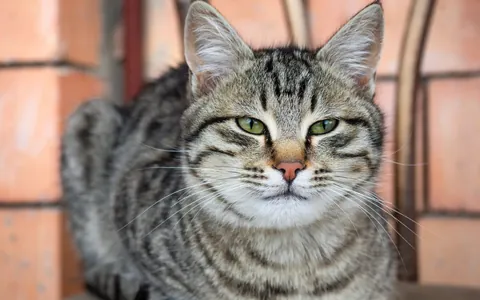 Cat FactsDSH Cat: What Domestic Shorthair Means on Your Cat's PapersThe short-haired label, and what DSH, DMH and DLH mean on a vet record.
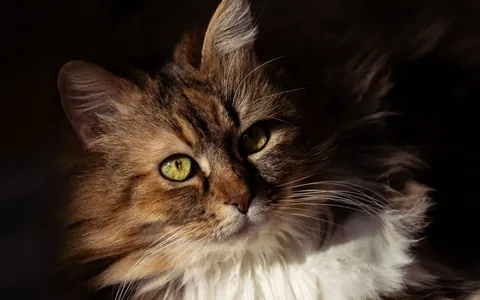 Cat FactsLong Haired Cat Breeds: 13 Fluffy Breeds and Their CoatsThe pedigree longhairs, each coat in its registry's words.ToolsIs My Cat a Maine Coon? A Breed Standard QuizFor a big, shaggy domestic longhair that might be more.
Christopher writes and runs Cat Trivia Games. The shelter datasets and studies behind this page are listed below, and how the site is made and corrected is on the editorial policy page. More about the author.
References
- Dodd and colleagues, BMC Veterinary Research, 2021 (PubMed Central). A cross-sectional study of owner-reported health in Canadian and American cats fed meat- and plant-based diets (the breed list spells out DSH, DMH and DLH). back
- The Cat Fanciers' Association. Finding the Purr-fect Pedigreed Kitten. back
- City of Austin, Texas, data.austintexas.gov, public domain, read November 19, 2026. Austin Animal Center Intakes (10/01/2013 to 05/05/2025) and Austin Animal Center Outcomes (10/01/2013 to 05/05/2025). back
- City of Austin, Texas, data.austintexas.gov, no license stated on these datasets, read November 19, 2026. Austin Animal Center Intakes and Austin Animal Center Outcomes (new system). back
- City of Bloomington, Indiana, data.bloomington.in.gov, no license stated on the dataset, read November 19, 2026. Animal Shelter Animals. back
- City of Dallas, Dallas Animal Services, www.dallasopendata.com, no license stated on these datasets, read November 19, 2026. Dallas Animal Shelter Data Fiscal Year 2000 - Present and Dallas Animal Shelter Data Fiscal Year 2023 - 2026. back
- City of Edmonton, data.edmonton.ca, under the City of Edmonton Open Data Terms of Use, read November 19, 2026. Animals Admitted to the Animal Care & Control Centre. back
- County of Los Angeles Department of Animal Care and Control, ArcGIS Online, no license stated, read November 19, 2026. Animal Care PawStats Data. back
- Louisville Metro Animal Services, Louisville Metro open data (LOJIC), under the Open Data Platform Terms and Use, read November 19, 2026. Louisville Metro KY - Animal Service Intake and Outcome. back
- City of Midland, Texas, ArcGIS Hub, no license stated (the city provides the data as is, with no guarantee), read November 19, 2026. Animal Intake (public view). back
- Montgomery County, MD, dataMontgomery, public domain, read November 19, 2026. OAS - Animal Shelter Pathway. back
- City of Norfolk, data.norfolk.gov, no license stated on the dataset, read November 19, 2026. Norfolk Animal Care and Adoption Center (NACC). back
- County of Riverside Department of Animal Services, data.countyofriverside.us, no license stated on the dataset, read November 19, 2026. Animal Services Animal Impound Report. back
- City of Sacramento, ArcGIS Hub, no license stated, read November 19, 2026. Animal Intakes and Outcomes for the Last 3 Years. back
- County of Sonoma Department of Health Services, data.sonomacounty.ca.gov, no license stated on the dataset, read November 19, 2026. Animal Shelter Intake and Outcome. back
- Carini, Sinski and Weber, Animals, 2020 (PubMed Central). Coat color and cat outcomes in an urban U.S. shelter. back
- Miller, Ward and Beatty, Animals, 2019 (PubMed Central). Population characteristics of cats adopted from an urban cat shelter and the influence of physical traits and reason for surrender on length of stay. back
- Kehler and colleagues, Journal of Heredity, 2007 (PubMed Central author manuscript). Four independent mutations in the feline fibroblast growth factor 5 gene determine the long-haired phenotype in domestic cats. back
- Cornell Feline Health Center, Cornell University College of Veterinary Medicine. The Danger of Hairballs. back
Written by Christopher Fox under our editorial policy.