 Cat Trivia Games
iOS App
Most Affectionate Cat Breed: What the Research Measured
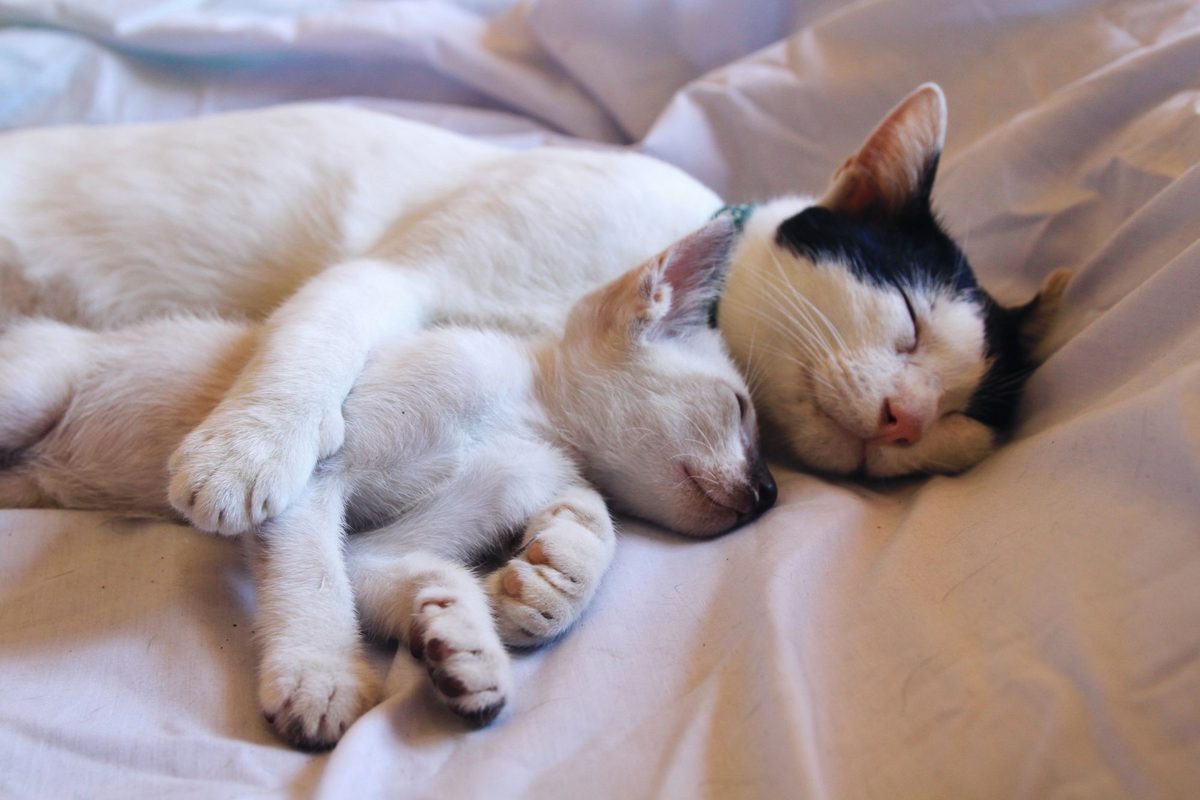
No study names one most affectionate cat breed. The closest thing researchers measure is how much a cat seeks contact with people. A University of Helsinki survey of 5,726 cats in Finland found Korats and Devon Rex cats the most likely to seek it and British Shorthairs the least likely.1 A later Helsinki study scored Siamese and Balinese cats highest.2 Within every breed, cats vary.
What the research measured
The 2019 Helsinki study asked owners of 5,726 cats from 40 breeds to fill in a behavior questionnaire. One trait was "contact to people," a cat's tendency to seek human contact. The team adjusted for sex, age, weaning age, outdoor access and other cats in the home, so the breed differences were not only differences in how the cats lived.1
Korat and Devon Rex cats were the most likely to seek contact, and Abyssinians and Oriental breeds were likely to as well. British Shorthairs were the most likely to keep their distance. Burmese cats were the least likely to be shy with strangers.1
The Ragdoll, which breed descriptions call relaxed, loving and friendly, came out among the least active breeds. In Ragdolls, seeking contact was genetically linked to activity, and the authors suggest that choosing calm cats that are easy to brush may have favored cats that seek less contact. They measured a moderate heritability for contact seeking, 0.42 in Ragdolls and 0.50 in Maine Coons and Turkish Vans, and found that "substantial genetic variation exists within breed populations."1
Three studies, three answers
Each study asked a slightly different question of different cats, and the top breeds change with it.
| Study | Who rated the cats | Most sociable | Least sociable |
|---|---|---|---|
| Helsinki, 20191 | Owners of 5,726 cats in Finland | Korat, Devon Rex | British Shorthair |
| Helsinki, 20212 | Owners of 4,316 cats in Finland | Siamese and Balinese, then Burmese and Oriental | Persian and Exotic |
| Japan, 20093 | 67 veterinarians ranking 12 breeds | Japanese domestic cat, American Shorthair | Chinchilla, Persian |
What is the friendliest cat breed?
The friendliest cat breed depends on which study you read. The 2021 Helsinki study first checked that its questionnaire gave consistent results between owners and over time. In it, Siamese and Balinese cats scored highest for sociability toward people, followed by Burmese and Oriental cats, and Persians and Exotics scored lowest. The authors say the trait resembles a mix of behaviors that other surveys score separately, such as attention seeking, purring and calling to people.2
Other studies disagree. The same paper notes that a US survey tool, the Fe-BARQ, ranked Burmese, Ragdoll and Maine Coon cats as the most attention seeking, and only the Burmese result held up in Finland. It also notes a US study that found Siamese cats less likely than other breeds to be sociable with people.2
In Japan, 67 veterinarians ranked 12 breeds and subbreeds. They put the Japanese domestic cat, a non-pedigree cat, and the American Shorthair at the top for both friendliness and demand for affection, and the Persian and its Chinchilla variety at the bottom. They placed the Siamese tenth of 12 for friendliness.3 The one steady result is the Persian, which sits near the bottom for seeking contact in all three studies.123
What the registries say
The Cat Fanciers' Association (CFA) describes each of these breeds warmly, so its words cannot rank them. Here is how its breed profiles describe the breeds the studies name.4
| Breed | CFA's description |
|---|---|
| Burmese | "Extremely people oriented, they will follow you from room to room, seeking out warm laps" |
| Siamese | "a need for closeness and human attention" |
| Korat | "a cat that demands attention and considers itself to be the head of its family" |
| Devon Rex | "Intensely loyal and loving, they become deeply attached to their owners and dislike being left alone for long periods" |
| Oriental | "Withdraw that attention and it may pine" |
| Abyssinian | "may settle in your lap for a moment but given its high activity level, it's unlikely to stay there for long" |
| Ragdoll | "loving without being demanding" |
| British Shorthair | "Cuddly and comforting," but will "wait for an invitation to sit on the couch beside you rather than jumping into your lap" |
| Persian | "an enduring devotion to their human companions" |
The British Shorthair and Persian profiles are as warm as the rest, though those breeds scored lowest for seeking contact in the Finnish studies.12
Every cat is an individual
Breed explains only part of how a cat behaves. In the 2021 Helsinki data, fearful cats were less sociable with people and active, playful cats were more sociable.2 A 2022 Helsinki study of more than 3,200 cats found poorly socialized cats more fearful, and the authors suggest kittens meet unfamiliar adults and children at least weekly up to 12 weeks of age.5 An earlier study from the same group found that kittens weaned before 8 weeks of age had a higher risk of aggression.6
Owners filled in all of these surveys, and the 2021 authors list one limit of that method: owners may expect certain behavior from a breed.2 My cat Moe, whose father was a Snowshoe Siamese, follows me from room to room, but he is one cat and says nothing about a breed. Meeting the cat in front of you tells you more than any breed table. How shy cats warm up to people is in my cat shyness study write-up.
Frequently asked questions
What is the nicest or kindest cat breed?
No study measured kindness. The nearest measure is aggression toward people. In the 2019 Helsinki study, British Shorthairs were the least likely to show it and Turkish Vans the most likely.1 Veterinarians in Japan rated the Maine Coon and Ragdoll lowest for aggression toward people.3
Are mixed-breed cats less affectionate?
The studies disagree. Veterinarians in Japan ranked the non-pedigree Japanese domestic cat first for friendliness.3 In Finland, house cats were more aggressive and shyer than the average purebred, and the authors suggest pedigree breeders may spend more time socializing kittens.1
Test your cat knowledge
Know your Korat from your Burmese? Cat Trivia has breed and behavior questions, free to play with no account.
Play Cat TriviaUp next
Christopher writes and runs Cat Trivia Games. The sources for this article are listed below, and how the site is made and corrected is on the editorial policy page. More about the author.
References
- Salonen M., Vapalahti K., Tiira K., Mäki-Tanila A. and Lohi H. (2019). Breed differences of heritable behaviour traits in cats. Scientific Reports 9: 7949. back
- Mikkola S., Salonen M., Hakanen E., Sulkama S. and Lohi H. (2021). Reliability and validity of seven feline behavior and personality traits. Animals 11(7): 1991. back
- Takeuchi Y. and Mori Y. (2009). Behavioral profiles of feline breeds in Japan. Journal of Veterinary Medical Science 71(8): 1053 to 1057. back
- The Cat Fanciers' Association (CFA). Breed profiles: Burmese, Siamese, Korat, Devon Rex, Oriental, Abyssinian, Ragdoll, British Shorthair, Persian. back
- Mikkola S., Salonen M., Hakanen E. and Lohi H. (2022). Fearfulness associates with problematic behaviors and poor socialization in cats. iScience 25: 105265. back
- Ahola M.K., Vapalahti K. and Lohi H. (2017). Early weaning increases aggression and stereotypic behaviour in cats. Scientific Reports 7: 10412. back
Written by Christopher Fox under our editorial policy.